









Accurate, Scalable & Research-Driven Factor Analysis

Simbi Labs provides scientifically designed Factor Analysis Services in Vadodara for academic, clinical, and industry research. Our approach combines advanced statistical techniques, dimensionality reduction methods, and robust validation frameworks to uncover underlying structures in complex datasets. This ensures reliable, interpretable, and actionable insights for researchers and organizations across Vadodara and surrounding regions.

Vadodara land mark

Vadodara’s Trusted Data Collection Services

Vadodara, a vibrant city in Gujarat, is not only rich in cultural heritage, including Laxmi Vilas Palace, but also emerging as a hub for research and analytics. With institutions like Maharaja Sayajirao University of Baroda and industries in pharmaceuticals, engineering, and chemicals, there is strong demand for accurate and structured data analysis. Organizations and researchers increasingly rely on professional Factor Analysis Services to uncover patterns, validate models, and derive actionable insights. Using advanced statistical techniques, dimensionality reduction methods, and robust validation frameworks, these services transform complex datasets into reliable insights, supporting research, growth, and strategic decision-making across Vadodara and surrounding regions.

Available Across Leading Localities in Vadodara

Simbi Labs offers expert Factor Analysis Services in Vadodara, assisting businesses, researchers, and organizations in uncovering meaningful patterns in their data. Covering areas like Alkapuri, Gotri, Manjalpur, Karelibaug, Vadsar, Waghodia Road, Fatehgunj, Akota, Padra Road, and Sama, we provide city-wide support. From data preparation to advanced statistical analysis, our team delivers reliable, interpretable insights for academic research, market studies, or business strategy. By revealing underlying structures in complex datasets, Simbi Labs helps clients make informed decisions and drive growth.

Our Factor Analysis Capabilities

Top view of hands using a planner with coffee and accessories, focused on May 2021 calendar.

Exploratory Factor Analysis (EFA)

We identify hidden patterns and underlying constructs within datasets using statistically sound extraction methods such as Principal Component Analysis (PCA) and common factor models. This helps in data reduction and variable grouping.

Colleagues discussing data trends on a whiteboard with graphs and charts.

Confirmatory Factor Analysis (CFA)

We validate hypothesized factor structures using advanced modeling techniques. Our CFA approach ensures model fit through indices such as RMSEA, CFI, and TLI, supporting theory-driven research.

Dimensionality Reduction

Large datasets are simplified by reducing redundant variables while preserving meaningful information. This improves model efficiency and interpretability.

Scale Development & Validation

We assist in designing and validating research instruments by assessing reliability, construct validity, and internal consistency using Cronbach’s alpha and factor loadings.

Offline data

Rotation Techniques

We apply orthogonal (Varimax) and oblique (Promax) rotation methods to achieve clearer factor structures and better interpretability of results.

API

Multivariate Data Analysis Integration

Factor analysis is integrated with regression, clustering, and structural equation modeling (SEM) for comprehensive data insights.

Advanced Factor Analysis & Statistical Services

01

Principal Component Analysis (PCA)

We transform correlated variables into uncorrelated components, enabling efficient data summarization and visualization.

02

Structural Equation Modeling (SEM)

Complex relationships between observed and latent variables are analyzed using SEM frameworks to support advanced research models.

03

Reliability & Validity Testing

We perform KMO tests, Bartlett’s test of sphericity, and internal consistency checks to ensure data suitability and robustness.

04

Survey Data Analysis

Survey datasets are analyzed to uncover behavioral patterns, customer insights, and latent constructs for decision-making.

05

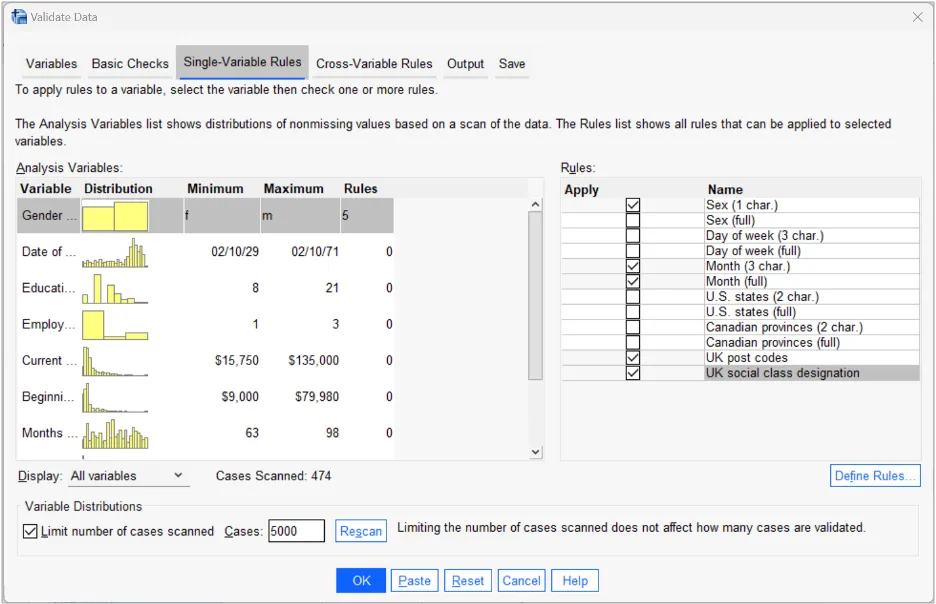
Data Cleaning & Preparation

We preprocess datasets by handling missing values, outliers, and normalization to ensure accurate factor extraction and modeling.

06

Multivariate Statistical Analysis

Analyze relationships between multiple variables for deeper research understanding.

Simbi Labs delivers structured, accurate, and scalable factor analysis services in Vadodara, aligned with your research and analytical goals. Our high-quality statistical insights support informed decision-making, enhance research outcomes, and provide a deeper understanding of complex data structures.
15+ Years of Experience

Why Choose Simbi Labs

Simbi Labs brings over a decade of expertise in advanced statistical analysis and research methodologies.

Expert Research Team

Our team includes statisticians, data scientists, and research analysts ensuring methodological precision and reliable outcomes.

Technology-Driven Approach

We utilize tools such as SPSS, R, Python, AMOS, and advanced statistical software for efficient and accurate analysis.

Pan India Execution Capability

We support large-scale research projects across diverse domains with consistent analytical standards.

Customized Research Solutions

Each project is tailored to specific research objectives, ensuring precise factor modeling and actionable insights.

Data-Preparation-issues-1
EFA | CFA | SEM Modelling

SPSS AMOS

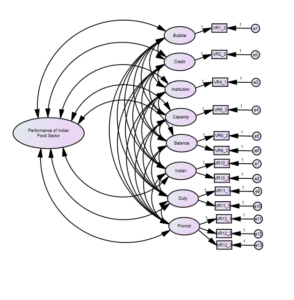
SPSS AMOS, also known as Analysis of Moment Structures, is a robust software intended for doing structural equation modeling (SEM). Structural Equation Modeling (SEM) is a type of statistical technique that combines quantitative data with qualitative causal assumptions to test and approximate causal links.
Look at these incredible numbers

Project Completed
0 K+
Scholars Associated
0 K+
Industrial Projects
0 +
Years in Market
0
0 %

Chooses SPSS AMOS

0 %

SPSS AMOS for Research

0 %

SPSS AMOS for Analysis

Softwares Tools We Use

SPSS

SPSS is widely used for statistical analysis in social sciences. Its Factor Analysis module simplifies extraction, rotation, and interpretation of factors.

R

R, with packages like psych and FactoMineR, allows flexible and detailed factor analysis. It supports both exploratory and confirmatory approaches with visualizations.

AMOS

AMOS integrates with SPSS to perform confirmatory factor analysis graphically. It is user-friendly for modeling relationships among latent variables.

SAS

SAS provides robust tools for multivariate analysis, including exploratory and confirmatory factor analysis. It handles large datasets efficiently with advanced customization options.

Stata

Stata offers comprehensive factor analysis features with easy-to-use syntax. It also provides factor rotation, scoring, and reliability testing for survey and experimental data.

XLSTAT

XLSTAT is an Excel add-on for statistical analysis, including factor analysis. It provides PCA, factor rotation, and correlation matrices directly in Excel.

MATLAB

MATLAB allows customized factor analysis using scripts and toolboxes. It is powerful for handling large datasets and advanced multivariate techniques.

Mplus

Mplus specializes in structural equation modeling and confirmatory factor analysis. It is ideal for latent variable modeling and complex survey data analysis.

Factor analysis Queries

If you want to download SPSS AMOS, it is usually necessary to have access to the IBM SPSS Statistics software suite, as AMOS functions as an extension or module of SPSS Statistics.

here is a Download Link https://www.ibm.com/products/structural-equation-modeling-sem

Exploratory Factor Analysis (EFA) is a statistical method used to identify the underlying structure among a set of variables. It is commonly employed in fields such as psychology, sociology, marketing, and education to explore complex relationships between observed variables and uncover hidden factors or dimensions that may influence them.

Confirmatory Factor Analysis (CFA) is a statistical technique used to assess the fit between observed data and a hypothesized factor structure. It is commonly employed in fields such as psychology, sociology, education, and marketing to evaluate the validity of measurement instruments and theoretical models.

Structural Equation Modeling (SEM) is a powerful statistical technique used to test complex relationships among variables and to evaluate theoretical models. Here’s an overview of SEM modeling: