
From Spills to Skills: 5S in Action for Food Safety in Food Production
Introduction – When Cleanliness Becomes the Secret Ingredient
Imagine entering a food factory where the floors shine like glass, every tool is precisely where you expect it to be, and every action is useful. Workers walk with confidence, not wondering about where to locate the next tool or stumbling over equipment that isn’t in the right location. This isn’t a dream; it’s the outcome of a strong organizational ethic called Lean 5S.
Read Also : Lean Audits: Improving Food Quality & Traceability
Companies in the food sector today are seeking for methods to be both safe and efficient at the same time. One minute missed may mean hundreds of goods wasted, and one safety lapse can lead to expensive recalls. Lean 5S is a disciplined way to organize and keep the workplace that changes operations from being chaotic to always working well.
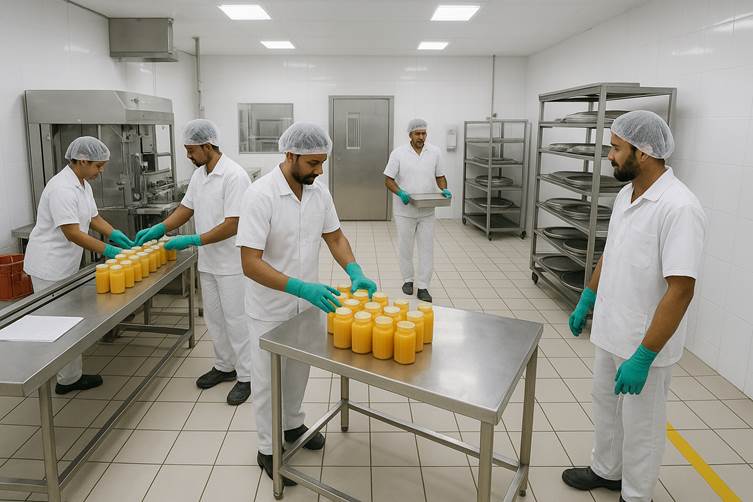
Background: Evolution of Lean 5S in Manufacturing
The 5S Lean Principles—Sort, Set in Order, Shine, Standardise, and Sustain—came from Japan in the 1950s as part of the Toyota Production System. They were meant to cut down on waste and make things run more smoothly. As time went on, businesses realised that they needed to put worker health and safety first along with efficiency. This led to the addition of Safety as the sixth “S,” which became 6S Lean or 5S + Safety. The change picked up speed in the late 1990s and early 2000s, notably in food processing and manufacturing, where safety and cleanliness are very important for following the rules and earning customers’ confidence. In the past, food plants were very focused on how much they could produce. But over time, the sector has had problems.
For food production, 5S addresses the critical needs:
1. Operational excellence in fast-paced, high-volume production environments.
2. Stricter food safety regulations (HACCP, ISO 22000, FSSAI).
3. Rising raw material costs.
4. Labor skill gaps.
5. Consumer demand for faster deliveries without compromising quality.
In this changing world, a dirty or disorganised facility doesn’t simply slow down production; it also puts workers at danger of contamination, accidents, and unhappy customers. In the past, food plants cared more about quantity than quality. But since prices are going up, safety rules are becoming stronger, and competition is growing throughout the world, the emphasis has changed to safe, efficient, and customer-focused manufacturing.
What is 5S lean Six Sigma?
Safety and speed are just as important as the ingredients when making meals. Lean 5S, which stands for Sort, Set in Order, Shine, Standardise, and Sustain, is a way to organise the workplace that turns messy, dangerous places into clean, efficient, and predictable ones. 5S lowers accidents, stops contamination, and increases production by getting rid of things that aren’t needed, organising tools so they are simple to reach, keeping up with stringent cleaning schedules, standardising procedures, and keeping discipline. In a world where one safety mistake may lead to expensive recalls, 5S helps food facilities keep their hygiene levels high while meeting high production needs. This shows that an organised workstation is the key to success.
Business Drivers for Lean 5S Adoption & Why
In today’s competitive food manufacturing sector, Lean 5S is not just a process tool—it’s a strategic necessity. Businesses adopt it to:
1. Ensure Regulatory Compliance – Strict adherence to HACCP, ISO 22000, and FSSAI standards.
2. Optimize Operational Efficiency – Reduce downtime from misplaced tools or cluttered workspaces.
3. Minimize Waste & Costs – Streamline processes to cut raw material loss and energy usage.
4. Enhance Workplace Safety – Prevent accidents and protect workers.
5. Safeguard Brand Reputation – Deliver consistent quality to maintain consumer trust.
Customer Expectations & Their Influence
Modern consumers are more informed and health-conscious. They expect:
1. Transparent food handling and hygiene protocols.
2. Uniform product quality across batches.
3. Zero tolerance for contamination incidents.
This rising demand compels manufacturers to integrate Lean 5S, ensuring a clean, organized, and safe production environment that meets both regulatory and consumer expectations.
What Exactly Are the 5S Lean Principles? (Now 6S Lean or 5S + Safety)
The 5S Lean Principles are a workplace organization method designed to improve efficiency, safety, and quality. Originating from Japan’s Toyota Production System, they stand for:
1. Sort (Seiri) – Remove unnecessary tools, raw materials, and clutter to keep production areas clean, organized, and compliant with food safety standards.
2. Set in Order (Seiton) – Arrange equipment and ingredients logically, ensuring quick access, reducing delays, and preventing cross-contamination risks in food processing lines.
3. Shine (Seiso) – Maintain spotless production floors, machinery, and utensils to meet hygiene regulations and boost customer trust in product quality.
4. Standardize (Seiketsu) – Establish consistent cleaning, storage, and workflow protocols to ensure ongoing compliance with safety audits and quality control requirements.
5. Sustain (Shitsuke) – Train and engage staff to consistently follow 5S practices, fostering discipline and continuous improvement in hygiene and operations.
6. Safety – Integrate safety checks, PPE use, and hazard controls to protect workers and ensure contamination-free food production environments.
Now, with growing focus on employee well-being, Safety has been added, making it 6S Lean to ensure hazard-free, compliant work environments.
What are the Core Objectives of Lean 5S in Food Manufacturing
1. Enhance Safety – Remove hazards and create predictable workflows.
2. Boost Efficiency – Reduce time spent searching, moving, or reworking.
3. Ensure Hygiene – Maintain contamination-free workspaces.
4. Improve Morale – Give employees a cleaner, more organized environment.
5. Build Trust – Deliver consistent quality that strengthens brand loyalty.
Present Scenario: Business & Customer Perspective
From a business perspective, Lean 5S is no longer optional—it’s becoming a competitive necessity. Global brands like Nestlé, PepsiCo, and Unilever are embedding Lean 5S in their production culture to ensure that:
1. Equipment downtime is minimized.
2. Safety incidents are reduced.
3. Waste is cut down dramatically.
From the point of view of customers, people have never been more mindful of food safety. A single mistake in quality may go viral in a matter of minutes, ruining trust that has been developed over decades. Customers today want to see clear hygiene standards, consistent quality, and openness. Lean 5S gives you the tools you need to always satisfy these needs.
Challenges and Limitations of Lean 5S in Food Industry Manufacturing
1. Initial Implementation Disruptions – Production slowdowns may occur while rearranging workspaces and training staff.
2. Risk of Over-Standardization – Excessive rigidity can reduce flexibility in handling unique production needs or emergencies.
3. Resistance to Change – Employees may be hesitant to adopt new routines, affecting consistency and compliance.
4. Ongoing Leadership Commitment – Continuous support from management is essential to sustain improvements over time.
5. Maintenance Effort – Regular audits and discipline are required to prevent slipping back to old habits.
How Does 5S Framework Step-by-Step Breakdown Implementation in Food manufacturing
In the food manufacturing sector, implementing Lean 5S has shown measurable safety benefits. The Flowchart shows how to apply 5S implementation in food Manufacturing
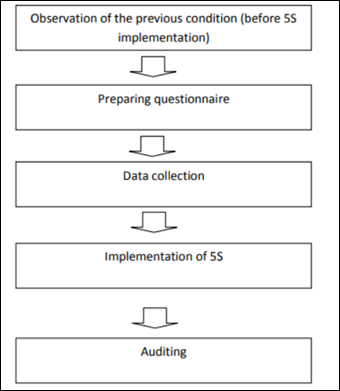
Lean 5S, a structured workplace management system that blends safety and efficiency into one seamless process. Here is step by step showed that how to implement.
| 5S Step | Implementation in Food Manufacturing | Safety Impact | Efficiency Impact |
| Sort (Seiri) | Remove unnecessary tools, ingredients, and clutter from work areas. | Reduces tripping hazards and contamination risks. | Frees space, improves workflow, and reduces search time. |
| Set in Order (Seiton) | Organize tools, raw materials, and equipment for easy access. | Minimizes accidents from misplaced or hard-to-reach items. | Shortens process time and increases production speed. |
| Shine (Seiso) | Clean equipment, floors, and surfaces regularly. | Prevents bacterial growth and foodborne hazards. | Ensures smooth machine operation and reduces downtime. |
| Standardize (Seiketsu) | Develop cleaning and organization SOPs with visual cues. | Maintains consistent hygiene and safety standards. | Reduces variability and ensures predictable output. |
| Sustain (Shitsuke) | Train staff and conduct regular audits to uphold 5S. | Promotes safety culture and employee awareness. | Maintains long-term productivity and operational discipline. |
The Impact of 5S in Food Manufacturing
Using Lean 5S in the food production industry has been proved to improve safety in a meaningful way. Reports from the industry say that facilities that used 5S saw up to a 40% drop in workplace accidents in the first year. Organising workstations, clearly labelling everything, and getting rid of clutter lowered the chances of slips and falls, mistakes while handling chemicals, and cross-contamination. In addition to safety, these facilities also reported operating cycles that were 15–20% quicker. This shows that organising the workplace not only keeps workers safe, but it also boosts productivity and the quality of the products.
How each 5S stage enhances food safety while accelerating operations without sacrificing product quality
1. Sort (Seiri)
Cleaning up the workstation by getting rid of extra equipment, old materials, and clutter lowers the danger of infection. This keeps only safe, certified goods in the manufacturing area, which lowers the risk of cross-contamination. Employees spend less time looking for equipment or supplies, which makes manufacturing activities go faster.
Points:
i. Prevents expired/raw material mix-ups.
ii. Reduces cleaning time by eliminating waste.
iii. Improves workflow clarity.
2. Set in Order (Seiton)
Putting tools, raw materials, and equipment in a logical order prevents mistakes from happening and lowers the risk of inadvertent contamination. Clear labels and colour coding make it easy for workers to follow hygiene rules. Workers can get to equipment and supplies quicker, which cuts down on downtime between activities and makes the workplace more efficient.
Points:
i. Quick location of safety gear and ingredients.
ii. Lower risk of ingredient misplacement.
iii. Smoother production flow.
3. Shine (Seiso)
Cleaning machinery, surfaces, and storage rooms on a regular basis keeps them free of allergens, mould, and germs. This phase makes it more likely that people will follow hygiene rules and keeps food safe. It also makes things run more smoothly by lowering the number of times equipment breaks down because of dirt accumulation and the number of times emergency deep cleaning has to halt.
Points:
i. Maintains hygiene compliance with audits.
ii. Prevents costly contamination incidents.
iii. Reduces unplanned downtime.
4. Standardize (Seiketsu)
Making ensuring that all shifts follow the same cleaning schedules, labelling systems, and operating procedures is a good way to keep hygiene practices the same. This makes sure that safety rules stay in place even when staff members change. Efficiency goes up because workers follow the same steps, which cuts down on mistakes and makes production more predictable.
Points:
i. Uniform safety standards across all teams.
ii. Easier training for new employees.
iii. Consistency in quality output.
5. Sustain (Shitsuke)
Long-term compliance with safety standards is possible by teaching and auditing 5S practices. Regular reinforcement keeps people from forgetting to clean or organise. Keeping a steady, organised workplace where processes stay the same and downtime is kept to a minimum helps with efficiency.
Points:
i. Long-term hygiene discipline.
ii. Continuous performance improvement.
iii. Higher employee ownership of safety.
Future Outlook: 5S Meets Industry 4.0 in Food Manufacturing
The future of food manufacturing lies in merging Lean 5S principles with Industry 4.0 technologies for unmatched hygiene, safety, and efficiency.
Integration of Automation, AI, and IoT with Lean 5S:
i. Cleaning, sorting, and getting rid of trash are all easier with automation.
ii. AI forecasts when maintenance will be needed, which keeps equipment working.
iii. IoT sensors keep an eye on cleanliness, temperature, and the danger of contamination in real time.
Predictions for Technology-Driven Hygiene and Efficiency:
i. Dashboards that provide real-time data will keep track of cleanliness and workflow.
ii. Smart robots will do jobs that are the same over and over again, which will cut down on mistakes made by people.
iii. Predictive analytics will make better use of resources and cut down on downtime.
iv. Blockchain could make sure that everything can be traced all the way from the raw ingredients to the packaging.
The food sector will have quicker, safer, and cleaner production environments by integrating the discipline of Lean 5S with the accuracy of digital technologies. This synergy will change the norms for production throughout the world.
How Simbi Labs Delivers Efficient Solutions as a Six Sigma Consultant Using 5S
As Six Sigma consultants, we look at processes, get rid of waste, and use custom 5S methods to improve workflow, make sure food safety rules are followed, and keep productivity, quality, and cost savings via regular training and monitoring.
1. Customized 5S Frameworks : create strategies for organising the workplace that are specific to the needs of each food production unit, making sure that operations run as smoothly as possible.
2. Risk Reduction for Contamination: Uses 5S to clean up, enhance hygiene, and lower the risk of contamination in accordance with food safety requirements.
3. Reducing Process Time: By getting rid of needless motions and optimising equipment location, this speeds up processes and cuts down on cycle times and downtime.
4. Training and Engaging Employees : They teach the 5S culture via hands-on training, which encourages responsibility and long-term progress.
5. Performance Monitoring and Continuous Improvement: After deployment, Six Sigma tools are used to keep an eye on important metrics to make sure that results last and operations stay excellent.
Case Study – Problem and Solution Using Lean 5S in a Dairy Processing Unit
A medium-sized dairy processing factory that makes yoghurt and pasteurised milk started having problems with contamination in its packaging area over and over again. Quality tests showed that final items had a lot of germs in them. This resulted to product recalls, consumer complaints, and money lost. The first inspections discovered that the tools were unclean, the cleaning equipment was stored incorrectly, and the organisation was bad, which made cross-contamination more likely.
Read Also : Visual Management Systems in Food Factories: A Step-by-Step Guide
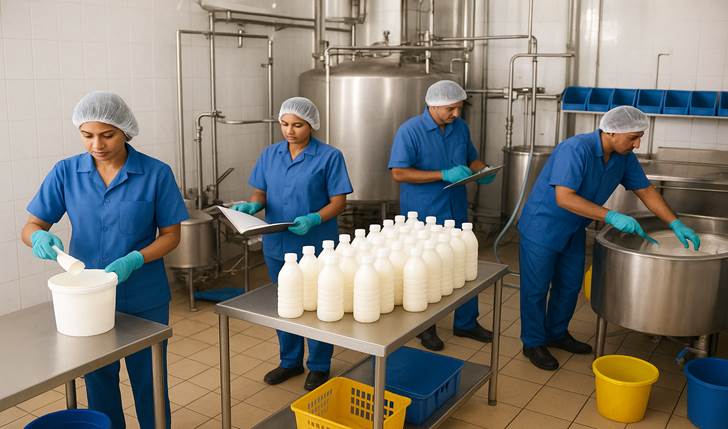
Problem:
- The workstation is messy, and cleaning items are kept close to where raw milk is handled.
- There was spilt milk and residue that wasn’t cleaned up right away since the paths were clogged.
- Employees utilising containers that aren’t marked, which causes problems with cleaning solutions.
- Time lost looking for equipment, which slows down cleaning routines and lowers hygiene.
Solution: How to Implement Lean 5S in Steps:
Sort (Seiri)
i. Took off the packing floor all the tools that weren’t needed, the old cleaning chemicals, and the damaged equipment.
ii. To reduce cross-contamination, cleaning supplies were kept apart from places where raw materials were stored.
Set in Order (Seiton)
i. To each cleaning instrument a specific storage location and put a label on it.
ii. Used colour-coded buckets and brushes to tell the difference between places where raw milk is stored and locations where it is packaged.
Shine (Seiso)
i. Set up a regular cleaning plan every day before and after each shift.
ii. To keep things clean, they put in floor drains and workbenches made of stainless steel that are simple to clean.
Standardise (Seiketsu)
i. Made checklists for each part that are easy to read and comprehend in the local language.
ii. Standardised cleaning methods with specified dilution ratios for chemicals.
Sustain (Shitsuke)
i. Did monthly hygiene checks and refresher training for personnel.
ii. Set up a system of rewards for keeping things clean and organised.
Results:
Using Lean 5S made food production better in ways that could be measured. Within three months, contamination events reduced by 90%, which greatly raised safety standards. The average shelf life of products increased up by two days, which made them more marketable and cut down on waste. Cleaning periods were cut down, which saved two hours of work every day. Also, employees were much more aware of and accountable for food safety, which helped create a proactive and responsible work culture. These findings show that structured workplace organisation is a direct cause of efficiency, quality, and long-term sustainability in the food production process.
The Recipe for Long-Term Success: Conclusion
In food processing, safety without efficiency slows everything down, while efficiency without safety puts lives and product quality at risk. Lean 5S strikes the perfect balance by making operations more efficient, keeping people safe, and encouraging a culture of constant development. 5S is like a treasured family recipe that has been improved over time to make sure it is always great. When you think of it as more than just a checklist, it becomes just as essential. Businesses may ensure long-term development and quality by making these concepts a part of their everyday activities.
Question for You: If losing one tool may cost your firm minutes, how much might a totally messy workstation cost your business each year?
Get in touch with Simbi Labs right now and start your adventure with confidence.
Book a free consultation for appointment
Email us at : grow@simbi.in
For an in-depth understanding, please refer to our book, “Academic Research Fundamentals: Research Writing and Data Analysis”. It is available as an eBook here, or you may purchase the hardcopy here .