
How On-Site Healthcare Data Collection Works in Practice
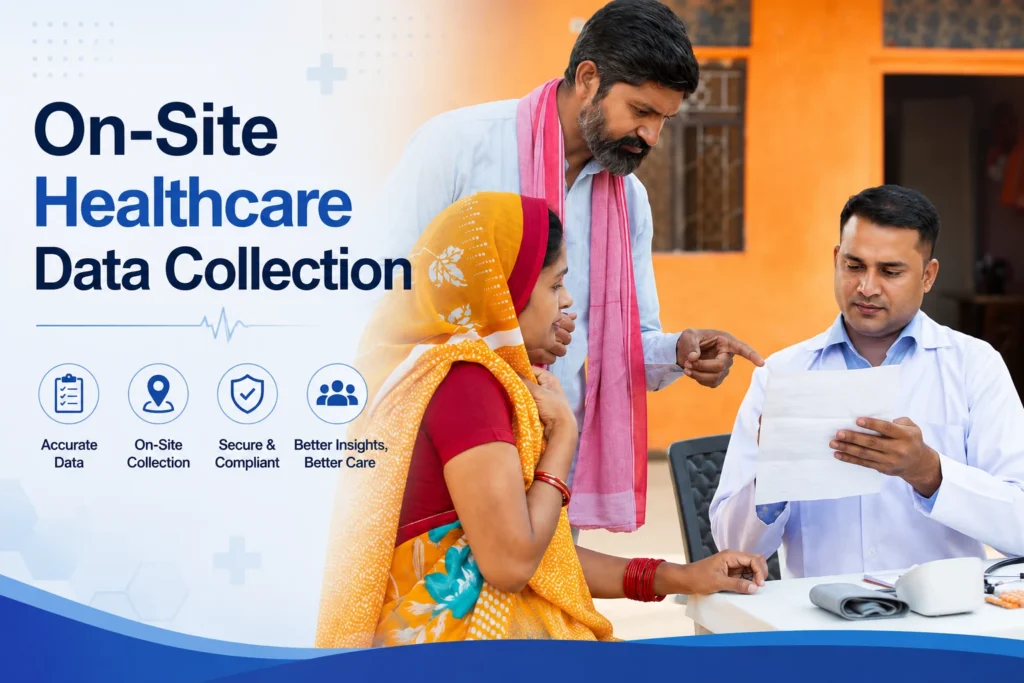
Introduction
In today’s rapidly evolving healthcare environment, on-site healthcare data collection has become essential for delivering efficient, accurate, and patient-centered care. From hospitals and diagnostic centers to mobile healthcare camps and outpatient clinics, healthcare professionals rely on healthcare data collection processes to capture patient information in real time.The success of modern healthcare depends heavily on collecting, processing, and analyzing patient data accurately. On-site healthcare data collection ensures healthcare providers have immediate access to critical medical information, helping improve diagnosis, treatment planning, and operational efficiency.This blog explores how on-site healthcare data collection works in practice, the technologies involved, and why it plays a vital role in modern medical data collection systems.
What Is On-Site Healthcare Data Collection?
On-site healthcare data collection refers to gathering patient information directly at healthcare facilities or service locations during patient interactions. This includes:
- Patient registration details
- Medical history documentation
- Vital sign recording
- Diagnostic test results
- Treatment progress tracking
- Medication administration records
Unlike delayed manual documentation, real-time patient data management enables immediate entry and access to information, reducing delays and improving patient outcomes.
Healthcare institutions use digital systems such as tablets, mobile devices, kiosks, and Electronic Health Record (EHR) software to streamline this process.
The Step-by-Step Healthcare Data Collection Process
Understanding the healthcare data collection process helps explain why it is so effective in practice.
1. Patient Registration and Verification
The first stage of on-site healthcare data collection begins when patients arrive at a facility.
Healthcare staff collect:
- Personal identification details
- Insurance information
- Medical history
- Existing health conditions
- Consent documentation
Digital registration tools improve healthcare data accuracy by minimizing human entry errors and ensuring standardized records.
2. Real-Time Clinical Data Entry
During consultations, nurses and physicians input patient observations directly into medical data collection systems.
This includes:
- Blood pressure
- Temperature
- Oxygen saturation
- Symptoms and complaints
- Preliminary diagnosis notes
With real-time patient data management, clinicians can instantly access previous records and compare trends, improving clinical decisions.
3. Diagnostic Data Integration
Laboratories and imaging departments feed test results directly into centralized systems.
Examples include:
- Blood test reports
- X-ray findings
- MRI scans
- ECG results
This automated healthcare data collection process reduces duplication and ensures faster diagnosis.Integrated medical data collection systems eliminate communication gaps between departments.
4. Treatment Documentation
Doctors document treatment plans directly during patient visits.
This includes:
- Prescriptions
- Procedures performed
- Medication schedules
- Follow-up instructions
Accurate on-site healthcare data collection ensures continuity of care and avoids treatment discrepancies.Digital documentation also supports legal compliance and audit readiness.
5. Monitoring and Continuous Updates
Healthcare data is not static. During hospitalization or follow-up care, patient information is updated continuously.
Monitoring devices often automatically transmit data such as:
- Heart rate
- Glucose levels
- Respiratory rate
- Recovery milestones
This supports real-time patient data management, enabling quick response to health changes.
Technology Behind Medical Data Collection Systems
Modern medical data collection systems rely on advanced technologies for speed and precision.
Common tools include:
Electronic Health Records (EHRs)
EHR platforms centralize all patient information and allow secure access across departments.
They improve healthcare data accuracy and reduce administrative workload.
Mobile Data Collection Devices
Healthcare workers use tablets and handheld devices for on-site healthcare data collection in clinics, emergency settings, and remote healthcare camps.
These tools support offline data capture and later synchronization.
IoT and Wearable Devices
Connected medical devices automatically collect health metrics for real-time patient data management.
Examples include:
- Smart monitors
- Portable ECG devices
- Continuous glucose monitors
These innovations enhance healthcare data collection processes significantly.
Why Healthcare Data Accuracy Matters
Poor-quality data can lead to serious clinical mistakes.
Accurate on-site healthcare data collection helps:
- Reduce diagnostic errors
- Improve treatment outcomes
- Enable faster decision-making
- Ensure regulatory compliance
- Support predictive healthcare analytics
High healthcare data accuracy creates trust among providers and patients alike.
Reliable medical data collection systems are essential for safer healthcare delivery.
Challenges in On-Site Healthcare Data Collection
Despite its benefits, healthcare facilities face challenges such as:
- Data entry fatigue
- Staff training gaps
- System interoperability issues
- Security and privacy concerns
- Device maintenance costs
Organizations must invest in staff education and secure infrastructure to optimize healthcare data collection processes.
The Future of On-Site Healthcare Data Collection
Emerging technologies like AI, automation, and predictive analytics are transforming on-site healthcare data collection.
Future systems will likely feature:
- Voice-assisted clinical documentation
- AI-powered error detection
- Faster interoperability across providers
- Advanced predictive patient monitoring
These advancements will further improve real-time patient data management and enhance overall patient care quality.
Conclusion
On-site healthcare data collection is the backbone of modern healthcare operations. It enables faster diagnoses, better treatment planning, improved healthcare data accuracy, and more efficient real-time patient data management.
As medical data collection systems continue evolving, healthcare providers can deliver smarter, safer, and more personalized patient care.Understanding how on-site healthcare data collection works in practice reveals why it remains one of healthcare’s most critical operational functions in the digital age.
Book a free consultation for appointment
Email us at : grow@simbi.in