
Ethical Considerations for Data Collection: 10 Best Practices
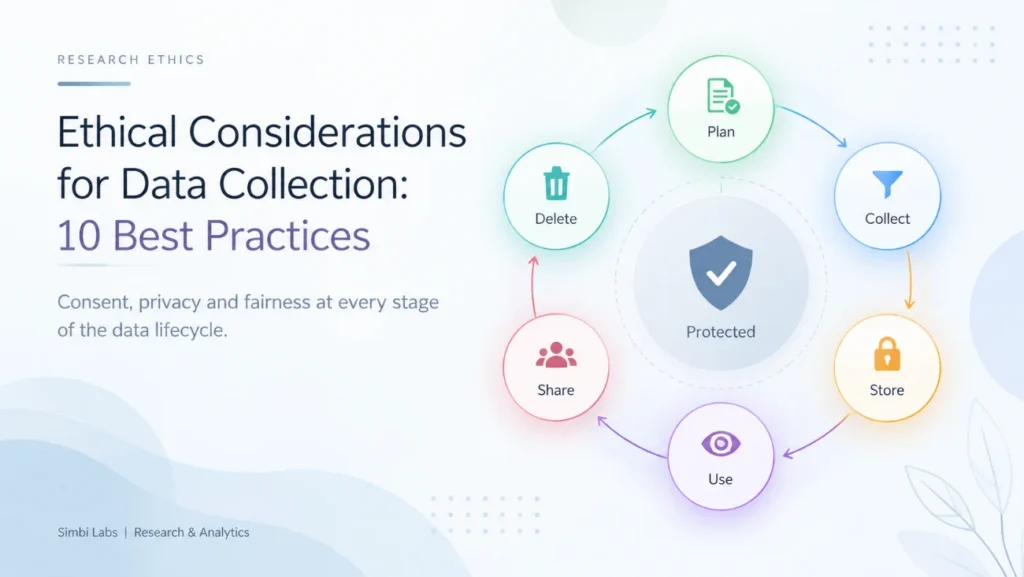
Figure 1: Ethical considerations apply at every stage of the data lifecycle, from planning to deletion
Collecting data about people is a responsibility, not only a technical task. Every survey, interview, observation or clinical measurement involves someone who has trusted a researcher with part of their life. This guide sets out the ethical considerations for data collection that researchers, institutions and organisations should apply, from the first design decision to the final deletion of records. It also explains ethical data collection practices that can be put to use immediately.
READ MORE: Data Collection Techniques: Methods, Types and Examples
Understanding the Ethical Considerations for Data Collection
The ethical considerations for data collection are the moral and professional standards that govern how data about people is obtained, handled and shared. They answer practical questions: Why are we collecting this? Have people agreed with full understanding? Who will see their information? What could go wrong for them? When will it be destroyed?
Modern research ethics in data collection draws on several well-known foundations. The Belmont Report identifies respect for persons, beneficence and justice as core principles. The Declaration of Helsinki guides medical research involving human participants. National frameworks, such as the Indian Council of Medical Research guidelines for biomedical and health research, and data protection laws, such as India’s Digital Personal Data Protection Act, 2023, and the EU’s GDPR, add specific duties. Institutional ethics committees translate these into approval conditions for individual studies, which is why research ethics in data collection should be considered at the design stage and not after fieldwork begins.
The Importance of Ethical Data Collection
Ethical practice matters for four connected reasons.
It protects people. Poorly handled data can expose participants to stigma, discrimination, financial harm or loss of employment. Health, financial and location information is especially sensitive, so data privacy and confidentiality safeguards must be in place from the start.
It improves data quality. Participants who trust a study answer more honestly and drop out less often. Clear consent and genuine confidentiality therefore strengthen the validity of results.
It protects the organisation. Breaches, unauthorised sharing or collection without consent can lead to legal penalties, withdrawn approvals, retracted publications and lasting reputational damage.
It sustains public trust. Research depends on communities being willing to take part. Every misuse of data makes future participation harder, for the whole field.
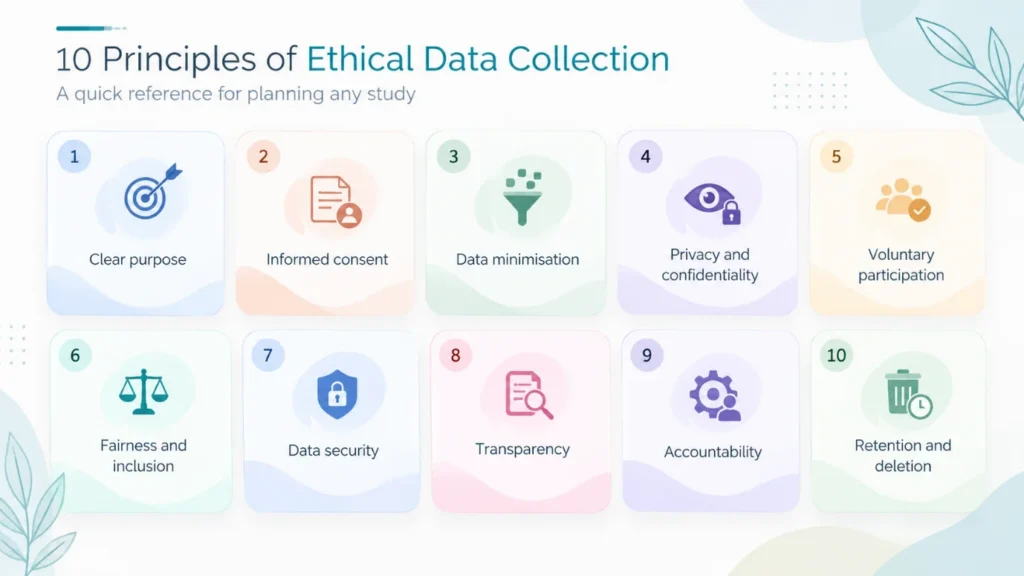
Figure 2: The ten principles covered in this guide
10 Principles of Ethical Data Collection
The ten principles below form a practical framework. Each is followed by a note on how it looks in daily work.
1. Define a Clear Purpose
Every question should serve a stated objective. A clear purpose limits collection, makes consent meaningful and lets reviewers judge whether the benefits justify the burden on participants.
In practice: Before adding any item to a questionnaire, write down the analysis that will use it. If there is none, remove the item.
2. Obtain Informed Consent
Informed consent in research means participants understand what is being asked and agree freely. Consent is a process, not just a signature. It should explain the purpose, procedures, risks and benefits, who will have access, how long data will be kept, the right to refuse or withdraw, and who to contact with questions.
In practice: Use plain language in the participant’s own language, allow time to ask questions and record consent in a way that matches the risk of the study.
3. Minimise the Data You Collect
Collect only what is necessary. Extra data increases risk without improving the study. Sensitive details such as health status, religion, caste, sexual orientation or precise location should be collected only when essential to the research question.
In practice: Replace exact age with age bands, and exact income with ranges, when the analysis does not need precision.
4. Protect Privacy and Confidentiality
Data privacy and confidentiality are distinct. Privacy is a participant’s right to control information about themselves. Confidentiality is the researcher’s duty to protect what has been shared. Both apply during collection, not only after it.
In practice: Hold interviews in private spaces, avoid collecting unnecessary metadata in online surveys and warn focus-group members that confidentiality among participants cannot be guaranteed.
5. Ensure Voluntary Participation
People must be free to decline or withdraw without penalty. Pressure can come from employers, teachers, clinicians or community leaders, and from incentives that are too large to refuse.
In practice: Make it clear that refusal will not affect services, grades or employment, and keep incentives modest and reasonable.
6. Promote Fairness and Inclusion
Ethical studies avoid placing unfair burdens on groups and avoid excluding people who should benefit from research. Language, disability access, digital exclusion and the wording of answer categories all affect fairness.
In practice: Offer translated materials, accessible formats and an offline option so that older, rural or low-income participants are not left out of an online survey.
7. Secure the Data
Security turns the promise of confidentiality into reality. Safeguards include encryption, strong authentication, role-based access, secure backups and audit logs. Sensitive data should never travel through personal email or unencrypted drives.
In practice: Store identifiable data in approved systems, review who has access regularly and remove access when team members leave.
8. Be Transparent
Participants and ethics committees should be able to understand what the study does with data, including sharing with partners, funders or third-party tools. Surprises damage trust.
In practice: Name the organisations that will receive data, say whether data may be reused and explain how results will be shared with participants.
9. Take Accountability
Someone must be responsible for ethical conduct. Accountability includes ethics approval where required, trained staff, a data management plan, a breach response procedure and clear records of decisions.
In practice: Assign a named data owner, keep consent records and test the breach plan before the study begins.
10. Apply Retention and Deletion Rules
Data should not be kept indefinitely. Retention periods should reflect the study protocol, legal requirements and ethics approval, and should end with secure deletion or, where permitted, anonymisation.
In practice: Set a retention schedule at the start, delete linking files as soon as analysis allows and record what was destroyed and when.
Ethical Data Collection Principles at a Glance
| Principle | What It Requires | Practical Check |
| Clear purpose | Every item serves a stated objective | Can each question be linked to an analysis? |
| Informed consent | Understanding and free agreement | Is consent explained in plain language? |
| Data minimisation | Only necessary data is collected | Could the study work without this item? |
| Privacy and confidentiality | Control over personal information | Is the setting private and access limited? |
| Voluntary participation | No pressure, free withdrawal | Is refusal consequence-free? |
| Fairness and inclusion | No unfair burden or exclusion | Are language and access barriers addressed? |
| Data security | Technical and organisational safeguards | Is data encrypted with controlled access? |
| Transparency | Open about uses and sharing | Are all data recipients disclosed? |
| Accountability | Named responsibility and records | Is there an owner and a breach plan? |
| Retention and deletion | Defined end of data life | Is there a schedule and deletion log? |
Table 1: The ten principles with their requirements and practical checks
Common Ethical Issues in Research Data Collection
Ethical issues in research often arise from ordinary situations rather than deliberate wrongdoing. The most frequent problems include:
1. Consent that is incomplete or rushed, such as long legal text that participants cannot realistically understand.
2. Collecting more than needed, which increases the harm if the data is lost or misused.
3. Weak confidentiality, for example names stored in the same file as responses or small groups where individuals can be recognised.
4. Hidden pressure, where participants feel unable to refuse a supervisor, teacher or clinician.
5. Bias and exclusion, including surveys that leave out people without internet access or that use judgemental wording.
6. Insecure handling, such as sharing files through personal email, using unapproved tools or leaving devices unlocked.
7. Unplanned reuse, where data collected for one purpose is later used for another without permission.
8. Indefinite retention, which keeps data alive long after its purpose has ended.
9. Insufficient protection of vulnerable groups, including children, patients and people in dependent relationships.
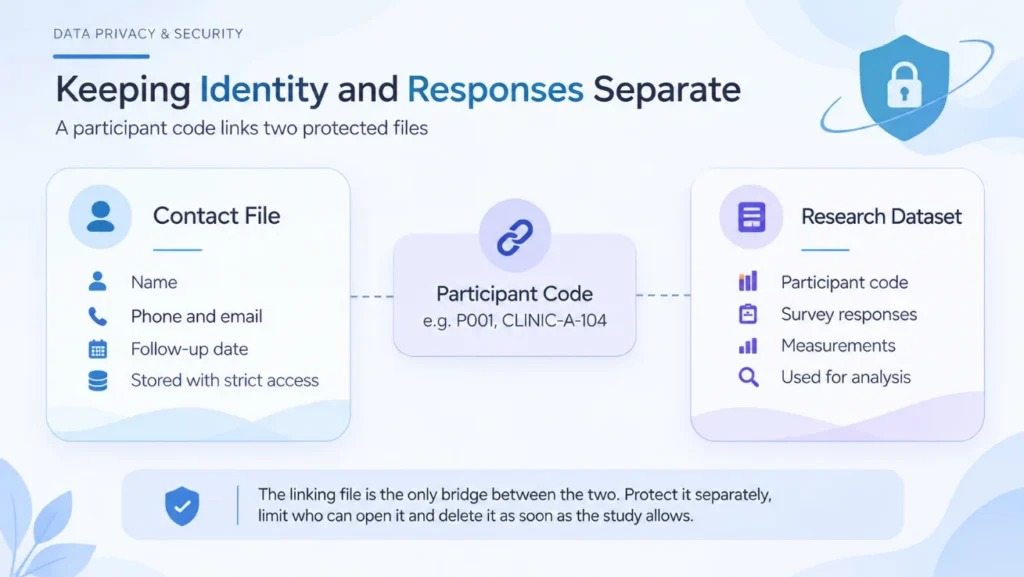
Figure 3: A participant code links a protected contact file and the research dataset
Monitor and Review
Check during the study that procedures are followed. Review incidents, complaints and protocol deviations, and update the plan when circumstances change.
Ethical Data Collection Examples
The following examples show how the principles work in realistic situations.
Example 1: A Workplace Stress Survey
Situation: A university researcher plans an employee survey on stress. Managers would like to see results by team. Ethical approach: The researcher collects no names, groups age and salary into bands, tells employees that participation does not affect employment and reports results only in groups large enough to prevent identification. Result: Higher response honesty and no risk to individuals.
Example 2: A Clinical Follow-Up Study
Situation: A clinic follows patients for twelve months and needs to contact them for follow-up visits. Ethical approach: Patients receive codes such as PAT-042. Contact details are stored separately with restricted access, consent covers follow-up contact and the linking file is deleted at the end of the study. Result: The team can follow participants without exposing identities in the analysis dataset.
Example 3: An Online Health Survey
Situation: An organisation designs a health survey that is online only. Ethical approach: The team recognises that older, rural and low-income people may be excluded, so it adds assisted phone interviews and a local-language version. It also turns off unnecessary tracking and collects only the fields the analysis needs. Result: A more representative sample and less personal data collected.
Ethical Data Collection Support from Simbi Labs
Ethical practice is easier when it is designed into the study. The Research and Analytics Division at Simbi Labs supports researchers, institutions and organisations with responsible data collection and analysis.
- Questionnaire design and review for clarity, fairness and data minimisation
- Consent and information sheet preparation in plain language
- Secure data collection, online and offline, with coded participant IDs
- Data cleaning, analysis and reporting in SPSS, R, Stata and Excel
Planning a study and want your data collection reviewed? Book a free consultation at app.simbilabs.com/appointment, email grow@simbi.in or call +91-99505-66669 to speak with the Simbi Labs team.
Conclusion
The ethical considerations for data collection are not obstacles to good research. They are what make research trustworthy. A clear purpose, informed and voluntary consent, minimal and secure data, fair treatment of participants and a firm end date for retention protect people and improve results at the same time. Strong informed consent in research, careful data privacy and confidentiality controls and consistent research ethics in data collection all depend on early planning. Teams that build these practices into planning, rather than adding them at the end, collect better data and keep the trust that future research depends on.
For expert support with study design, data collection and analysis, connect with Simbi Labs, the Research and Analytics Division of Simbi Labs India.
Frequently Asked Questions
1. What are the ethical considerations for data collection?
They are the standards that govern how data about people is gathered and handled. The main ones are a clear purpose, informed consent, minimal collection, privacy and confidentiality, voluntary participation, fairness, security, transparency, accountability and defined retention and deletion.
2. What are ethical data collection practices?
Ethical data collection practices include explaining the study in plain language, obtaining consent, collecting only necessary data, using participant codes instead of names, storing data securely, limiting access and deleting data when it is no longer needed.
3. What is informed consent in research?
Informed consent is a participant’s voluntary agreement to take part after understanding the purpose, procedures, risks, benefits, data use, their right to withdraw and how to ask questions. It is an ongoing process rather than a one-time signature.
4. What is the difference between data privacy and confidentiality?
Privacy is the participant’s right to control information about themselves. Confidentiality is the researcher’s duty to protect information that has been shared. Good studies safeguard both.
5. What are common ethical issues in research?
Common issues include unclear consent, excess data collection, weak confidentiality, pressure to participate, exclusion of certain groups, insecure storage, reuse of data without permission and keeping data too long.
6. Is coded data the same as anonymous data?
No. Coded data can be linked back to individuals if a key exists. It becomes anonymous only when the link is permanently removed, so the linking file must be protected and deleted when appropriate.
7. Do all studies need ethics committee approval?
Requirements depend on the institution, country and type of research. Studies involving human participants or health data usually need review, so researchers should check institutional and legal requirements before starting.
8. Can Simbi Labs help with ethical data collection?
Yes. Simbi Labs supports questionnaire design, consent materials, secure data collection and analysis for research and organisational projects.