
Online vs Offline Data Collection: A Complete Guide for Research Projects
Choosing how to collect data is one of the earliest and most consequential decisions in any research project. The method determines who can be reached, how reliable the responses are, how quickly results arrive and what the exercise costs. A carefully written questionnaire cannot make up for a collection method that never reaches the intended respondents.
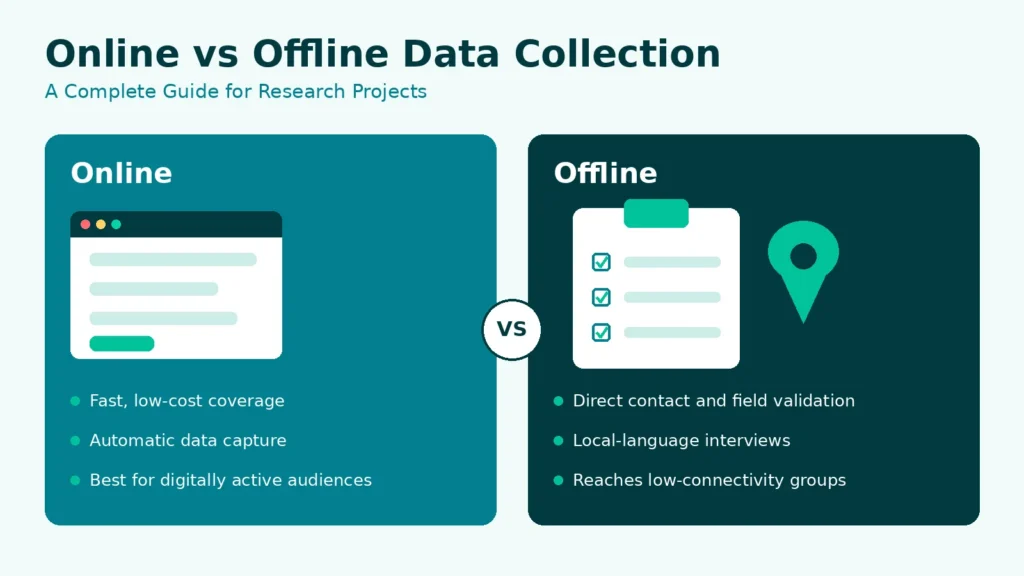
Online vs Offline Data Collection is best understood as a choice between two ways of reaching people rather than a contest between two technologies. Online methods deliver questionnaires through forms, apps, email and web platforms and record answers automatically. Offline methods rely on field visits, face-to-face and telephone interviews, paper questionnaires and direct observation. In practice, most well-run studies draw on online and offline data collection together, using each where it is strongest.
Understanding Online Data Collection
Online data collection gathers responses through internet-based platforms. Common examples include Google Forms, Microsoft Forms, SurveyMonkey, Typeform, KoboToolbox, email surveys, web forms, mobile applications, social media questionnaires and managed respondent panels. It is widely used for customer feedback, employee surveys, product testing, academic surveys and student research.
Its main strengths are speed, a low cost per additional response, automatic storage of answers in spreadsheets or dashboards, real-time monitoring of progress and simple export for analysis. These advantages are most valuable for large, straightforward surveys aimed at respondents who are comfortable with phones and computers.
Understanding Offline Data Collection
Offline data collection gathers information directly from respondents through household surveys, face-to-face interviews, telephone interviews conducted by trained callers, paper questionnaires, retail audits, community meetings and observation. It is the more reliable route when the study population is not active online or when the research requires physical confirmation of a place, a product or a person.
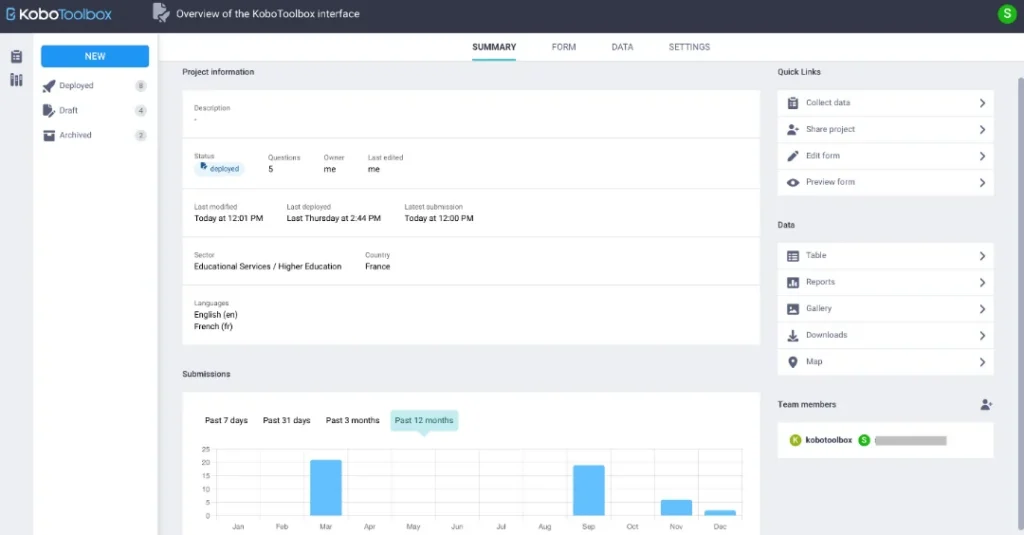
Offline digital survey collection has become the standard way to reduce those trade-offs. Interviewers record answers on tablets or smartphones running applications such as KoboToolbox or ODK, which store data locally without a network connection and synchronise once connectivity returns.
READ MORE: How Offline Survey Tools Collect Data
Why the Choice Matters in India
India’s population is diverse in ways that directly affect survey design. Internet access, education, language and comfort with technology differ across states, between cities and villages, and between age groups. India recognises 22 scheduled languages, with many more local dialects in everyday use. A method that works well in a metropolitan setting can perform poorly in a small town or village.
Data from the Telecom Regulatory Authority of India for March 2026 illustrate the gap. Urban areas account for roughly 651.9 million internet subscribers against about 440.9 million in rural areas, and urban subscriptions run at about 127 per 100 people against roughly 48 per 100 in rural areas. Because one person may hold several connections, these figures overstate the number of unique users, but the direction is clear: a rural household is far less likely to be reachable through a survey link.
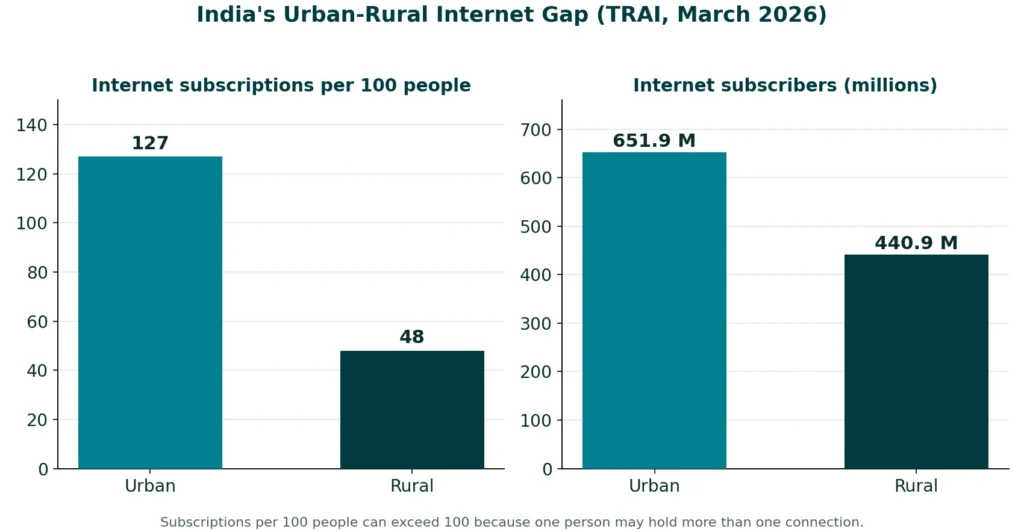
Figure 1. Urban and rural internet access in India, based on TRAI data for March 2026 as reported by The Week.
How the Two Approaches Work in Practice
Both approaches follow a structured research process, but the execution differs. In online collection, the questionnaire is designed digitally and distributed by link, email, messaging apps, social media, websites or respondent panels. Responses flow into a spreadsheet or dashboard, where they are monitored, cleaned and analysed.
In offline collection, trained field researchers obtain responses in person. The work begins with field planning and surveyor training, moves through respondent selection and interviews under supervision, and ends with data entry, validation and reporting. Skipping the training and supervision stages is the most common reason field data turns out to be unreliable.
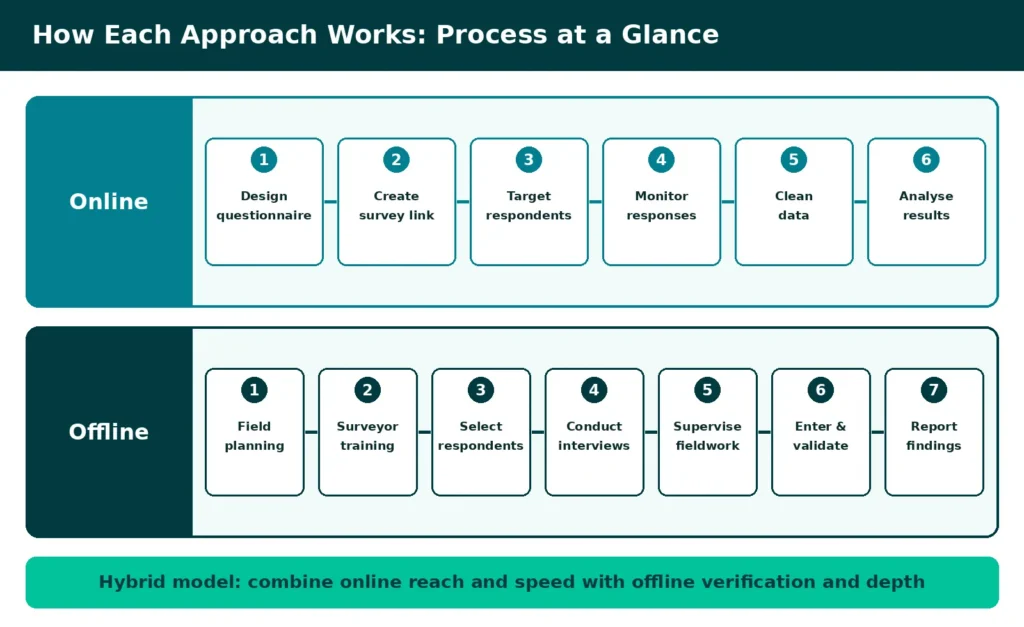
Figure 2. Typical process steps for online and offline data collection.
Data Quality Considerations
Survey quality depends on four key areas: coverage, non-response, measurement and processing. Online surveys may exclude people with limited connectivity and can face rushed responses or duplicate entries. Offline surveys depend on good sampling frames and interviewer quality, but may face interviewer bias and data-entry errors. Online studies use quotas, attention checks and duplicate detection, while offline studies use interviewer training, pilots, back-checks and field audits.
Online and Offline Survey Data Entry Services
Survey data entry services convert paper, scanned or online responses into clean, analysis-ready datasets. The process typically includes:
- Entry templates aligned with the questionnaire.
- Double data entry and mismatch reconciliation.
- Validation of ranges, skips and consistency.
- Coding of open-ended responses and missing values.
- Delivery of labelled Excel, SPSS or Stata files with correction logs.
Online vs Offline Data Collection at a Glance
The table below summarises how the two approaches compare across the criteria that usually decide the choice.
| Criterion | Online Data Collection | Offline Data Collection |
| Speed | Fast; responses can arrive within hours or days | Slower; depends on field planning, travel and team size |
| Cost per response | Low, particularly at scale | Higher; involves surveyors, travel and supervision |
| Geographic reach | Wide, wherever respondents are connected | Limited by field access, but strong where connectivity is poor |
| Suitable audiences | Urban, digitally active respondents | Rural, semi-urban, household and community respondents |
| Depth of responses | Limited probing; shorter questionnaires work best | Interviewer can clarify, probe and observe |
| Data validation | Automated checks, but identity is hard to confirm | Physical verification, GPS, photos, supervisor checks and back-checks |
| Language support | Depends on translated versions of the form | Interviewers can work in local languages |
| Data entry effort | Automatic capture into spreadsheets or dashboards | Minimal with digital tools; substantial with paper forms |
| Main risks | Duplicates, inattentive responses, coverage gaps | Interviewer effects, higher cost, longer timelines |
| Best suited for | Feedback, quick polls and large simple surveys | Field research, verification, sensitive and in-depth studies |
Common Mistakes to Avoid
1. Selecting the method on cost alone, when an inexpensive online survey may not reach the right audience and a poorly planned field survey can become expensive.
2. Using the same questionnaire in both modes. Online questions should be short and self-explanatory, while offline interviews can support follow-up questions.
3. Working without a clear sampling plan or sampling frame.
4. Writing leading questions or skipping pilot testing.
5. Omitting validation and respondent verification from the plan.
Selecting the Right Method
The decision should begin with the research objective and work outward through the practical constraints:
1. Respondent profile and connectivity: can the target group realistically be reached and heard through a web link?
2. Geography and sample size: how widely dispersed is the population, and how many responses are needed?
3. Timeline and budget: how quickly are results needed, and what can the project afford?
4. Language and literacy: does the study need interviews in local languages or assisted completion?
5. Sensitivity and verification: does the topic call for privacy, trust, physical confirmation or location proof?
If speed and reach among digitally active respondents matter most, online collection is usually the stronger fit. If verified, location-based or in-depth responses are required, offline collection is more appropriate. For most Indian studies that must serve both needs, a hybrid design offers the best balance.
Future Trends in Data Collection
Several developments are shaping how the two approaches evolve. Mobile-first and offline-capable survey apps continue to narrow the gap between field and digital work. AI-assisted cleaning and anomaly detection help identify suspicious responses earlier. GPS-based field monitoring and real-time dashboards give supervisors immediate visibility of progress and quality. Human fieldwork will nevertheless remain essential for rural research, healthcare studies, retail audits and community-level surveys.
Conclusion
Online vs Offline Data Collection is not a question of which method is universally better. The right choice depends on the purpose of the study, the audience, the geography, the timeline and the level of data quality required. Online methods are faster and less expensive, while offline methods provide interaction and field validation. For research in India, the most reliable approach is usually the one that matches the way the target respondents can actually be reached, and it frequently combines both.
Book a free consultation for appointment
Email us at : grow@simbi.in
FAQs
What is the main difference between online and offline data collection?
Online collection delivers questionnaires through internet-based tools and records responses automatically, while offline collection gathers responses in person or by telephone through trained interviewers, paper forms or offline-capable apps.
When should a project use offline digital survey collection?
It suits fieldwork in areas with unreliable connectivity, where interviewers need built-in validation, GPS and timestamps and where data should reach analysts without manual keying.
Can online and offline data collection be combined in one study?
Yes. Hybrid designs are common, for example online collection for reachable respondents with field follow-up for those who cannot be reached online, provided questions are adapted for each mode.
What do online and offline survey data entry services include?
They cover template design, double data entry, validation checks, coding of open-ended answers, cleaning of online exports and delivery of analysis-ready files in formats such as Excel, SPSS or Stata.
Which approach works better for rural respondents in India?
Offline collection is generally more dependable, because rural internet access is considerably lower than urban access and face-to-face contact supports local languages and trust.