Data Collection Techniques: Methods, Types and Examples
Data is essential for research, business planning, customer analysis, product development, and decision-making. However, the value of data depends on how accurately and systematically it is collected. Poor sampling, incomplete responses, or unsuitable methods can lead to unreliable results.
Choosing the right data collection methods and techniques helps ensure that information is relevant, reliable, and suitable for its intended purpose.
Understanding Data Collection Techniques
Data collection techniques are systematic approaches used to gather information for research, analysis, or decision-making. The right technique depends on what the researcher needs to understand.
For example, surveys can collect responses from a large number of people, while interviews can provide deeper insights into individual experiences. Transaction records and digital systems can also provide information about actual behaviour.
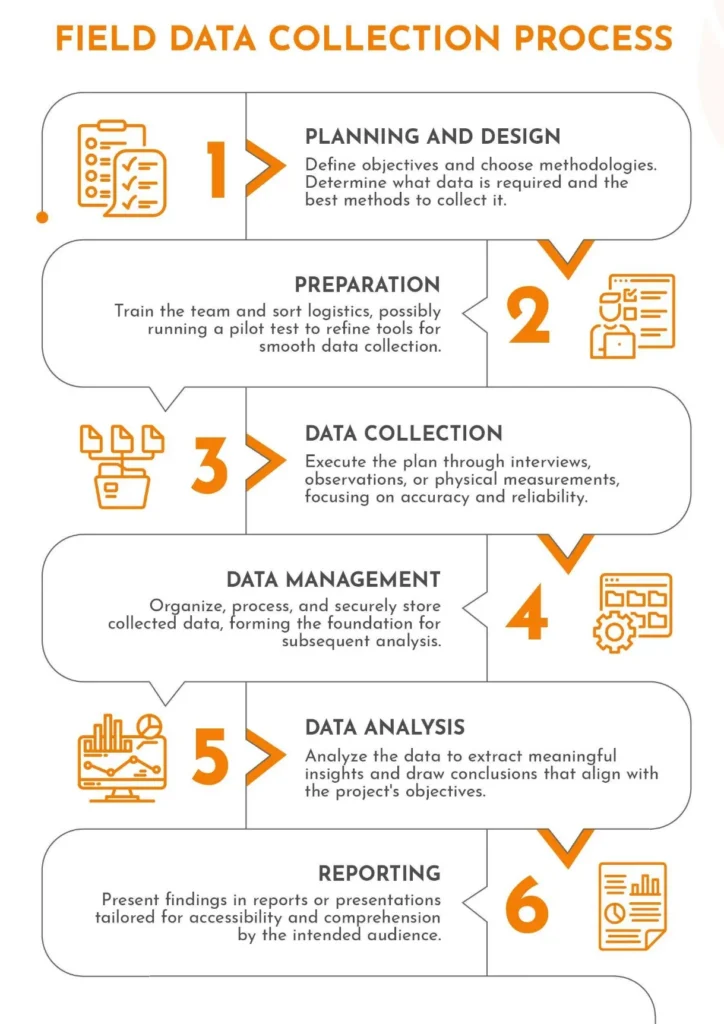
An effective data collection process begins with a clear objective, followed by selecting the appropriate data source, method, participants, and quality checks.
Major Types of Data
Understanding the type of data required helps determine the most suitable data collection methods.
| Data Type | Meaning | Common Examples |
| Primary Data | Collected directly for a specific purpose | Surveys, interviews, observations |
| Secondary Data | Existing information collected by another source | Reports, government data, research papers |
| Qualitative Data | Describes opinions, experiences, and behaviours | Interviews, focus groups |
| Quantitative Data | Numerical and measurable information | Surveys, transactions, sensor data |
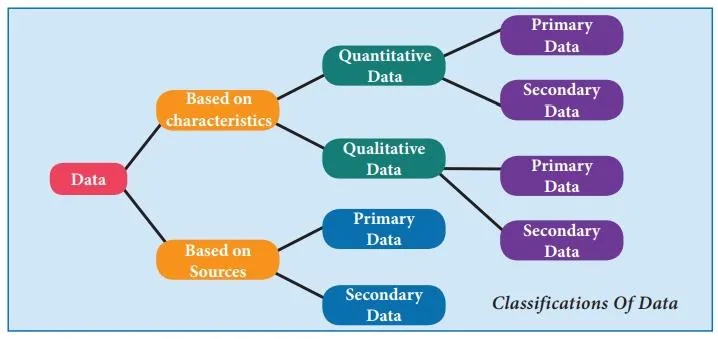
- Primary data is collected directly for a specific purpose through surveys, interviews, observations, experiments, or measurements.
- Secondary data already exists and was collected by another source. Government statistics, research papers, industry reports, and organizational records are common examples. Its relevance, accuracy, and date should be checked before use.
- Qualitative data focuses on opinions, experiences, motivations, and behaviours. Interviews, focus groups, and observations are commonly used.
- Quantitative data is numerical and can be measured or statistically analyzed. Surveys, transaction records, experiments, and sensors can generate quantitative data.
Key Data Collection Methods and Techniques
Different data collection techniques serve different research needs. The following methods are among the most widely used.
| Method | Best Used For | Key Advantage |
| Surveys | Large-scale responses | Fast and measurable |
| Interviews | Detailed opinions | Deeper insights |
| Focus Groups | Exploring different views | Group interaction |
| Observation | Understanding behaviour | Captures actual actions |
| Document Analysis | Existing information | Saves collection time |
| Digital Collection | Online behaviour | Scalable and automated |
| Sensors | Continuous measurements | Real-time data |
1. Surveys and Questionnaires
Surveys collect standardized information from a defined group. They are useful for gathering large volumes of responses efficiently.
However, unclear questions, poor sampling, and low response rates can affect the reliability of results.
2. Interviews
Interviews provide detailed information about people’s experiences, opinions, and motivations. They can be structured, semi-structured, or unstructured.
They are particularly useful when researchers need explanations that surveys may not capture.
3. Focus Groups
Focus groups involve a small group discussing a specific topic, product, service, or idea under the guidance of a moderator.
They can reveal different perspectives and generate new ideas, although group dynamics may influence individual responses.
4. Observation
Observation involves systematically recording behaviours, activities, or events.
It can help researchers understand what people actually do rather than relying only on what they report. Observation may be participant-based or non-participant.
5. Document and Record Analysis
Existing documents, reports, databases, government records, and organizational records can provide valuable information.
This approach is useful for understanding historical patterns and existing conditions. Researchers should check the source, date, completeness, and original purpose of the records.
6. Digital and Online Data Collection
Web surveys, website activity, application usage, transaction records, and other digital sources allow organizations to collect information at scale.
These methods can provide useful behavioural insights, but privacy, consent, security, and data governance should also be considered.
7. Sensors and Automated Data Collection
Sensors and connected devices can collect information continuously with limited manual effort. Examples include industrial sensors, fitness devices, and environmental monitoring systems.
Their reliability depends on sensor accuracy, calibration, maintenance, and technical infrastructure.
Read Also : Field Survey Data Collection Services: A Complete Guide for Businesses and Researchers
Selecting the Right Data Collection Method
There is no single best method for every research project. The choice depends on the objective, target population, available resources, required accuracy, and type of information needed.
Surveys work well for large-scale standardized data, while interviews and focus groups are useful for exploring experiences and motivations. Observation can provide behavioural insights, while digital records can show actual activity.
Sampling is equally important. Even a well-designed questionnaire may produce misleading results if the selected sample does not represent the target population. Pilot testing can also identify unclear questions and practical problems before full-scale collection.
Read Also : Data Collection Service Pricing in India: A Practical 2026 Guide
Combining Data Collection Techniques
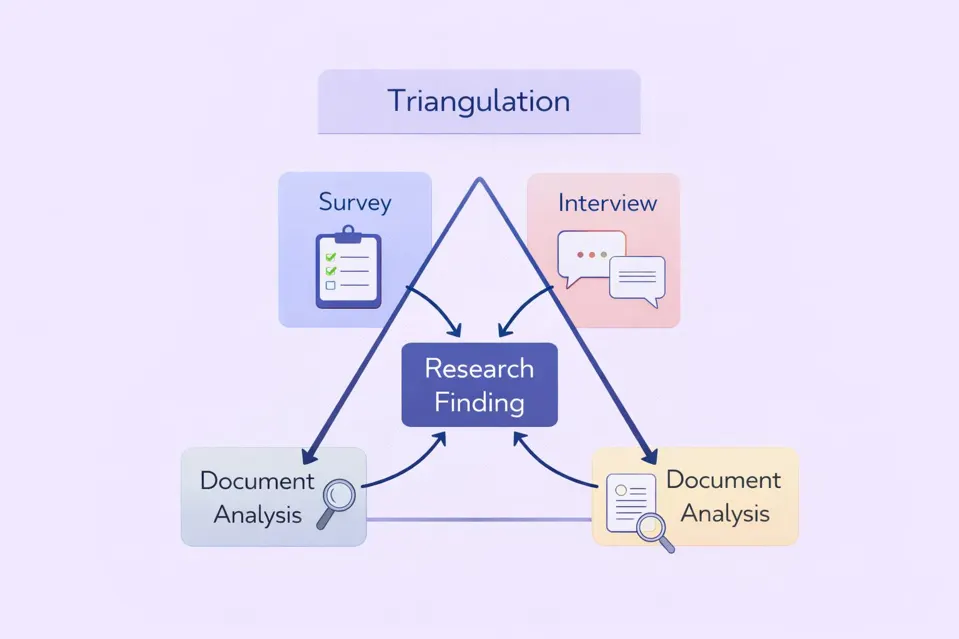
Using more than one technique can provide a more complete view of a research problem. This approach is often called mixed-methods research or triangulation.
For instance, a survey may identify common customer complaints, interviews can explore the reasons behind them, and customer records can help compare those findings with actual behaviour.
Combining methods can therefore provide both breadth and depth while helping researchers cross-check important findings.
An Example of Effective Data Collection
Suppose a college wants to understand student satisfaction with its online learning system. First, the researchers define the objective: to identify students’ satisfaction levels and major problems. They then collect primary data through an online survey of 500 students, asking questions about ease of use, course quality, technical issues, and overall satisfaction. To understand the reasons behind the responses, they conduct interviews with 20 students. They also use secondary data, such as technical-support records and system usage reports.
The collected data is then checked for missing responses, duplicate entries, and errors before analysis. This example shows how surveys, interviews, and existing records can be combined to obtain reliable and meaningful insights.
Data Quality and Common Challenges
Effective data collection is not simply about gathering large amounts of information. Data can be affected by incomplete responses, sampling errors, duplicate records, inaccurate entries, poorly designed questions, and response bias.
Digital data collection also creates concerns around privacy, security, consent, and responsible data use.
Quality checks should therefore be included throughout the collection process. Reviewing data for missing information, inconsistencies, duplication, and unusual entries can improve reliability before analysis.
Ready to make better use of your data? Connect with Simbi Labs today.
Book a free consultation for appointment
Email us at : grow@simbi.in
Frequently Asked Questions
1. What are data collection techniques?
Data collection techniques are systematic ways of gathering information for research, analysis, or decision-making. Common techniques include surveys, interviews, observation, focus groups, and digital data collection.
2. What are the main data collection methods?
The main methods include surveys, interviews, focus groups, observation, document analysis, digital data collection, and sensor-based collection.
3. What is the difference between primary and secondary data?
Primary data is collected directly for a specific purpose, while secondary data already exists and was originally collected by another source.
4. Which data collection method is best?
The best method depends on the research objective. Surveys work well for large-scale standardized data, while interviews and observations are useful when deeper insights are required.
5. Why is sampling important?
Sampling determines who or what is included in a study. An unrepresentative sample can produce biased findings, even when the collection technique itself is well designed.
6. Can different data collection techniques be combined?
Yes. Combining techniques such as surveys, interviews, and record analysis can provide broader and more reliable insights.
7. Turn Data into Better Insights with Simbi Labs
Effective data collection helps businesses make smarter, evidence-based decisions. Simbi Labs can help you use data more effectively through practical technology solutions tailored to your needs.