
How On-Site Healthcare Data Collection Works in Practice
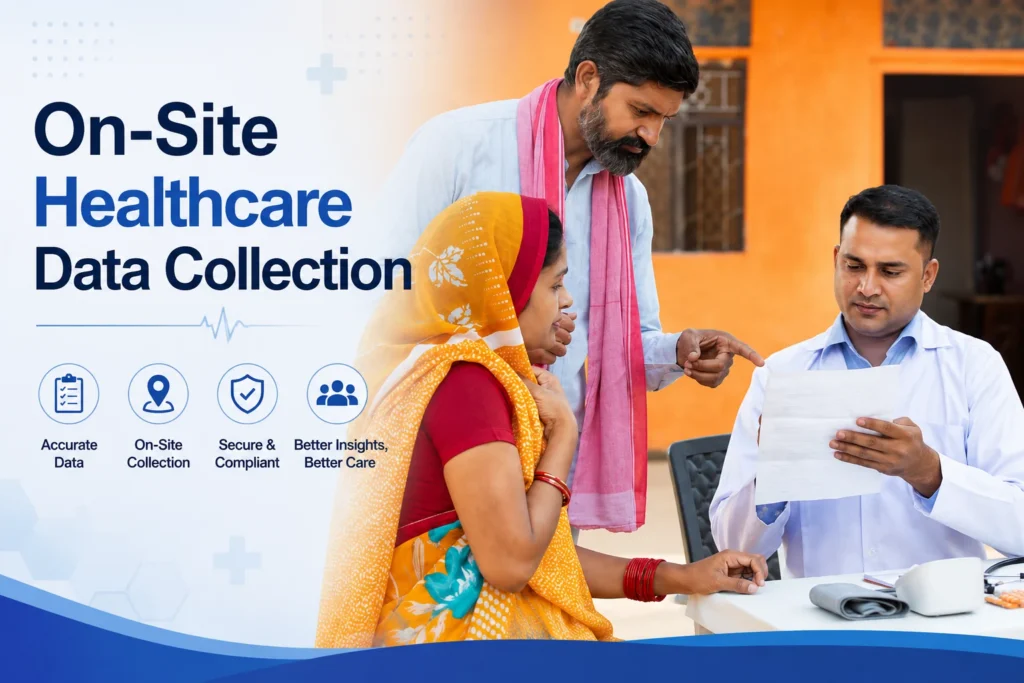
Introduction
In today’s digital-first healthcare environment, on-site healthcare data collection has become an essential part of improving patient outcomes, operational efficiency, and clinical decision-making. From hospitals and diagnostic labs to community clinics and research centers, healthcare organizations rely on accurate and timely data to provide better care and maintain compliance with strict healthcare regulations.
The process of on-site healthcare data collection involves gathering patient and operational information directly at healthcare facilities using advanced digital tools, trained personnel, and standardized workflows. Unlike remote or retrospective data gathering, this method captures real-time information where care is delivered, ensuring higher healthcare data accuracy and reliability.Understanding how on-site healthcare data collection works in practice helps organizations optimize workflows, reduce errors, and create stronger patient-centered systems.
What Is On-Site Healthcare Data Collection?
On-site healthcare data collection refers to the structured process of recording patient health information, treatment details, clinical observations, and administrative records directly within a healthcare facility.
This data typically includes:
- Patient demographics and medical history
- Vital signs and examination findings
- Diagnostic test results
- Medication administration records
- Treatment progress notes
- Operational and staffing metrics
The goal of on-site healthcare data collection is to create a reliable digital record that supports treatment decisions, regulatory reporting, and long-term healthcare planning.
Healthcare institutions depend on this medical data collection process to maintain seamless coordination between departments while improving patient safety and service quality.
Step 1: Patient Registration and Initial Data Entry
The first stage of on-site healthcare data collection begins when a patient enters the healthcare facility.
Front-desk personnel or digital kiosks collect foundational information such as:
- Personal identification details
- Insurance information
- Existing health conditions
- Emergency contact information
- Consent forms
Modern clinical data collection systems often integrate directly with Electronic Health Records (EHRs), allowing patient information to sync instantly across departments. This minimizes duplication and strengthens healthcare data management, ensuring every care provider accesses the same accurate record.
Step 2: Clinical Assessment and Real-Time Recording
Once registration is complete, clinicians begin documenting medical assessments.
Healthcare professionals collect:
- Blood pressure, pulse, temperature, oxygen saturation
- Symptoms and complaints
- Physician observations
- Diagnostic notes
- Preliminary treatment recommendations
Using tablets, mobile workstations, and integrated software platforms, clinicians can complete on-site healthcare data collection in real time.
Real-time documentation improves healthcare data accuracy because information is captured immediately rather than entered later from memory or handwritten notes.This practical workflow reduces omissions and supports faster clinical decisions.
Step 3: Diagnostic Testing and Automated Data Integration
Many healthcare facilities use connected diagnostic equipment to streamline on-site healthcare data collection.
Examples include:
- Laboratory analyzers
- Imaging systems
- ECG and monitoring devices
- Blood glucose monitoring tools
These devices automatically transmit results into clinical data collection systems, eliminating manual transcription errors.
Automation strengthens the medical data collection process by ensuring consistency and allowing providers to review results quickly.Integrated diagnostics also support predictive analytics, helping clinicians detect risks earlier and improve care planning.
Step 4: Data Validation and Quality Assurance
A critical part of on-site healthcare data collection is validating information for completeness and accuracy.
Healthcare organizations typically implement:
- Automated system alerts for missing fields
- Duplicate record detection
- Staff verification protocols
- Periodic data audits
Maintaining strong healthcare data management standards protects patient safety and ensures compliance with healthcare regulations.
Without validation, even minor inaccuracies can affect diagnoses, treatments, insurance claims, and reporting requirements.This is why healthcare data accuracy remains a core objective throughout every stage of collection.
Step 5: Secure Storage and Accessibility
After validation, collected information is securely stored within encrypted healthcare databases.
Authorized personnel can access records instantly for:
- Treatment planning
- Specialist referrals
- Prescription updates
- Follow-up scheduling
- Performance reporting
Secure storage is fundamental to on-site healthcare data collection because healthcare records contain highly sensitive information.Advanced clinical data collection systems use role-based access controls, audit logs, and compliance safeguards to protect privacy while maintaining operational efficiency.
Benefits of Effective On-Site Healthcare Data Collection
When implemented properly, on-site healthcare data collection offers significant benefits:
Improved Patient Outcomes
Timely and accurate information enables better clinical decisions.
Reduced Administrative Errors
Automation eliminates redundant manual entry.
Better Workflow Efficiency
Departments access synchronized records instantly.
Enhanced Regulatory Compliance
Accurate reporting supports legal and accreditation standards.
Actionable Insights
Strong healthcare data management enables trend analysis and performance improvement. These advantages make on-site healthcare data collection a foundational practice for modern healthcare delivery.
Challenges Healthcare Facilities Face
Despite its benefits, implementing on-site healthcare data collection can present challenges:
- Staff resistance to new systems
- Integration issues with legacy software
- Training requirements
- Data privacy concerns
- Infrastructure costs
Successful adoption requires investment in staff education, intuitive technology, and continuous process improvement. Organizations that prioritize these areas create stronger, more reliable medical data collection processes over time.
The Future of On-Site Healthcare Data Collection
Emerging technologies are transforming on-site healthcare data collection even further.
Artificial intelligence, IoT-enabled monitoring devices, voice-assisted documentation, and predictive analytics are making data capture faster and smarter.As healthcare evolves, organizations with advanced clinical data collection systems will gain stronger insights, better patient outcomes, and greater operational resilience.
Conclusion
On-site healthcare data collection is far more than a documentation task—it is the backbone of effective healthcare delivery.
By combining digital tools, standardized workflows, automated integration, and strict validation practices, healthcare organizations can ensure superior healthcare data accuracy and stronger patient care outcomes. As technology advances, mastering on-site healthcare data collection will remain essential for organizations seeking efficiency, compliance, and long-term healthcare excellence.
Book a free consultation for appointment
Email us at : grow@simbi.in