
Cost of Hiring Clinical Research Coordinators in India: A Complete Guide for Sponsors and CROs

Successfully conducting clinical trials is more than just science. The execution of a well-performing study is supported by a skilled operational team, which ensures the coordination of participants, compliance with regulatory needs, documentation management and communication among all stakeholders. Of these, Clinical Research Coordinators (CRCs) are a central part of making sure that clinical trials are conducted on time, are on protocol, and have high data quality and participant safety.
As India continues to strengthen its position as a preferred destination for global clinical research, sponsors, biotechnology companies, and Contract Research Organisations (CROs) are increasingly evaluating the Cost of Hiring Clinical Research Coordinators in India. But there are a number of factors beyond salary that must be considered when assessing staffing costs. The overall investment is dependent on a number of operational parameters, such as study complexity, therapeutic experience, staffing models, project time frame, technology needs, regulatory support during the entire clinical trial.
Organizations should consider the value that operational value provided CRCs bring to study execution rather than the lowest staffing cost. Hiring the right clinical research professionals can lead to increased protocol compliance, fewer delays in operations, increased participant retention and overall study efficiency.
READ THIS ALSO: Hire Dedicated Clinical Research Coordinators
Why CRC Staffing Should Be Considered an Operational Investment
While many people consider clinical trial staffing to be a direct cost of clinical trial operations, the smart sponsors understand that it is a significant investment in the quality and execution of clinical trials. From recruitment and consenting patients to regulatory compliance documents, monitoring assistance, and study end, Clinical Research Coordinators are involved in almost all aspects of the clinical study process.
There are several tangible benefits that can be seen in organisations that invest in qualified CRC professionals: study start-up time is reduced; protocol deviations are reduced; the quality of documentation improves; and collaboration between Investigators, Sponsors and Clinical Research Associates (CRAs) is improved. These operational enhancements often cancel out the up-front staffing costs because they often save on expensive delays and reduce compliance risks.
The value of CRC staffing extends beyond routine coordination by contributing to:
- Improved participant recruitment and retention
- Timely completion of protocol-defined study activities
- Inspection-ready regulatory documentation
- Faster resolution of data queries
- Enhanced communication between stakeholders
- Better adherence to study timelines
- Reduced operational disruptions
Instead of evaluating CRC costs as isolated expenditures, organizations should consider their impact on the overall success of the clinical trial.
What Determines the Cost of Hiring Clinical Research Coordinators in India?
The Cost of Hiring Clinical Research Coordinators in India varies significantly depending on the operational requirements of the clinical study. Research areas that are more complex, involve multiple research sites, decentralized trial models, and/or advanced digital technologies tend to call for coordinators with specific expertise, which leads to a higher overall staffing investment.
Likewise, research designed to evaluate longer-term effects or larger sample sizes will depend on continued provision of services, which will impact staffing and funding decisions. Staffing costs are also influenced by geographic distribution, regulatory conditions and sponsor expectations.
While there is no simple formula to use for determining the price, the sponsors should consider the unique operating needs of each study.
Figure 2: Key Cost Drivers for Clinical Research Coordinator Staffing
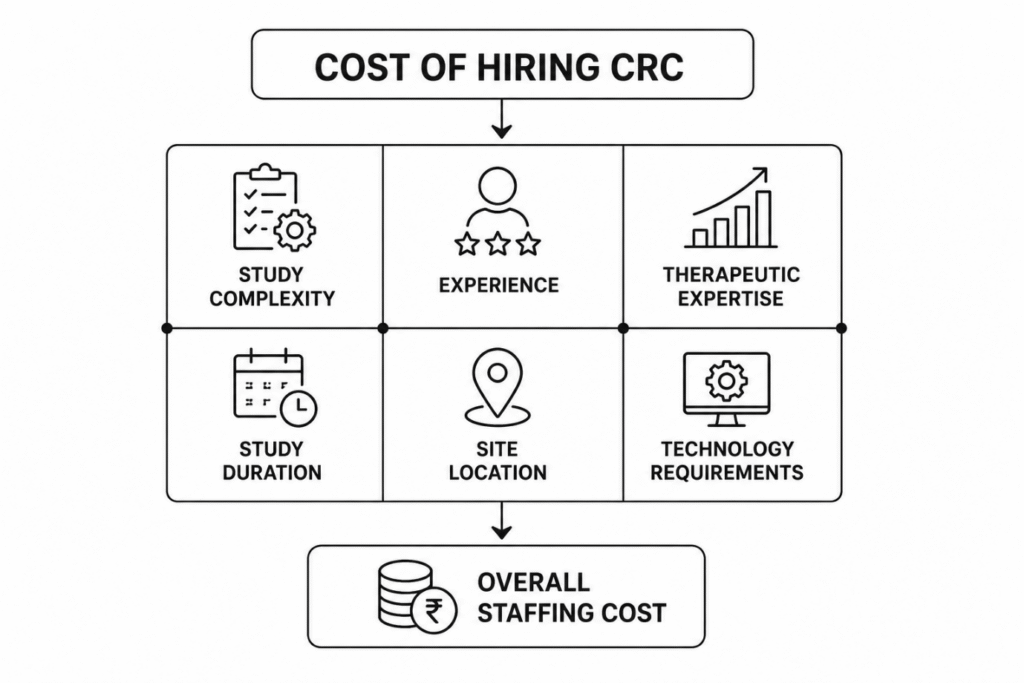
Table 1. Factors Influencing the Cost of Hiring Clinical Research Coordinators in India
| Cost Driver | Influence on Overall Budget |
| Study Phase | High |
| Therapeutic Area Complexity | High |
| Number of Research Sites | High |
| CRC Experience Level | Moderate to High |
| Study Duration | High |
| Participant Enrollment Target | Moderate |
| Technology Platforms (EDC, CTMS, eTMF) | Moderate |
| Regulatory Documentation Requirements | Moderate |
| Staffing Model (Dedicated, Contract, Outsourced) | High |
Each of these variables contributes to the overall staffing investment. Sponsors should therefore evaluate total operational requirements rather than relying solely on salary benchmarks when planning clinical trial budgets.
Hidden Staffing Costs That Organizations Often Overlook
Organizations often only consider direct recruitment costs when planning clinical trial budgets, missing out on indirect operational costs that can have a big impact on the performance of a study. Often, however, these delays due to the lack of staffing, insufficient protocol training, or high staff turnover have a greater impact on finances than the initial investment in hiring.
Hidden operational costs may include:
- Extended onboarding and protocol training
- Delayed participant recruitment
- Increased protocol deviations
- Additional monitoring visits
- Documentation corrections and rework
- Reduced workforce productivity during transition periods
- Knowledge loss due to staff turnover
Organisations that proactively invest in experienced CRC professionals often reduce these hidden operational costs while improving study efficiency and regulatory compliance.
Comparing CRC Staffing Models from a Cost Perspective
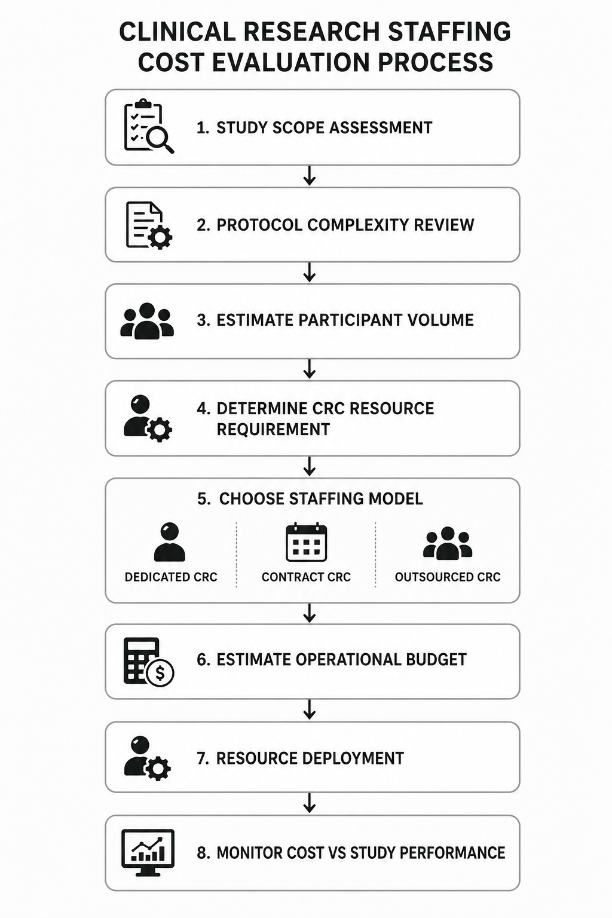
Selecting the most appropriate staffing model is one of the most important decisions influencing the Cost of Hiring Clinical Research Coordinators in India. Most organisations opt for one of the dedicated, contract or outsourced CRC models depending on the length of the studies, operational complexity and the availability of resources. There are different financial and operational benefits to each model, and it is important to consider the overall value that each offers and not just the up-front staffing expense.
Long duration research programs require continuity with deep study involvement, which is provided by dedicated CRCs. Contract CRCs can be flexible and fast to deploy for short-term project or peak operations, and outsourced CRC services can provide standardized processes and central management to support multi-center and global studies, with operational support scalable based on the size of the study.
The goal is not to choose the lowest cost, but to choose the staffing option that best enables the study to be conducted at an efficient cost, with good quality and meets regulatory requirements.
Figure 3: Clinical Research Staffing Cost Evaluation Process
Optimizing Clinical Trial Budgets Without Compromising Study Quality
Saving money on staffing should not be at the cost of operational excellence. Sponsors who only consider reducing recruitment costs may find that they have a greater number of protocol deviations, delayed enrolment, extra monitoring activities, and need to correct documentation multiple times over the course of the study, which can lead to a greater long-term cost. Rather, successful organisations make the best use of their resources by optimising budgets, increasing workforce utilisation and matching staffing resources to study needs.
Effective cost optimization strategies include:
- Selecting the appropriate CRC staffing model based on study complexity
- Matching coordinator expertise with therapeutic requirements
- Using technology platforms to improve operational efficiency
- Scaling staffing resources according to recruitment milestones
- Monitoring workforce productivity through predefined KPIs
- Standardizing operational workflows across participating sites
- Investing in experienced professionals to reduce rework and compliance risks
This strategic approach enables sponsors to improve both financial performance and clinical trial outcomes while maintaining high standards of quality.
Table 2. Choosing the Right CRC Staffing Strategy for Different Study Requirements
| Clinical Research Scenario | Recommended Staffing Approach |
| Single-Site Pilot Study | Contract CRC |
| Long-Term Oncology Program | Dedicated CRC |
| Multi-Center Clinical Trial | Outsourced CRC Services |
| Decentralized Clinical Trial | Hybrid Staffing Model |
| Short-Duration Feasibility Study | Contract CRC |
| Global Phase III Study | Outsourced CRC Services |
| Enterprise Clinical Research Program | Dedicated Internal CRC Team |
Rather than applying a single staffing model to every project, organisations should align resource planning with study objectives, operational complexity, and anticipated workload.
Maximising Return on Clinical Trial Staffing Investment
The Clinical Research Coordinator is more than an operational player. Experienced CRC professionals help to accelerate the activation of studies, better participant retention, better documentation, and better collaboration between sponsors, investigators, and Clinical Research Associates (CRAs). Such enhancements help lower risk during operations, and ensure timely study completion and regulatory readiness.
Clinical research is moving toward decentralization, digital technologies and global collaborations; and staffing decisions will be made based on productivity, flexibility and operational scalability – not on direct staffing costs only. Establishing a long-term operational view of staffing investments will enable organisations to be able to execute clinical trials efficiently and with adherence.
About Simbi Labs India
The successful running of clinical trials starts with experienced personnel and a well-designed resource plan. Simbi Labs India offers a wide range of Clinical Research Coordinator staffing solutions for pharmaceutical companies, biotechnology firms, Contract Research Organizations (CROs), hospitals, and research institutions to meet varying study needs. From providing dedicated site coordination to contract staffing and outsourcing clinical operations, Simbi Labs India brings together experienced professionals, streamlined processes, and regulatory knowledge to ensure quality, compliance, and efficiency.
It’s important to grasp the Cost of Hiring Clinical Research Coordinators in India beyond just salary and recruitment costs. The actual costs of clinical research staffing depend on the complexity of a study, the need for operations, the level of expertise of the clinical research staff, technology utilization and the long-term goal of a project. Strategic investments in seasoned CRC professionals can lead to enhanced operational efficiency, better compliance and more successful studies, with reduced unwanted delays and quality problems. The bottom line: The best staffing option is the one that offers sustainable value over the entire clinical trial lifecycle.
Take your clinical trial to the next level by optimizing your clinical trial staffing strategy with Simbi Labs India.
Optimize Your Clinical Trial Staffing Strategy with Simbi Labs India
In search of quality and efficient operational Clinical Research Coordinators without sacrificing experience? Simbi Labs India offers sponsors, CROs, and research institutions the ability to make their clinical trial budgets more efficient while maintaining compliance with regulatory requirements, participant-centric study coordination, and a focus on delivering high-quality study execution. Talk to our experts about finding the right staffing solution for your next clinical research program.
Frequently Asked Questions
1. What influences the Cost of Hiring Clinical Research Coordinators in India?
2. Is outsourcing Clinical Research Coordinators more cost-effective?
3. How does study complexity affect CRC staffing costs?
4. Which staffing model is best for long-term clinical research programs?
5. How can sponsors optimize Clinical Research Coordinator staffing budgets?
6. Why should staffing costs be evaluated beyond salary?
Book a free consultation for appointment
Email us at : grow@simbi.in