
Meta-Analysis for Research Papers: When and Why to Use It for Stronger Evidence-Based Results
Understand the concept of meta-analysis for research papers, when and why to use it for accurate and evidence based research outcome in India.
Introduction
Researchers need to grasp the concept of meta-analysis for research papers and when and why to use it to generate high quality evidence-based research. A country like India, where academic research and data-driven decision making is increasingly gaining momentum, meta-analysis takes place to merge the findings from various studies for better accuracy and reliability. This guide provides an overview of the meaning, uses and advantages of meta-analysis to make analytical options considered by students, researchers and businesses.
What is Meta-Analysis?
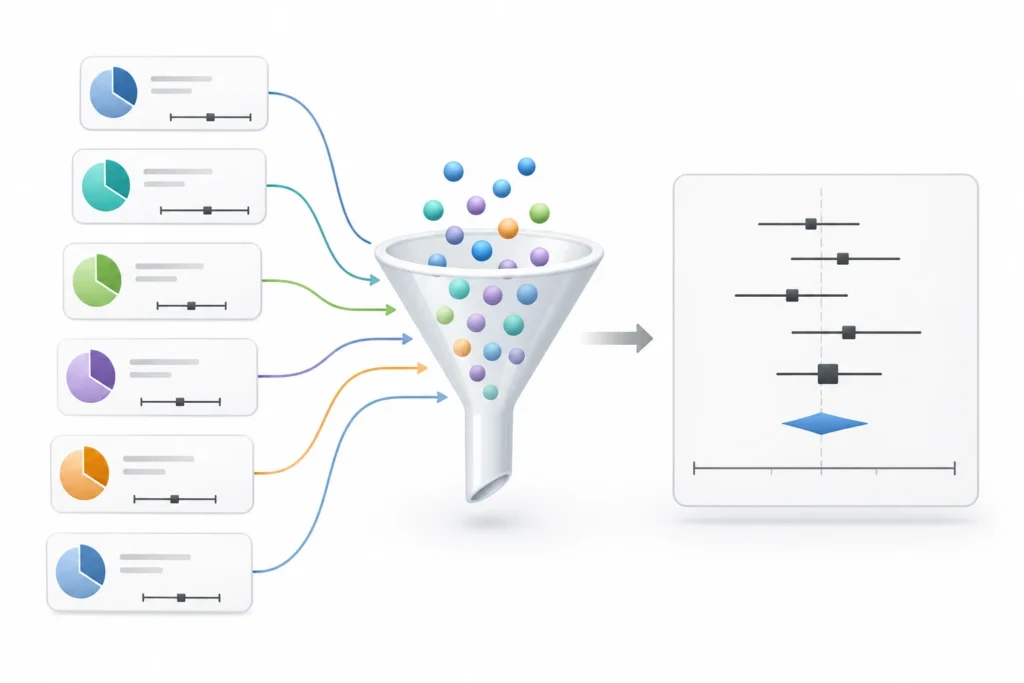
Meta-analysis is a statistical method used to pool the findings of several independent studies in a systematic way with the intent of summarizing the research findings. It offers quantitative synthesis of findings, as well as the overall trends.
Researchers use meta-analysis in research papers when and why: calculating effect sizes, understanding the variability and enhancing the statistical power of their conclusions.
Importance of Meta-Analysis in India
Meta-analysis is increasingly important in India due to rising research standards and the need for reliable insights. Its significance includes:
- Supporting systematic reviews in academic and clinical research
- Enhancing credibility of research publications
- Assisting policymakers with evidence-based conclusions
- Strengthening market research and business analytics
With the growth of interdisciplinary studies, meta-analysis is becoming a key research methodology.
Meta-Analysis for Research Papers: When and Why to Use It
When to Use Meta-Analysis
- When multiple studies exist on the same topic
- When results from studies are inconsistent or conflicting
- When a larger combined sample size is required
- When conducting systematic literature reviews
Why to Use Meta-Analysis
- Improves statistical accuracy and precision
- Increases reliability of findings
- Reduces bias across studies
- Identifies patterns and relationships
Understanding meta-analysis for research papers: when and why to use it ensures robust and meaningful research outcomes.
How Meta-Analysis Services Work
Professional data analysis companies follow a structured process:
Study Selection
Using inclusion/exclusion criteria to select papers.
Data Extraction
Gathering important data including sample size, results, and effect sizes.
Statistical Analysis
Advanced tools such as R, Python and IBM SPSS Statistics.
Interpretation and Reporting
Using visualisations such as forest plots and detailed explanations to present results.
Key Features of Meta-Analysis Services
- Comprehensive literature review
- Advanced statistical modeling
- Accurate data synthesis
- Clear and structured reporting
- Confidential and plagiarism-free services
Benefits of Meta-Analysis in Research
- Combines multiple studies for stronger conclusions
- Enhances validity and reliability
- Supports evidence-based decision-making
- Identifies research gaps and trends
- Improves publication success rates
Industry Use Cases
Healthcare
In clinical trials, meta-analysis is often employed to assess the effectiveness of treatments.
Market Research
Combines information from different surveys to gain insight into consumer behavior.
Education
Analyses effectiveness of teaching methods and policies.
Finance
Combines datasets to assess market trends and investment risks.
Tools and Technologies Used
Meta-analysis requires advanced analytical tools such as:
- R
- Python
- IBM SPSS Statistics
- Microsoft Excel
These tools enable efficient data aggregation, statistical computation, and visualization.
Common Mistakes to Avoid
When applying meta-analysis for research papers: when and why to use it, avoid these common errors:
- Including low-quality or biased studies
- Ignoring heterogeneity across datasets
- Misinterpreting effect sizes
- Inadequate literature search
- Overlooking publication bias
Avoiding these mistakes ensures accurate and credible research outcomes.
How to Choose the Right Service Provider
Selecting the right data analysis partner is critical for successful meta-analysis:
- Expertise in systematic reviews and meta-analysis
- Strong statistical and research methodology knowledge
- Experience across academic and industry domains
- Use of advanced analytical tools
- Assurance of confidentiality and plagiarism-free work
A reliable provider ensures high-quality and publication-ready research.
Future Trends in Meta-Analysis
Meta-analysis is evolving rapidly with technological advancements:
- AI-powered literature review automation
- Machine learning integration for data synthesis
- Advanced visualization tools
- Cloud-based research platforms
These trends are making meta-analysis faster, more accurate, and scalable in India.
Conclusion
Knowing when and why to employ meta analysis for research papers is vital to creating dependable and effective research papers. Meta-analysis is used to tie multiple studies together, and can help to improve the accuracy, reduce the bias, and bolster conclusions. In the era of increasing standards of research in India, the use of “Meta-analysis” or “Collaborate with experts” can help you to produce high quality and successful research.
Call to Action
Wanting an experienced assist with meta-analysis or data analysis for research? We have a professional team that provides you with in-depth services such as Data Collection, Advanced Statistical Analysis, AI solutions, Plagiarism Removal, and Market Research in India. Call us today to get accurate, reliable and publication-ready research.
Book a free consultation for appointment
Email us at : grow@simbi.in