
Aseptic Packaging: Ensuring Freshness, Safety, and Longer Shelf Life
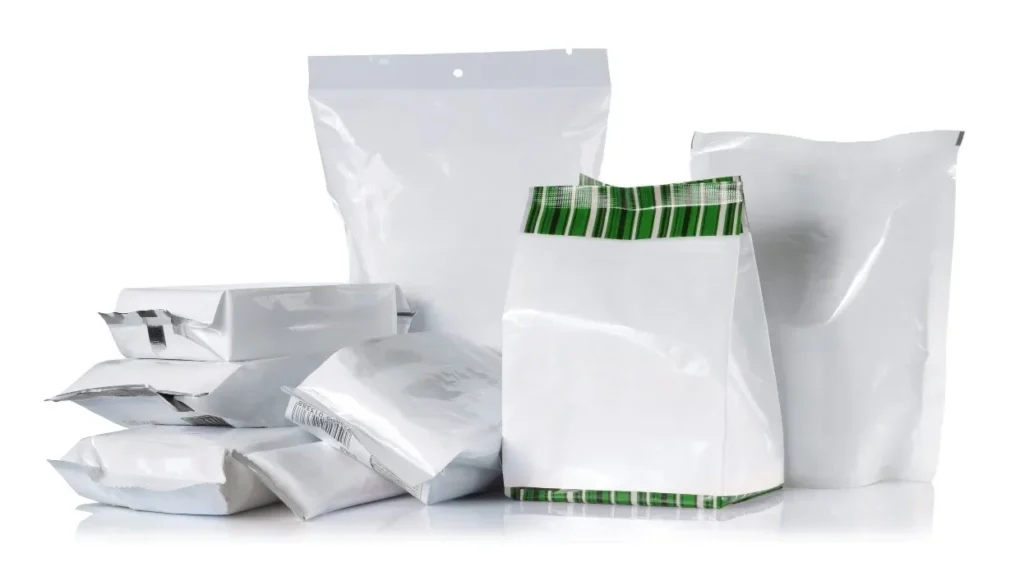
What is Aseptic Packaging?
Aseptic packaging is a specialized technique used to preserve liquid foods, pharmaceuticals, and other perishable products without refrigeration. In this process, both the product and its packaging are sterilized separately and then combined in a completely sterile environment, ensuring maximum protection from contamination. This advanced method enhances aseptic packaging freshness safety shelf life by preventing the entry of harmful microorganisms. As a result, products remain fresh, safe for consumption, and shelf-stable for extended periods, often lasting several months without the need for preservatives or cold storage.
Why Aseptic Packaging Is Important
Aseptic packaging plays a vital role in modern food and beverage industries because it combines safety with efficiency. It allows products to stay fresh and safe for six to twelve months without the need for cold storage, which makes distribution much easier. This method also helps preserve the natural taste, color, and nutrients of the product without relying on artificial additives. By cutting down the need for refrigeration, it reduces transportation and storage costs significantly. At the same time, it minimizes the use of chemical preservatives, making the final product healthier and more appealing to consumers.
Read Also : ISO Implementation Services
Core Processing Steps in Aseptic Packaging
Step 1 – Product Sterilization
i. The product is quickly heated to 135–150°C for 2–5 seconds (Ultra High Temperature or UHT treatment).
ii. This kills bacteria, spores, and enzymes that cause spoilage.
Step 2 – Packaging Sterilization
Packaging material (cartons, bottles, pouches) is sterilized separately using:
a. Superheated steam
b. Hydrogen peroxide spray or bath
c. Dry heat
Step 3 – Sterile Filling
i. Both sterilized product and packaging meet in a completely sealed filling chamber.
ii. The environment is kept sterile with HEPA‑filtered air and positive air pressure to prevent contamination.
Step 4 – Sealing
i. The package is sealed immediately after filling.
Step 5 – Storage and Distribution
i. Once sealed, the product is shelf‑stable at room temperature for months.
ii. No need for refrigerated transport unless required by regulations.
Six layers included in Aseptic packaging:
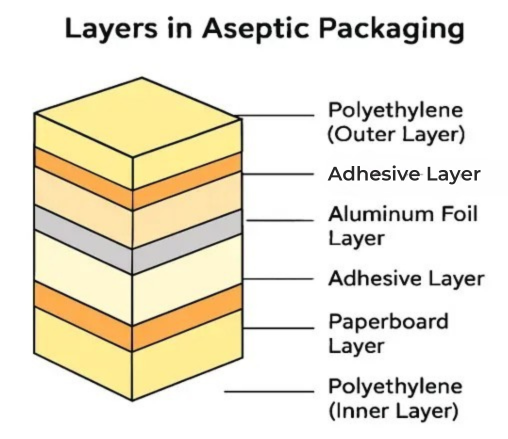
1. Polyethylene (Inner Layer)
Forms the food contact layer.
2. Adhesive Layer
Binds the inner polyethylene to the paperboard.
3. Paperboard Layer
Provides strength and rigidity.
4. Adhesive Layer (Second)
Bonds paperboard to the aluminum foil.
5. Aluminum Foil Layer
Acts as a light, oxygen, and moisture barrier.
6. Polyethylene (Outer Layer)
Provides external moisture protection and a printable surface.
How statistics are applied in aseptic packaging:
| Stage | Statistical Techniques | Purpose |
| Process Optimization | DOE, Regression, Response Surface Methodology | Identify optimal sterilization and filling conditions |
| Process Control & Quality | SPC (Control Charts), Cp/Cpk, Acceptance Sampling | Maintain consistent quality and monitor variations |
| Product Safety & Sterility | Hypothesis Testing, Chi‑Square Tests, Confidence Intervals | Validate sterility and ensure safety compliance |
| Shelf-Life & Stability | Survival Analysis, ANOVA, Time Series Modeling | Estimate shelf life and compare packaging methods |
| Market & Cost Analysis | Forecasting (ARIMA), Cluster Analysis, Cost Modeling | Predict demand, segment customers, control cost |
SWOT Analysis of Aseptic Packaging
SWOT is used to evaluate internal strengths and weaknesses as well as external opportunities and threats.
| Category | Key Points for Aseptic Packaging |
| Strengths | Long shelf life without refrigeration, no preservatives needed, high product safety and quality. |
| Weaknesses | High initial investment, need for skilled operators, complex equipment maintenance. |
| Opportunities | Rising demand for ready‑to‑drink and health‑focused beverages, growth in export markets, increasing awareness of food safety. |
| Threats | Regulatory changes, competition from cheaper packaging methods, fluctuations in packaging material costs. |
PESTEL Analysis of Aseptic Packaging
PESTEL examines external macro‑environmental factors that influence strategic decisions.
| Factor | Impact on Aseptic Packaging |
| Political | Food safety laws, trade policies, and government incentives for advanced packaging. |
| Economic | Equipment cost, global market demand, and consumer purchasing power. |
| Social | Preference for healthy, preservative‑free products; lifestyle changes increasing demand for ready‑to‑drink options. |
| Technological | Innovations in sterilization, packaging machinery, and recyclable materials. |
| Environmental | Push for eco‑friendly, sustainable packaging solutions. |
| Legal | Compliance with FDA, FSSAI, ISO 22000, and other food and pharmaceutical standards. |
Conclusion:
Aseptic packaging extends product shelf life, preserves quality, and reduces storage costs without preservatives. Using SWOT and PESTEL analyses helps businesses evaluate feasibility and market conditions, while statistical methods ensure process efficiency, sterility, and compliance. Simbi Labs India supports companies end‑to‑end — from research and process design to quality validation and market strategy — making aseptic packaging both technically sound and commercially viable.
For an in-depth understanding, please refer to our book, “Academic Research Fundamentals: Research Writing and Data Analysis”. It is available as an eBook here, or you may purchase the hardcopy here .