
Clinical Data Collection and Site Coordination Services: The Backbone of Successful Clinical Trials
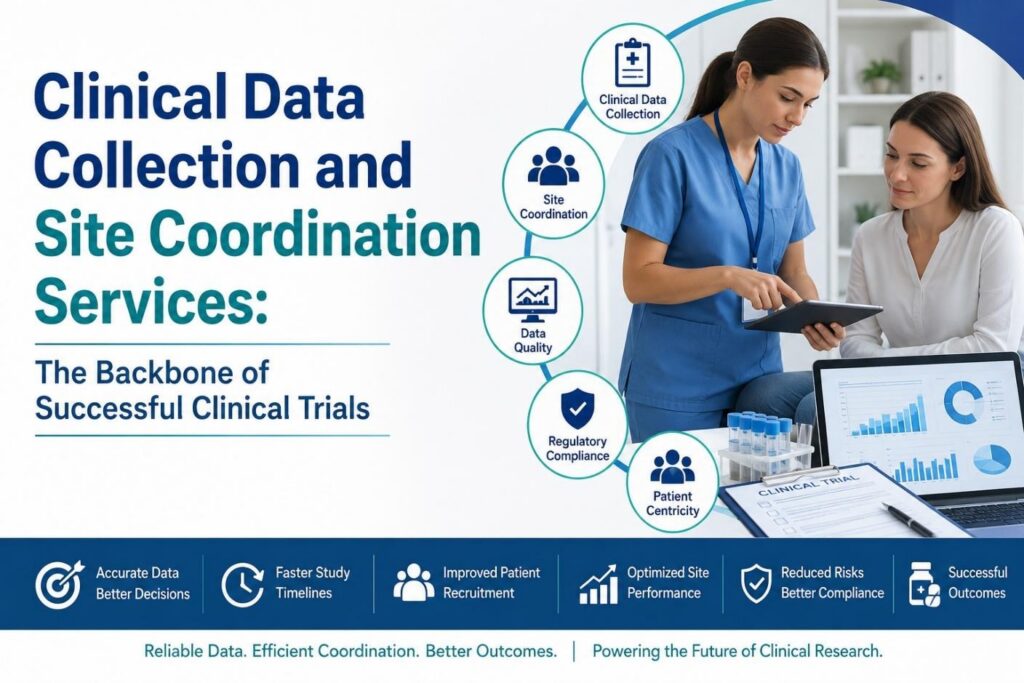
The Foundation of Successful Clinical Trials
Every successful clinical trial depends on two key factors: quality of clinical data and efficient site co-ordination. If patient data is not gathered in a uniform manner or research sites are poorly managed, even the most promising investigational drug or medical device can be hindered by delays, protocol deviations or regulatory issues.
From patient recruitment and enrollment to database lock, CDCS and Site Coordination Services ensure that each phase of a trial is conducted with precision, ensuring the integrity and regulatory adherence of data. These services support sponsors and Contract Research Organizations (CROs) in optimizing clinical operations, enhancing clinical trial support, recruiting patients, and effectively monitoring clinical trials at various research sites.
With the increasing complexity, decentralization, and technological advancement of clinical trials, strong CRO support is essential to ensure successful research conducted in timely and efficient schedules, while ensuring safe and effective therapies enter the market as quickly as possible.
The Science Behind Clinical Data Collection Services
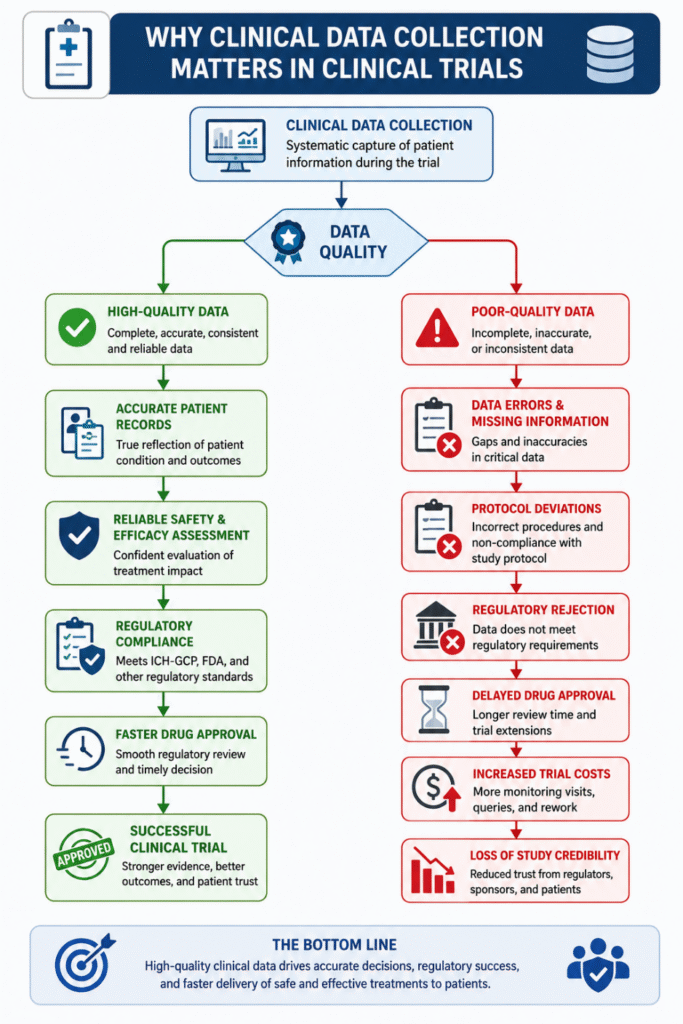
Clinical Data Collection Services consist of the systematic process of gathering, checking, storing and recording all the data collected throughout the course of a clinical trial. Such services ensure that all the data gathered during the study is accurate, complete, consistent, and reliable, which sets a solid foundation for assessing investigational drugs, medical devices, or therapies and their safety and effectiveness.
The types of information collected include patient demographics, medical history, lab test results, vital signs, imaging reports, adverse events, drug administration details, Electronic Patient-Reported Outcomes (ePRO), Electronic Health Records (EHR), and data gathered from wearables and other digital health tools. Standardized Data Collection Procedures and advanced Electronic Systems ensure Data Integrity and facilitate informed Decision Making throughout the Trial.
Understanding Site Coordination Services
Site Coordination Services encompass the various aspects of managing the daily operations at clinical trial sites to ensure that the trials are conducted in an efficient, ethical, and regulatory-compliant manner. A site coordinator facilitates communication among sponsors, CRO, principal investigator, the ethics committee, patients, and clinical monitors, ensuring smooth trial operation and the completion of study activities.
Example: In a multi-center diabetes clinical trial, a site coordinator schedules patient visits, ensures informed consent is obtained, coordinates laboratory tests, updates trial records, and communicates with the clinical monitor. This seamless coordination helps prevent protocol deviations, improves patient retention, and keeps the study on schedule.
Core Components of Clinical Data Collection Services
- Electronic Data Capture (EDC) : Electronic Data Capture (EDC) systems eliminate the use of paper Case Report Forms (CRFs) and enable investigators to input patients’ data directly into secure digital platforms, which incorporate automated validation routines to enhance accuracy and minimize manual error.
- Source Data Verification (SDV) : Clinical monitors are used to compare source documents like medical records and laboratory reports with data entered into the EDC system to ensure consistency and data integrity.
- Data Cleaning: Before database lock, experts detect missing data, inconsistencies, duplicate records and logical errors so as to ensure the quality of the data for statistical analysis.
- Query Management: If inconsistencies are identified, data management teams produce queries to research sites and keep track of the corrections made and the time limits for the corrections within the regulations.
- Data Validation :The collected information can be checked against predefined quality standards and protocol requirements through automated edit checks and manual reviews.
Major Responsibilities of Site Coordination Teams
Site coordinators oversee multiple operational activities, including:
- Scheduling participant visits
- Coordinating patient recruitment and screening
- Managing informed consent documentation
- Organizing laboratory sample collection and shipment
- Maintaining Trial Master Files (TMF)
- Preparing sites for monitoring visits and audits
- Reporting adverse events promptly
- Coordinating investigator meetings
- Ensuring protocol compliance
- Supporting regulatory documentation
The Role of CRO Support in Clinical Operations
There are many challenges associated with conducting clinical trials, including operational, regulatory, and logistical issues. CRO support can help sponsors navigate these complexities through their expertise, best practice and technology.Key areas of CRO support include:
- Clinical trial planning
- Site selection and activation
- Clinical data management
- Clinical monitoring
- Regulatory submissions
- Patient recruitment strategies
- Vendor management
- Quality assurance
- Risk management
- Database management
How Site Coordination Improves Clinical Operations
Effective site coordination strengthens clinical operations by:
- Reducing protocol deviations
- Improving communication between stakeholders
- Accelerating patient enrollment
- Ensuring timely data entry
- Supporting regulatory compliance
- Enhancing patient retention
- Facilitating faster monitoring visits
- Reducing operational delays
- Improving overall study quality
Patient Recruitment: The Biggest Challenge in Clinical Trials
One of the main challenges to clinical trials is patient recruitment. Issues that we often see are low patient awareness, strict patient eligibility, geographic patient barriers, high participant attrition rates, and poor methods for patient engagement. Addressing these challenges with patient-focused recruitment and communication can positively impact the process of enrollment, retention and the success of trials.
A series of technologies for transforming clinical data collection.A sequence of technologies for clinical data collection transformation. Digital technologies are increasingly relied upon to help improve the efficiency and quality of modern clinical trials.
Technologies Transforming Clinical Data Collection
Modern clinical trials increasingly rely on digital technologies to improve efficiency and data quality.
| Technology | Purpose |
| Electronic Data Capture (EDC) | Digital patient data entry |
| eConsent | Electronic informed consent |
| ePRO | Patient-reported outcomes |
| CTMS | Clinical Trial Management |
| Wearable Devices | Remote patient monitoring |
| AI-based Data Validation | Automated error detection |
| Remote Monitoring Platforms | Virtual monitoring visits |
| eSource | Direct electronic source documentation |
| Cloud Databases | Centralized data storage |
Challenges in Clinical Data Collection and Site Coordination
Despite technological advancements, organizations often encounter several operational challenges.
| Challenge | Impact |
| Missing patient data | Delayed analysis |
| Protocol deviations | Compliance risks |
| Poor patient retention | Recruitment delays |
| Data entry errors | Increased queries |
| Site communication gaps | Operational inefficiencies |
| Regulatory documentation issues | Audit findings |
| Technology integration problems | Workflow disruptions |
| Multi-site coordination complexity | Timeline delays |
Best Practices for High-Quality Clinical Trial Support
Organizations can improve trial performance by adopting best practices such as:
- Standardized data collection procedures ensure consistency and accuracy across all clinical trial sites.
- Comprehensive site staff training helps research teams follow study protocols and regulatory requirements effectively.
- Real-time data validation identifies errors early, improving data quality and reducing delays.
- Risk-based monitoring strategies focus resources on critical study areas to enhance efficiency.
- Strong communication between sponsors and sites ensures timely coordination and issue resolution.
- Digital documentation systems streamline record management and support regulatory compliance.
- Regular quality audits help identify gaps and maintain high standards throughout the trial.
- Continuous patient engagement improves recruitment, retention, and participant satisfaction.
- Centralized project management enhances coordination across multiple sites and stakeholders.
- Early issue identification and resolution minimizes risks and keeps clinical trials on schedule.
Example: Vaccine Clinical Trial
A health company is running a clinical trial of a new flu vaccine. A site coordinator invites volunteers who meet eligibility criteria, coordinates their appointments, obtains informed consent, and documents medical history, vaccination information, and follow-up observations in an Electronic Data Capture (EDC) system.
All the data is reviewed by clinical monitors on a regular basis to assure accuracy and compliance with the protocol and the CRO facilitates communication between all hospitals. As patients are enrolled to the trial with accurate data and the activities are well coordinated, the study is completed within time frame, regulatory compliance is ensured and the vaccine is brought to the box of regulatory approval with a smooth flow.
Future Trends in Clinical Data Collection and Site Coordination
Today, clinical data collection and site coordination is progressing more and more towards a technology-driven process with a focus on increasing efficiency, data quality and patient engagement.
New technologies are emerging, such as AI-enabled data review, decentralized clinical trials, and hybrid clinical trials, remote patient monitoring, real-time, predictive analytics for patient identification, electronic source data integration, blockchain-based security of health data, wearable health technologies, risk-based quality management, automated site performance analytics, and cloud-based collaboration platforms.
As a whole, these developments are enabling CROs to improve efficiency, boost data quality, cut expenses and speed up drug development.
Why Professional CRO Support Matters
With the support of professional CRO, sponsors can manage clinical trials more efficiently, with the benefits of better data quality, regulatory compliance, and shorter study timelines, and higher patient recruitment and retention. CROs bring expertise to the table in clinical operations, site management, and risk mitigation, optimizing trial performance, minimizing operational issues, and aiding regulatory submissions.
As such, collaborating with seasoned CROs can enable organizations to conduct complex clinical trials with greater confidence, within a framework of high-quality, efficient and safe patient care.
Driving Excellence in Clinical Research
Seamless data collection, effective site coordination, proactive patient recruitment, and continued clinical monitoring are essential to the success of any clinical trial. These contribute to the effective running of clinical studies, compliance with regulatory standards and the production of high-quality evidence for decision-making.
With the clinical research field ever changing, having expert CRO support has become crucial to optimizing clinical operations, improving clinical trial support, and ensuring top-notch outcomes.
Comprehensive Clinical Data Collection and Site Coordination Services can help organizations speed up drug development, enhance the efficiency of the process, and deliver safe and innovative medicines to patients earlier.
Book a free consultation for appointment
Email us at : grow@simbi.in
FAQs
1. What are Clinical Data Collection and Site Coordination Services?
These services involve collecting accurate clinical trial data while coordinating research site activities to ensure regulatory compliance, patient safety, and efficient study execution.
2. How does CRO support improve clinical trials?
CRO support provides expertise in clinical operations, data management, monitoring, regulatory compliance, and patient recruitment, helping sponsors conduct trials more efficiently.
3. Why is patient recruitment important in clinical research?
Timely recruitment ensures studies meet enrollment targets, reducing delays and improving the likelihood of completing clinical trials on schedule.
4. What is the role of clinical monitoring?
Clinical monitoring verifies that trials follow approved protocols, maintain data integrity, protect participant safety, and comply with regulatory requirements.
5. What technologies are commonly used in clinical data collection?
Electronic Data Capture (EDC), eConsent, ePRO, Clinical Trial Management Systems (CTMS), wearable devices, and AI-powered validation tools are widely used to improve data quality and operational efficiency.