
Crowd Control Management Plan: Strategies for Safer Events
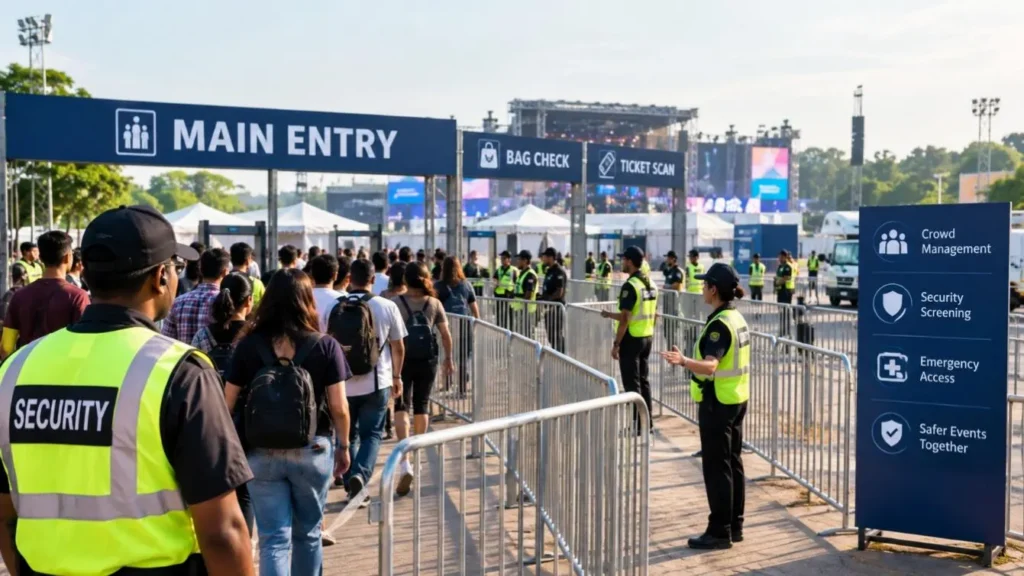
Managing a large event involves far more than placing security personnel at entrances. As attendance increases, movement becomes more complex, queues can form quickly, roads can become congested, and emergency access can become restricted. A well-planned approach is essential to protect attendees while keeping the event organised and efficient.
A crowd control management plan provides a structured framework for managing pedestrian movement, entrances, exits, restricted areas, communication, emergency response, and staff coordination. When combined with effective crowd and traffic control management, it also addresses what happens outside the venue, including vehicle movement, parking, drop-off areas, pedestrian crossings, and emergency access.
Understanding Crowd Control Management
Crowd control management involves planning and coordinating the movement of people at large events such as concerts, festivals, sporting events, and public gatherings. The goal is to keep movement predictable, organised, and safe rather than simply restricting it.
Crowd conditions can change quickly as attendees arrive, move between areas, or leave the venue. Effective management therefore requires risk assessment, planning, monitoring, communication, and rapid response.
Key Elements of a Crowd Control Management Plan
An effective plan should address the entire movement cycle, from arrival to departure.
| Planning area | Key consideration | Practical objective |
| Entry management | Queues, screening and ticket verification | Prevent excessive crowd build-up |
| Internal movement | Walkways, barriers and high-density areas | Maintain predictable pedestrian flow |
| Exit management | Multiple exits and emergency routes | Enable orderly dispersal |
| Traffic management | Parking, drop-off and road access | Reduce vehicle congestion |
| Communication | Signage, announcements and staff communication | Provide clear instructions |
| Emergency response | Evacuation, medical incidents and fire | Enable rapid and coordinated action |
| Monitoring | CCTV, staff observation and occupancy information | Detect congestion early |
| Post-event review | Incidents, bottlenecks and attendee feedback | Improve future planning |
Crowd control management process
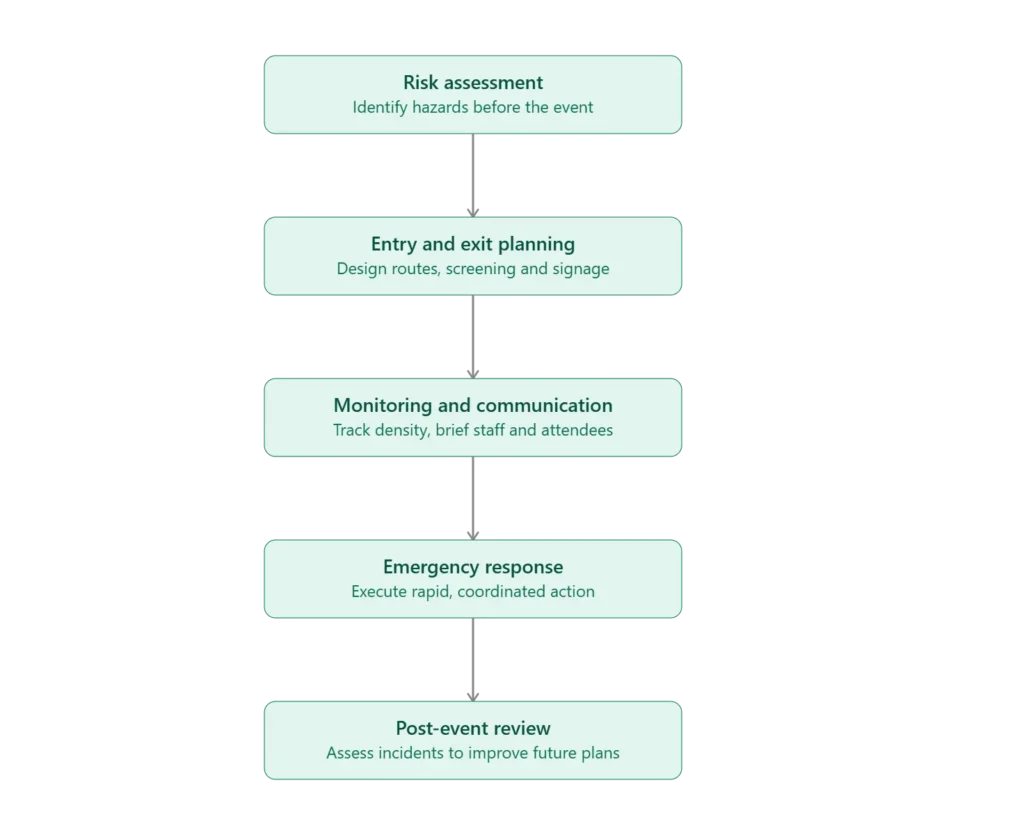
1. Begin With a Risk Assessment
Before an event, organisers should identify potential hazards such as overcrowded entrances, narrow passageways, insufficient exits, poor visibility, traffic conflicts, adverse weather, and restricted emergency access. The assessment should cover both normal operations and emergencies, with measures in place to prevent congestion from becoming dangerous.
2. Design Entry and Exit Routes
Entry and exit points should match the expected attendance and venue layout. Separate pedestrian routes, organised screening, and efficient ticket checks can help reduce queues. Emergency exits and access routes must remain clear throughout the event.
3. Manage High-Density Areas
Stages, food areas, ticket counters, transport points, and popular attractions can attract large crowds. These areas require active monitoring, with measures such as barriers, signage, controlled entry, additional staff, or alternative routes to maintain safe crowd density.
Crowd and Traffic Control Management Beyond the Venue
Crowd safety does not stop at the venue boundary. A major event can significantly affect surrounding roads and pedestrian routes.
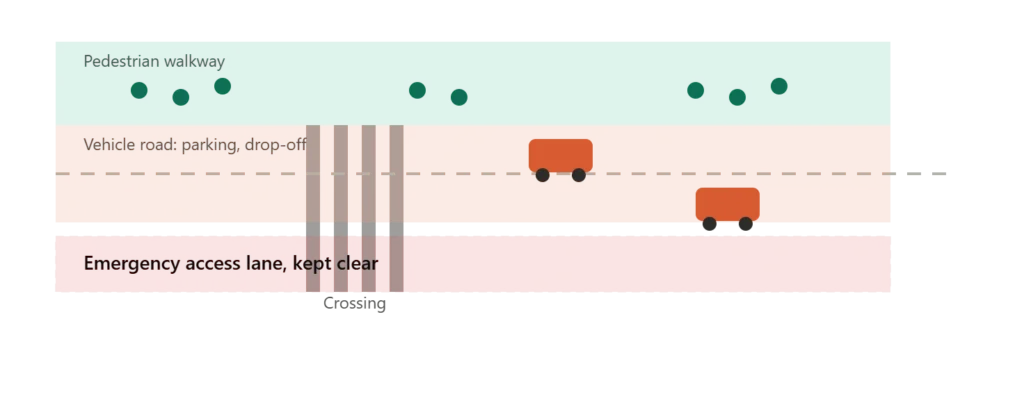
Crowd and traffic control management should therefore coordinate vehicle and pedestrian movement around parking facilities, entrances, drop-off points, public transport locations, nearby roads, and emergency access routes.
For instance, allowing vehicles to enter and leave through the same narrow access point used by pedestrians can create unnecessary conflict. Separating these flows and providing clear directional information can reduce congestion.
Emergency access is particularly important. Ambulances, fire services, and other emergency vehicles need a reliable route even when normal traffic is heavy.
READ MORE : Top 10 Common Crowd Management Mistakes That Lead to Congestion
Example: Managing a Large Concert
Consider a concert expecting 10,000 attendees, with most arriving within an hour before the programme. If everyone uses one entrance, ticket checks and security screening can quickly create long queues and affect nearby traffic.
A proactive plan could distribute attendees across multiple entry points, organise queue lanes, position staff at pedestrian-vehicle crossings, and use signage to reduce congestion.
During the event, staff can monitor high-density areas and regulate access when necessary. At closing, multiple exits can support an orderly dispersal while traffic personnel manage vehicles outside the venue.
The key lesson is that crowd management should adapt to each stage of an event. Arrival, peak attendance, programme changes, and departure can create different risks and require different controls.
Communication and Staff Coordination
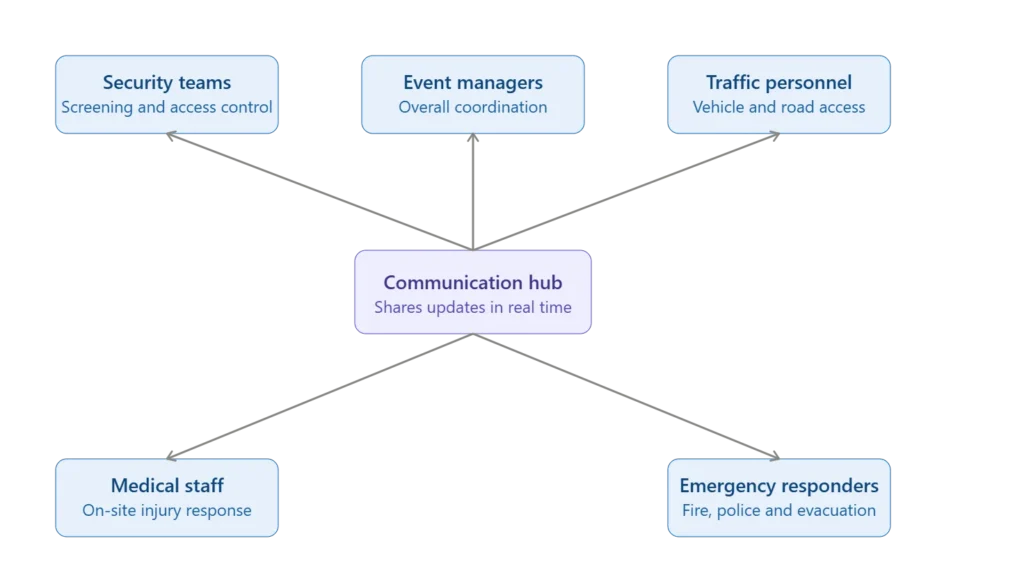
A crowd management plan is effective only when staff understand their roles. Security teams, event managers, traffic personnel, medical staff, and emergency responders should have clearly defined responsibilities and communication channels.
Attendees should also receive clear instructions through signage, announcements, digital displays, and staff guidance. Consistent communication is especially important when routes change, entrances reach capacity, or congestion develops, helping prevent confusion and counter-flow.
Monitoring and Early Intervention
Crowd conditions can change quickly, so continuous monitoring helps organisers identify risks early. Warning signs include long queues, blocked walkways, counter-flow, pushing, or increasing crowd density.
CCTV, occupancy monitoring, and digital communication tools can support on-ground staff. However, trained personnel remain essential for assessing conditions and taking timely action.
Emergency Preparedness
Every crowd control management plan should include procedures for emergencies such as fire, medical incidents, severe weather, security threats, and evacuation. Staff should know emergency routes, assembly areas, communication procedures, and escalation protocols. Clear instructions and coordinated responses can help maintain orderly movement during stressful situations.
Common Crowd Management Challenges
Events may face unexpected challenges such as higher-than-expected attendance, sudden weather changes, transport disruptions, or overcrowding at popular attractions.
Pedestrian and vehicle movement should be planned together, particularly around entrances, crossings, parking areas, and drop-off zones. After the event, reviewing incidents, congestion points, and staff responses can help improve future crowd and traffic control management.
Pedestrian and vehicle zones separated outside the venue
Plan Safer Events with Simbi Lab
Planning a large event? Simbi Lab can help you develop smarter, more organised approaches to crowd and traffic control management. From understanding crowd movement to identifying potential congestion points, the right planning strategy can improve safety, coordination, and the overall event experience.
Connect with Simbi Lab today to explore practical solutions for safer, better-managed events.
Book a free consultation for appointment
Email us at : grow@simbi.in
FAQs
What is a crowd control management plan?
A crowd control management plan is a structured strategy for managing the movement and safety of people during an event. It typically covers entry and exit management, pedestrian flow, high-density areas, communication, emergency procedures, staff responsibilities, and monitoring.
What is the difference between crowd management and crowd control?
Crowd management focuses on organising safe and efficient movement, while crowd control generally refers to measures used to regulate or restrict movement when necessary. Effective event planning uses both approaches according to the situation.
Why is traffic management important for large events?
Large gatherings can affect surrounding roads, parking areas, pedestrian crossings, and emergency access routes. Coordinating vehicle and pedestrian movement helps reduce congestion and potential conflicts around the venue.
How can technology support crowd management?
CCTV, occupancy monitoring, digital signage, communication systems, and other technologies can provide organisers with information about crowd conditions and help them respond to congestion more quickly.
When should a crowd management plan be prepared?
Planning should begin well before the event. The final plan should be reviewed with relevant staff and stakeholders before attendees arrive, with contingency measures available for unexpected changes.
What should organisers do after an event?
Organisers should review incidents, congestion points, emergency responses, communication effectiveness, and attendee feedback. These findings can then be used to improve future crowd management plans.