
Why CROs Outsource Clinical Operations: A Strategic Approach to Faster, Smarter Clinical Trials
The Shift Toward Outsourced Clinical Operations
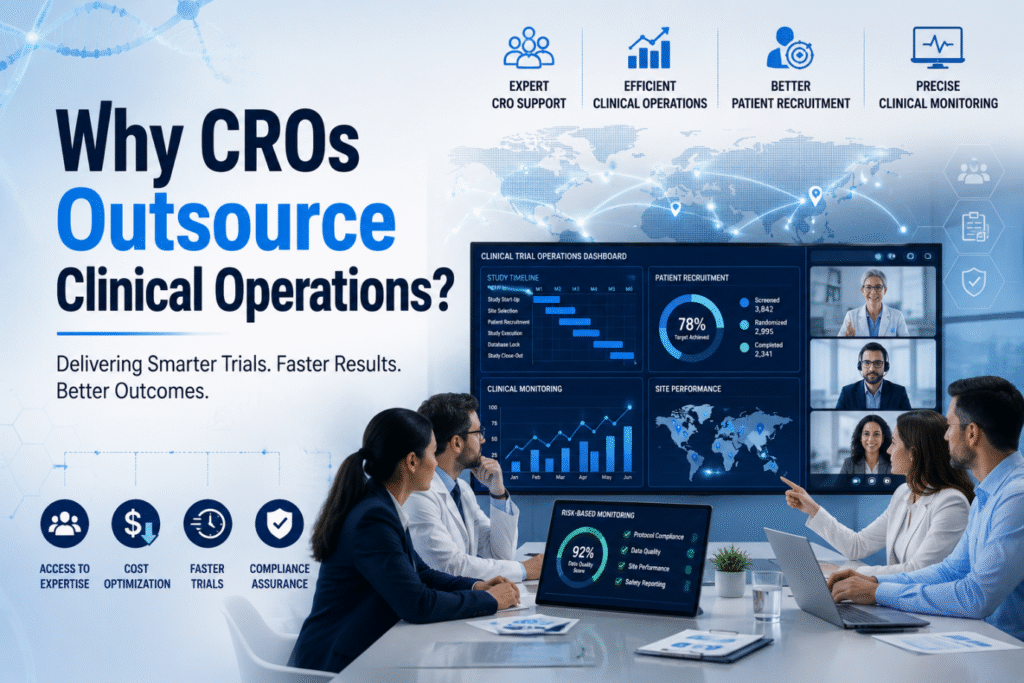
Clinical research is becoming more complex, with more stringent regulatory demands, cutting-edge trial designs, trial sites around the world and a desire to speed up drug development.
The need for Contract Research Organizations (CROs) to deliver high quality clinical trials that meet compliance standards, are cost-efficient, and keep patients safe is ever-present. To address these requirements, a number of CROs are making strategic partnerships with specialized clinical partners who have the proven capabilities, scale and technology that they require.
This is not just about cutting costs, it’s about empowering CROs to become more efficient, better Clinical Trial Support, better Clinical Monitoring and better Patient Recruitment.This is not only about cost savings, it’s about CROs becoming more efficient, better Clinical Trial Support, better Clinical Monitoring and better Patient Recruitment to focus on scientific innovation and strategic decision-making.
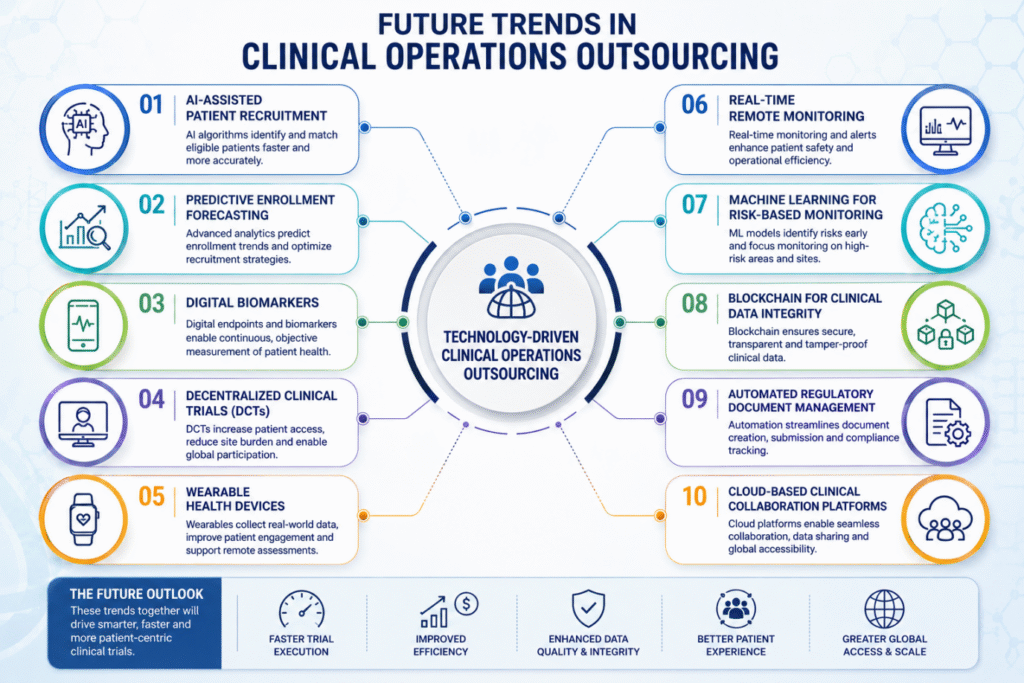
This Guide delves into the reasons behind the strategic importance of outsourcing for CROs, key Clinical Operations functions typically outsourced, benefits and drawbacks, and prevailing trends that influence the future of Clinical Operations.
READ THIS ALSO: Benefits of Outsourcing Site Management
Understanding Clinical Operations
Clinical operations involve the initiation, conduct, oversight and administration of clinical trials from initiation to close-out. Their main task is to ensure that all clinical trials are performed according to the approved study protocol, are in compliance with Good Clinical Practice (GCP) guidelines, meet applicable regulatory requirements, protect the rights and safety of clinical trial participants, and are on schedule and within budget.
To meet these objectives, the collaboration of several actors is required – the sponsors, Contract Research Organization (CROs), investigators, study coordinators, ethics committees, regulatory agencies, laboratories, vendors, and trial participants.
Clinical operations, therefore, play a crucial role in maintaining the quality of clinical data, regulatory compliance, and the successful completion of clinical studies.
Why Clinical Operations Have Become More Complex
There are several reasons why modern clinical trials are much more complex than traditional trials:
i. International multi-country trials: Trials that are done in several countries need to be coordinated with various regulatory agencies, languages, cultures, and health care systems.
ii. Decentralized clinical trials (DCTs): DCTs are clinical trials that leverage digital technologies and remote patient engagement to enhance access and convenience for participants.
iii. Personalized medicine: Personalized medicine requires clinical trials to assess treatments based on a person’s genetic makeup, or biomarkers, or on specific disease factors. iv.Adaptive trial designs: Adaptive trial designs enable the pre-programmed changes of trial protocols based on interim data, while keeping trial integrity intact.
v.Digital health technologies: Digital health technologies like wearable devices, mobile apps, and telemedicine systems allow for ongoing monitoring and real-time data collection from patients.
vi. Real-world evidence integration: RWE integration is when real-world evidence is used to complement clinical trial data.
vii. Stricter compliance with changing global guidelines, documentation standards and quality assurance procedures are key to meeting the increased regulatory expectations.
viii. The volume of clinical data is increasing: Advanced data management solutions and analytics are needed to handle the growing number of clinical data, ensuring its accuracy, security, and timely accessibility for decision-making.
Why CROs Outsource Clinical Operations
To avoid building up permanent staff for each project, CROs are turning to external specialists to offer a specific type of support for each clinical trial. The major reasons are listed below:
1.Leverage of specialised expertise:
Organisations can access experienced professionals through CRO Support without the need to hire and train them, and Clinical trials demand professionals who are highly skilled in their area of work, such as:
a. Clinical Research Associates (CRAs)
b.Clinical Project Managers
c.Regulatory Specialists
d. Medical Writers
e. . Data Managers
f. Biostatisticians
g. Quality Assurance Auditors
2. Faster Clinical Trial Start-Up
Study startup is one of the most time-consuming phases, activities include:
- Site feasibility
- Investigator selection
- Ethics approvals
- Regulatory submissions
- Site contracts
- Budget negotiations
- Site initiation visits
3. Improved Patient Recruitment
One of the biggest reasons clinical trials fail to meet timelines is slow patient enrolment, studies frequently experience:
- Low recruitment rates
- High screen failure rates
- Patient dropouts
- Delayed enrollment
Professional Patient Recruitment partners use advanced strategies such as:
- Digital recruitment campaigns
- Electronic health record screening
- Physician referral networks
- Community outreach
- Social media recruitment
- AI-powered patient matching
4. Scalability Without Increasing Permanent Staff
During slower weeks, it is not economically viable to keep big permanent teams, Outsourcing offers flexible resource allocation based on the needs of the project, it does not involve a long-term commitment of resources (people or space) and in certain weeks, it is necessary to have:
- Hundreds of CRAs
- Additional monitors
- Regulatory teams
- Data management staff
5. Cost Optimization
the expenses around clinical operations are a significant part of the overall costs of running a trial, Outsourcing lowers costs for:
- Recruitment
- Employee benefits
- Infrastructure
- Office space
- Technology licensing
- Training
- Equipment
- Administrative management
6. Better Clinical Monitoring
Effective Clinical Monitoring is essential for ensuring:
- Protocol compliance
- Accurate data collection
- Patient safety
- Regulatory adherence
Outsourced monitoring teams provide experienced CRAs who perform:
- Site monitoring visits
- Source data verification (SDV)
- Risk-based monitoring
- Remote monitoring
- Site performance reviews
- Investigator training
- CAPA follow-up
7. Global Trial Management
Modern trials frequently involve multiple countries, global studies require knowledge of:
- Country-specific regulations
- Local ethics committees
- Language requirements
- Import/export documentation
- Cultural considerations
- Local recruitment practices
8. Regulatory Compliance
Clinical research operates within strict regulatory frameworks, including:
- ICH-GCP
- FDA regulations
- EMA guidelines
- CDSCO requirements
- MHRA standards
- PMDA regulations
9. Access to Advanced Technology
Technology has become central to modern Clinical Operations, many outsourcing providers invest heavily in:
- Electronic Data Capture (EDC)
- Clinical Trial Management Systems (CTMS)
- eConsent platforms
- ePRO solutions
- Remote monitoring platforms
- AI-powered analytics
- Risk-Based Monitoring software
10. Focus on Core Competencies
Rather than managing every operational detail, CRO leadership can focus on:
- Client relationships
- Scientific strategy
- Trial design
- Innovation
- Business development
- Regulatory consulting
Clinical Functions Commonly Outsourced
Several operational activities are routinely outsourced during clinical trials.
| Clinical Function | Purpose |
| Clinical Trial Support | Study coordination and execution |
| Patient Recruitment | Faster participant enrollment |
| Clinical Monitoring | Site oversight and quality assurance |
| Regulatory Affairs | Submission and compliance management |
| Medical Writing | Protocols, CSRs, regulatory documents |
| Data Management | Database creation, validation, cleaning |
| Biostatistics | Statistical analysis and reporting |
| Pharmacovigilance | Safety monitoring and adverse event reporting |
| Site Management | Site communication and performance tracking |
| Quality Assurance | Audits and inspection readiness |
Benefits of Outsourcing Clinical Operations
Organisations that strategically outsource often experience:
- Faster study startup
- Reduced operational costs
- Improved patient recruitment
- Higher protocol compliance
- Better clinical monitoring quality
- Access to specialized expertise
- Enhanced regulatory compliance
- Greater operational flexibility
- Faster database lock
- Accelerated study completion
Challenges of Outsourcing Clinical Operations
Outsourcing clinical operations can be beneficial for many reasons, but it can also be challenging for organizations to manage effectively to ensure that their trial is run successfully.
Some of the challenges faced are communication between the sponsor and the CRO team, coordinating vendor performance, concerns regarding data security and patient confidentiality, quality issues between various service providers, time zone differences that can cause delays, integration with internal systems and processes, and ongoing monitoring of vendor performance to guarantee compliance, efficiency, and top-tier trial results.
Best Practices for Successful CRO Outsourcing
Organizations can maximize outsourcing success by following these practices:
- Select partners with proven therapeutic expertise.
- Define roles, responsibilities, and performance metrics clearly.
- Establish transparent communication channels.
- Use standardized SOPs and documentation.
- Conduct regular quality audits and compliance reviews.
- Monitor key performance indicators (KPIs) throughout the project.
- Ensure data security and regulatory compliance.
- Build long-term collaborative partnerships rather than transactional vendor relationships.
Example
Suppose an Indian small pharmaceutical company has created a new diabetes drug. The research team is good, but the company lacks manpower and facilities to carry out a large clinical trial at several hospitals. The company outsources its clinical operations to a Contract Research Organization (CRO) instead of handling all the operations by itself. The CRO handles the clinical trial site selection, patient recruitment, study monitoring, study data collection and management and preparation of regulatory documents. In the meantime, the pharmaceutical company concentrates on the development of the medicine and the analysis of the final results.
Result: Outsourcing the clinical operations saves time and money, adds expertise in the clinical field, helps to keep the trial compliant with regulations, and streamlines the process.
Why Choosing the Right Clinical Operations Partner Matters
Partnering with a company that has extensive clinical operations expertise, comprehensive quality systems, scalable resources and a global regulatory understanding will be key to the success of outsourcing clinical operations.
An experienced partner can optimize workflows, improve Clinical Trial Support, enhance Clinical Monitoring, increasePatient Recruitment, and assist CROs in completing their study to be of high quality and within budget on time.
By working with a trusted clinical research solutions provider, CRO Support can be enhanced by ensuring a better return on investment, remaining compliant and embracing the complexity of today’s clinical trials with confidence.
Frequently Asked Questions (FAQs)
1. Why do CROs outsource clinical operations?
2. What services are commonly included in clinical operations outsourcing?
3. How does outsourcing improve patient recruitment?
4. What is the role of clinical monitoring in outsourced trials?
5. Is outsourcing clinical operations suitable for small and mid-sized CROs?
Book a free consultation for appointment
Email us at : grow@simbi.in