
Clinical Research Services: A Sponsor’s Framework for Choosing the Right Research Partner
Laying the Foundation for Clinical Trial Success
Clinical translation from the lab to patients is a complex process which involves scientific knowledge, regulatory compliance and perfect execution. Clinical Research Services have transformed from support functions into strategic relationships that significantly impact the success of clinical trials, with the integration of technology and a patient-centric approach becoming more global.
Choosing a Clinical Trial Partner is more than just an economic or size decision today. The right Clinical Research Company can shorten study timelines, improve patient recruitment, help ensure regulatory compliance and boost data quality.
By contrast, an inexperienced Clinical Research Vendor can cause delays, protocol deviations, increased costs and compliance issues. Many partners provide these same functions on paper, and sponsors should take a closer look at the scientific experience, operational excellence, technology, quality systems, and consistency of results of a partner.
Clinical Research Services Have Evolved Beyond Traditional Outsourcing
Ten years ago, the role of Clinical Research Services was mainly to perform operational responsibilities like clinical monitoring, data management, regulatory documentation etc. and the sponsor maintained his strategic control over the studies.
The duties and responsibilities of a Clinical Research Company have grown to a great extent today. For the top sponsors, these partners now assist them with clinical development planning, clinical protocol optimization, regulatory strategy, patient recruitment, digital trial technologies, risk-based quality management, pharmacovigilance, and inspection readiness. It’s been influenced by advanced global studies, stringent regulations, decentralized research designs, and the development of technologies like AI, wearables, and electronic health records.
In this way, Clinical Research Services are important in today’s age to improve trial efficiency and ensure compliance and speed up the development of new therapies.
The New Standard for Choosing a Clinical Research Company
Sponsors used to choose Clinical Research Services providers based on size of company, geographical spread, cost and previous experience. While these criteria are still important, they no longer reflect a provider’s ability to manage today’s complex clinical trials. It’s time to base the uniting of modern sponsors on capabilities, not scale.
The right Clinical Research Company needs to be well-qualified with extensive therapeutic portfolio, a proactive approach to risk management, robust quality systems, advanced digital expertise and a quick response to operational issues. These considerations can help sponsors choose a Clinical Trial Partner that will provide effective, quality and compliant clinical research.
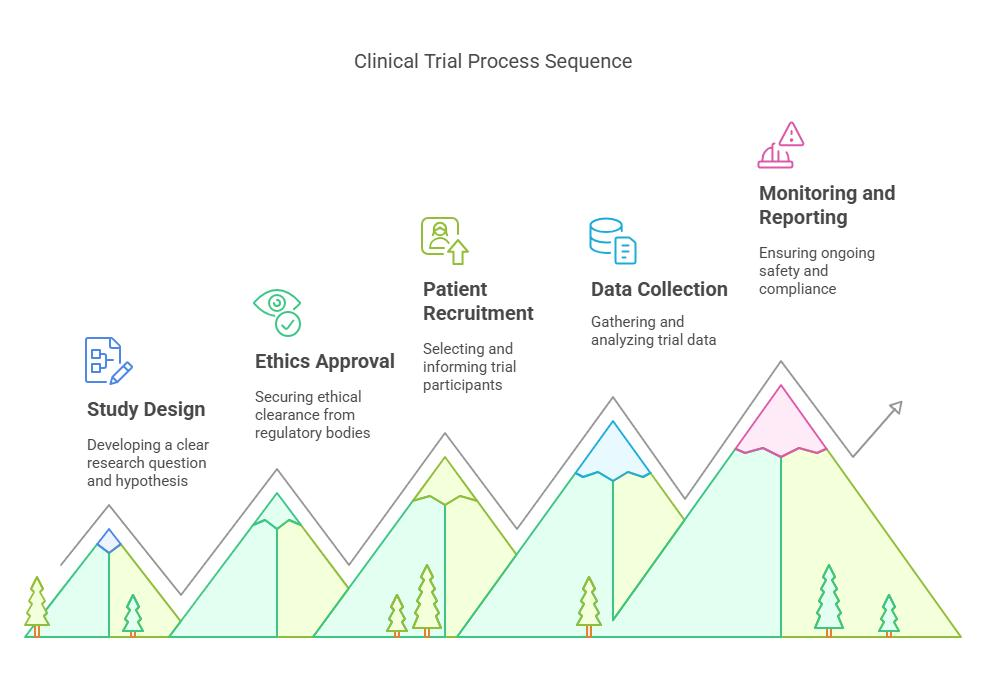
A Sponsor’s Five-Layer Framework for Evaluating Clinical Research Services
Rather than judging providers on dozens of separate criteria, sponsors can use five capability layers that are interdependent to help them make a decision. The layers are all essential parts of a successful clinical trial delivery. The framework includes:
| Evaluation Layer | Primary Focus |
| Scientific Intelligence | Clinical expertise and protocol quality |
| Operational Excellence | Study execution and project delivery |
| Digital Clinical Infrastructure | Technology and data integration |
| Regulatory Confidence | Compliance and inspection readiness |
| Long-Term Partnership Potential | Scalability and strategic collaboration |
Layer One: Scientific Intelligence – The Foundation of Successful Clinical Research Services
Good clinical trial science begins with good science planning, not with patients. All the scientific choices made during the planning stage dictate whether or not a study is feasible, acceptable, and is likely to provide a valid scientific outcome. A Clinical Trial Partner with extensive scientific understanding assists sponsors to design better studies, minimize operational risks, and enhance trial results.
Understanding the Disease Beyond the Protocol
Clinical Research Services companies that have a proven track record have a broad understanding of the therapeutic area, in addition to the written protocol. They are experts in disease biology and progression, standard treatment paths, patient populations, clinical endpoints, biomarker strategies, safety assessment and patient burden.
This incorporates the knowledge to design scientifically sound studies, patient-centric studies, and operationally feasible studies, which will enhance trial efficiency and data quality.Before Study Startup: Protocol OptimizationMinimising risks and avoiding expensive changes during the trial,
Multidisciplinary Scientific Expertise
Strong Clinical Research Services providers bring together experts such as:
- Physicians
- Clinical scientists
- Medical monitors
- Therapeutic specialists
- Pharmacologists
- Biostatisticians
- Epidemiologists
- Regulatory experts
Therapeutic Area Expertise Matters
A specialized Clinical Research Company understands:
- Disease-specific challenges
- Investigator expectations
- Recruitment barriers
- Patient retention strategies
- Standard treatments
- Competitive clinical landscape
Scientific Support Throughout the Trial
Scientific support is not just available during study start-up, but is critical throughout the clinical trial lifecycle. Clinical Research Services (CRS) providers with experience constantly track compliance with the protocol, evaluate safety data, suggest protocol modifications as required, help with medical writing, interpret interim study results, and create regulatory documents.
It helps ensure data integrity, compliance with regulations, and the informed decision making at all phases of the trial.
Layer Two: Operational Excellence – Turning Clinical Strategy into Execution
All the best protocol in the world is no good if it is not executed properly. The success of clinical trials requires thousands of interrelated activities to be managed and executed with precision across investigators, research sites, laboratories, vendors, sponsors, regulators and patients.
Operational excellence is the capacity of a Clinical Research Vendor to consistently do these activities and keep quality, timelines and regulatory compliance.
Study Startup Sets the Pace for the Entire Trial
The startup phase is often underestimated, yet delays during this period can affect the entire development timeline.
An experienced provider establishes structured startup processes covering:
- Country feasibility assessments
- Site selection
- Investigator qualification
- Regulatory submissions
- Ethics committee approvals
- Contract negotiations
- Budget management
- Essential document collection
- Site activation planning
Site Selection Is About Quality, Not Quantity
Sponsors are often assuming that the bigger investigator network, the quicker the recruitment. For experienced Clinical Research Services providers, however, performance is the most important factor and not availability . effective site evaluation considers:
- Previous enrollment success
- Patient population availability
- Investigator experience
- Staff capacity
- Infrastructure readiness
- Historical compliance
- Competing studies
- Geographic diversity
Project Management Drives Operational Consistency
Clinical trials generate thousands of tasks that must remain synchronized despite changing circumstances.
Professional project management provides:
- Clear governance structures
- Defined responsibilities
- Milestone tracking
- Risk identification
- Budget oversight
- Vendor coordination
- Cross-functional communication
- Timeline management
Clinical Monitoring Has Shifted from Verification to Risk Management
Traditional monitoring was strongly based on checking all the data points on regular visits to the site. Modern Clinical Research Services focus on Risk Based Monitoring (RBM) in which attention is given to what activities have the potential to adversely affect patient safety and data integrity.This approach combines:
- Centralized monitoring
- Remote monitoring
- Data analytics
- Trigger-based site visits
- Quality risk indicators
- Performance dashboards
Effective Communication Keeps Trials Moving
Operational success depends as much on communication as it does on technical expertise.
The best Clinical Trial Partners establish structured communication frameworks that include:
- Weekly project reviews
- Executive governance meetings
- Risk escalation pathways
- Investigator engagement plans
- Real-time performance reporting
- Transparent issue tracking
Layer Three: Digital Clinical Infrastructure – The Technology That Powers Modern Clinical Research Services
The clinical research landscape has now become a digital one where technology is no longer an ancillary tool, but is the engine that drives a successful clinical trial. With the increasing complexity of clinical trials, their geographical spread and data volume, sponsors are also looking for a Clinical Research Services provider that can provide an integrated digital ecosystem to streamline collaboration, improve data quality, and provide real-time decision making.
But being a software owner does not mean you are a digitally mature organization. A competent Clinical Research Company establishes a unified infrastructure that ensures systems talk to each other, lessen manual efforts, minimize errors, and offer end-to-end visibility during the clinical trial life cycle.
The real benefit of technology is how well it can help to make decisions more quickly, aid in regulatory compliance, and enhance the investigators, sponsors and patient experience.
From Individual Systems to an Integrated Clinical Ecosystem
Many organizations still evaluate providers by asking whether they use Electronic Data Capture (EDC) or Clinical Trial Management Systems (CTMS). While these platforms are essential, they represent only one part of a broader digital ecosystem.
Modern Clinical Research Services integrate multiple technologies into a unified workflow where information flows continuously between stakeholders.
A connected ecosystem typically includes:
- Electronic Data Capture (EDC): A digital system used to collect, manage, and validate clinical trial data, ensuring accuracy and faster data processing.
- Clinical Trial Management Systems (CTMS): A centralized platform that helps manage trial planning, site activities, budgets, timelines, and overall study progress.
- Electronic Trial Master File (eTMF): A secure digital repository for storing and managing all essential trial documents required for regulatory compliance and audits.
- Electronic Regulatory Binder (eReg): A digital solution for organizing investigator site regulatory documents, making regulatory submissions and inspections more efficient.
- Interactive Response Technology (IRT): A system that automates patient randomization, treatment allocation, and investigational product supply management during clinical trials.
- Electronic Patient-Reported Outcomes (ePRO): Digital tools that allow participants to report symptoms, treatment responses, and quality-of-life data directly using mobile devices or web portals.
- Electronic Source Documentation (eSource): The direct electronic recording of patient data at the research site, reducing manual transcription errors and improving data quality.
- Electronic Consent (eConsent): A digital informed consent process that enables participants to review study information, ask questions, and provide consent electronically.
- Risk-Based Monitoring (RBM) Dashboards: Interactive dashboards that use real-time data and analytics to identify high-risk sites, patients, or study activities requiring focused monitoring.
- Clinical Analytics Platforms: Advanced platforms that analyze clinical trial data to monitor study performance, identify trends, and support data-driven decision-making.
- Safety Databases: Specialized systems used to collect, track, analyze, and report adverse events, ensuring ongoing patient safety and regulatory compliance.
- Remote Monitoring Tools: Digital technologies that enable clinical research teams to monitor study data, site performance, and compliance remotely, reducing the need for frequent on-site visits.
Technology Should Enable Better Decisions, Not More Complexity
One of the misconceptions is that the more technology, the better the trial performance will be. In fact, over- or poorly-integrated systems can cause operational bottlenecks. An experienced Clinical Trial Partner concentrates on technology that has measurable value.Examples include:
Real-Time Trial Visibility
Interactive dashboards allow sponsors to monitor:
- Enrollment progress
- Site activation status
- Data query trends
- Protocol deviations
- Monitoring visit completion
- Safety events
- Study milestones
Centralized Data Review
Modern platforms consolidate information from multiple sources, allowing clinical teams to identify:
- Missing data
- Unusual trends
- Safety concerns
- Site performance variations
- Recruitment challenges
Risk-Based Quality Management
Advanced analytics help identify areas of high risk that need attention instead of reviewing each activity individually.Examples include:
- High protocol deviation rates
- Delayed data entry
- Low-performing sites
- Unusual adverse event patterns
- Declining patient retention
The Rise of Artificial Intelligence in Clinical Research Services
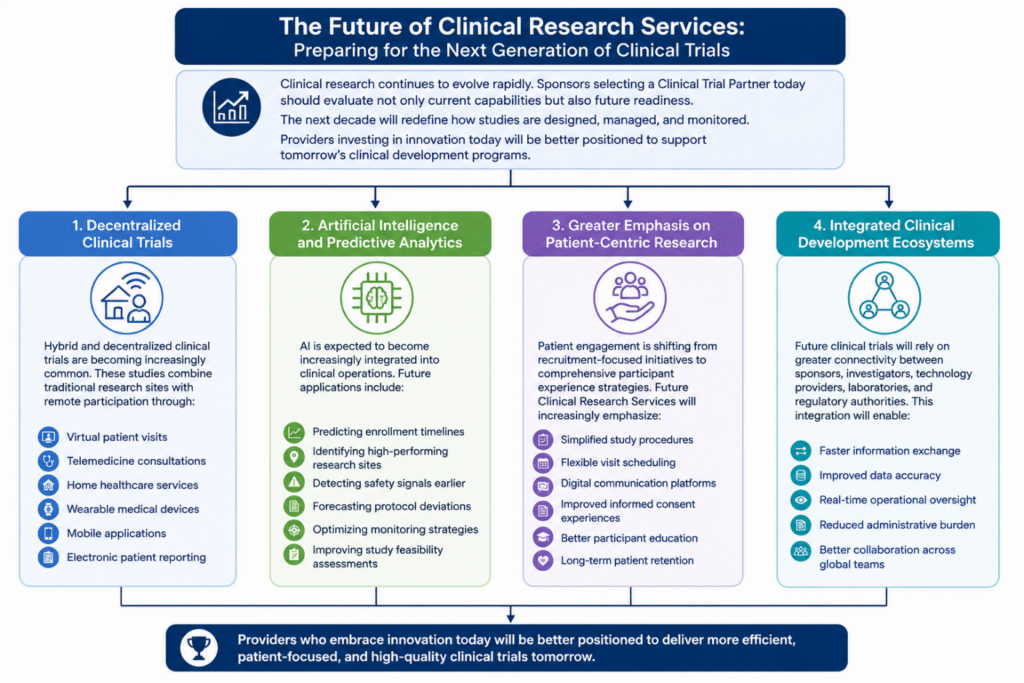
The role of Clinical Development is changing, and Artificial Intelligence (AI) is helping—rather than taking over—clinical skills. To boost operational efficiency, major Clinical Research Vendors are turning to AI. Clinical Development is undergoing a transformation with the help of Artificial Intelligence (AI) and not in spite of it.
Leading Clinical Research Vendors employ AI to enhance operational efficiency by forecasting patient recruitment, determining site selection, predicting risks, identifying data anomalies, medical coding, reviewing clinical documents, planning resources and assessing study feasibility.
AI’s ability to process vast amounts of information allows for quicker and more informed decision-making, which can enhance the efficiency of trials, minimize risks, and optimize trial performance for sponsors.
Patient-Centric Technology Is Becoming a Competitive Advantage
Modern clinical trials increasingly prioritize participant convenience and engagement.
Technology now enables patients to contribute to research without frequent site visits through:
- Electronic informed consent
- Mobile symptom reporting
- Wearable health devices
- Telemedicine visits
- Home healthcare integration
- Remote data collection
Layer Four: Regulatory Confidence – Building Compliance into Every Stage of Clinical Research
Compliance with regulations must not be seen as a final hurdle before submission. It needs to be part of all operational processes, starting from protocol up to database lock.
The trustworthy Clinical Research Services provider would construct quality and compliance within the study itself instead of trying to address the shortcomings post-study. Sponsors need to therefore consider the provider’s regulatory systems; whether they are proactive, standardized, and inspection-ready
Compliance Is More Than Following Guidelines
The overwhelming majority of providers claim to be compliant with ICH-GCP and area regulations. But regulatory maturity is more than just compliance.
It also ensures the generation of documentation, procedures and data that are robust enough to pass regulatory review every time. This requires:
- Well-defined Standard Operating Procedures (SOPs)
- Continuous staff training
- Internal quality reviews
- Audit readiness
- Document traceability
- Risk management systems
- Corrective and Preventive Action (CAPA) programs
Inspection Readiness Should Exist Every Day
Preparing for an inspection only when notified creates unnecessary risk.
Leading Clinical Research Services providers maintain continuous inspection readiness through:
- Ongoing document quality reviews
- Routine internal audits
- Regulatory mock inspections
- Quality trend analysis
- Continuous CAPA monitoring
- Staff competency assessments
Quality Culture Is Stronger Than Quality Control
Quality control identifies errors after they occur.
Quality culture prevents them.
An experienced Clinical Trial Partner encourages every team member—from clinical monitors to project managers—to take ownership of quality.
Characteristics of a strong quality culture include:
- Transparent reporting
- Early issue escalation
- Cross-functional collaboration
- Continuous improvement
- Root cause analysis
- Preventive thinking
Global Studies Demand Regulatory Agility
International clinical trials mean familiarity with several regulations. Sponsors should assess Clinical Research Vendor to determine their experience in submitting projects in a variety of regulatory environments and ensuring quality of submission.Capabilities may include:
- Country-specific regulatory submissions
- Ethics committee coordination
- Import and export documentation
- Local language requirements
- Regional safety reporting
- Regulatory intelligence updates
Layer Five: Long-Term Partnership Potential – Looking Beyond a Single Clinical Trial
There are many sponsors who choose a study provider and do not look into collaboration. But there are never only one or two trials for clinical development. Effective treatments go through several stages, more indications, post-marketing and global roll-out.
When you’re preparing for long-term growth, it’s essential that your Clinical Research Company can provide the same sort of consistency that can save you time and money when you need to swap vendors.
Can the Provider Grow with Your Development Program?
Scalability involves far more than increasing staff numbers.
Sponsors should assess whether the provider can support:
- Phase I to Phase IV development
- Global study expansion
- New therapeutic indications
- Medical device studies
- Pediatric research
- Rare disease programs
- Real-world evidence studies
- Post-marketing surveillance
Strategic Thinking Creates Long-Term Value
The best Clinical Research Services providers challenge assumptions, recommend improvements, and contribute ideas that strengthen development programs.
Rather than simply following sponsor instructions, they provide:
- Operational recommendations
- Feasibility insights
- Recruitment optimization
- Technology innovations
- Risk mitigation strategies
- Process improvements
The Hidden Costs of Choosing the Wrong Clinical Research Vendor
Cost remains one of the most common factors influencing vendor selection.
However, the lowest proposal often becomes the most expensive choice when operational inefficiencies begin to accumulate,poor vendor selection can affect nearly every aspect of a clinical trial.
- Recruitment Delays: Slow enrollment extends study timelines, increases operational expenses, and postpones regulatory submissions.
- Protocol Deviations: Inadequate training or poor site oversight increases protocol violations, affecting both data quality and regulatory confidence.
- High Staff Turnover: Frequent changes in project managers, CRAs, or data management teams disrupt study continuity and increase training requirements.
- Communication Failures: Delayed issue escalation often results in avoidable operational setbacks.
- Technology Limitations; Disconnected systems create duplicate work, inconsistent reporting, and increased administrative burden.
- Compliance Risks: Weak documentation practices increase the likelihood of inspection findings, corrective actions, and approval delays.
Capability Maturity Model for Clinical Research Companies
Not every provider delivers the same level of strategic value. Sponsors can evaluate vendors using a capability maturity model that reflects how deeply they contribute to clinical development.
| Capability Level | Type of Provider | Primary Focus | Value Delivered |
| Level 1 | Task Vendor | Executes assigned activities | Basic operational support |
| Level 2 | Service Provider | Delivers defined functional services | Reliable project execution |
| Level 3 | Strategic CRO | Improves operational performance | Risk reduction and efficiency |
| Level 4 | Innovation Partner | Introduces technology and process improvements | Competitive advantage |
| Level 5 | Development Partner | Contributes to long-term clinical strategy | Sustainable portfolio growth |
Example: Accelerating COVID-19 Vaccine Trials
Strategic CRS has proven to be valuable as COVID-19 vaccines have been developed in record time.The value of strategic Clinical Research Services was clearly shown with the swift development of COVID-19 vaccines.
There’s Pfizer, who partnered with ICON plc and other research partners, and Moderna, who has been working closely with CROs and tech partners to conduct large-scale clinical trials across the globe. These partnerships used digital data capture, centralized monitoring, real-time analytics, and efficient site management to expedite patient enrollment, data analysis, and uphold quality and regulatory standards.
These trials were successful, demonstrating the value that seasoned Clinical Research Services partners can bring to a sponsor’s ability to deliver complex trials with tight timelines.
Questions Every Sponsor Should Ask Before Selecting Clinical Research Services
Clinical Research Company can often be viewed in a positive light through its Request for Proposal (RFP) documents, capability presentations and marketing brochures. These materials offer good information but do not usually show how the organization functions when clinical trials have unanticipated difficulties.
Structured dialogues about the Clinical Research Vendor’s operational philosophy, performance metrics, quality culture, and problem-solving approach are the best way to assess a Clinical Research Vendor. Often the answers to these questions give more information about the proposal than does the proposal itself.
Sponsors should be specific rather than general in asking questions. For example, “How much experience do you have?” is too broad, but “How many will you be able to ask to leave in a week” is more specific.
Questions About Scientific Expertise
The quality of protocols and the likelihood of success of studies is directly impacted by the scientific understanding. It is important for sponsors to learn about how much they can go into the therapeutic area understanding of the provider, not just the fact that they have had some experience.
Questions About Clinical Operations
Operational performance determines whether a study remains on schedule and within budget.
Sponsors should ask questions such as:
- What percentage of your studies meet planned enrollment timelines?
- How do you identify underperforming research sites?
- What key performance indicators do you monitor throughout a study?
- How frequently are project risks reviewed?
- What is your average study startup timeline?
Questions About Quality and Compliance
Quality systems should be evaluated beyond regulatory certifications,Sponsors may ask:
- How often do you conduct internal quality audits?
- What is your CAPA management process?
- How do you maintain inspection readiness?
- Have your studies undergone regulatory inspections?
- How do you ensure consistency across global project teams?
Questions About Technology
Technology should improve efficiency rather than complicate workflows,useful questions include:
- Which digital platforms are integrated into your clinical operations?
- How do sponsors access real-time study information?
- Can your systems integrate with sponsor platforms?
- What cybersecurity measures protect clinical data?
- How do you support decentralized clinical trials?
Questions About Communication
Communication failures are among the most common causes of project delays,sponsors should understand:
- Who will serve as the primary project contact?
- How frequently are governance meetings conducted?
- What escalation process exists for critical issues?
- How are performance reports shared?
- How do you communicate changes that may affect timelines?
Why Culture Matters in Clinical Research Services
Clinical trials don’t always run smoothly. There are various challenges like recruitment delays, changes in protocols, regulatory changes, supply chain disruptions, and safety concerns that demand prompt and coordinated action.
Those with a robust operational culture are more likely to do this with accountability, clear communication, cross functional collaboration, quick decision making, ongoing education, and a shared focus on quality.The vendor should be evaluated on its ability to exhibit a Strong Clinical Research Culture including the following:
- Leadership Accessibility: Senior leaders are actively involved in governance meetings and engaged during the project, not just during contract negotiations.
- Staff Continuity: Lower turnover rates contributes to higher continuity, retention of institutional knowledge, and investigator and sponsor relationships.
- Continuous Improvement: Regularly review project performance, understand recurring issues and take measurable improvements.
- Knowledge Sharing: Clinical Operations, Medical Affairs, Regulatory, Quality Assurance and Data Management teams should not work in silos.
Book a free consultation for appointment
Email us at : grow@simbi.in
FAQs
1. What are Clinical Research Services?
Clinical Research Services encompass scientific, operational, regulatory, data management, monitoring, safety, and quality activities required to plan, conduct, manage, and complete clinical trials while ensuring compliance, patient safety, and reliable study outcomes.
2. Why is choosing the right Clinical Trial Partner important?
The right Clinical Trial Partner improves study planning, patient recruitment, regulatory compliance, data quality, and operational efficiency. A strong partnership minimizes delays, reduces risks, and helps sponsors achieve successful clinical trial outcomes.
3. What should sponsors evaluate in a Clinical Research Company?
Sponsors should assess therapeutic expertise, scientific leadership, operational capabilities, digital infrastructure, quality management systems, regulatory experience, project governance, communication practices, scalability, and previous clinical trial performance.
4. How do Clinical Research Services support regulatory compliance?
Clinical Research Services ensure compliance through protocol development, ethics submissions, quality management systems, monitoring, safety reporting, documentation control, audit preparation, and adherence to global regulatory guidelines throughout the trial lifecycle.
5. What technologies should a Clinical Research Vendor provide?
An experienced Clinical Research Vendor should support integrated technologies such as EDC, CTMS, eTMF, eConsent, ePRO, eSource, IRT, remote monitoring platforms, analytics dashboards, and secure data management systems for efficient trial oversight.
6. How can Clinical Research Services improve patient recruitment?
Effective Clinical Research Services use feasibility assessments, site performance analysis, digital outreach, investigator engagement, patient-centric trial design, retention strategies, and community partnerships to accelerate recruitment and reduce participant dropout.
7. What are the risks of selecting the wrong Clinical Research Vendor?
Choosing the wrong Clinical Research Vendor can result in delayed enrollment, protocol deviations, poor communication, compliance issues, increased costs, inconsistent data quality, regulatory findings, and significant setbacks to clinical development timelines.
8. How do Clinical Research Services contribute to long-term clinical development?
Beyond individual studies, Clinical Research Services support portfolio growth by providing scalable operations, regulatory expertise, strategic planning, digital innovation, and consistent execution across multiple phases of clinical development and global research programs.