
Clinical Trial Process: 8 Steps and Phases Explained
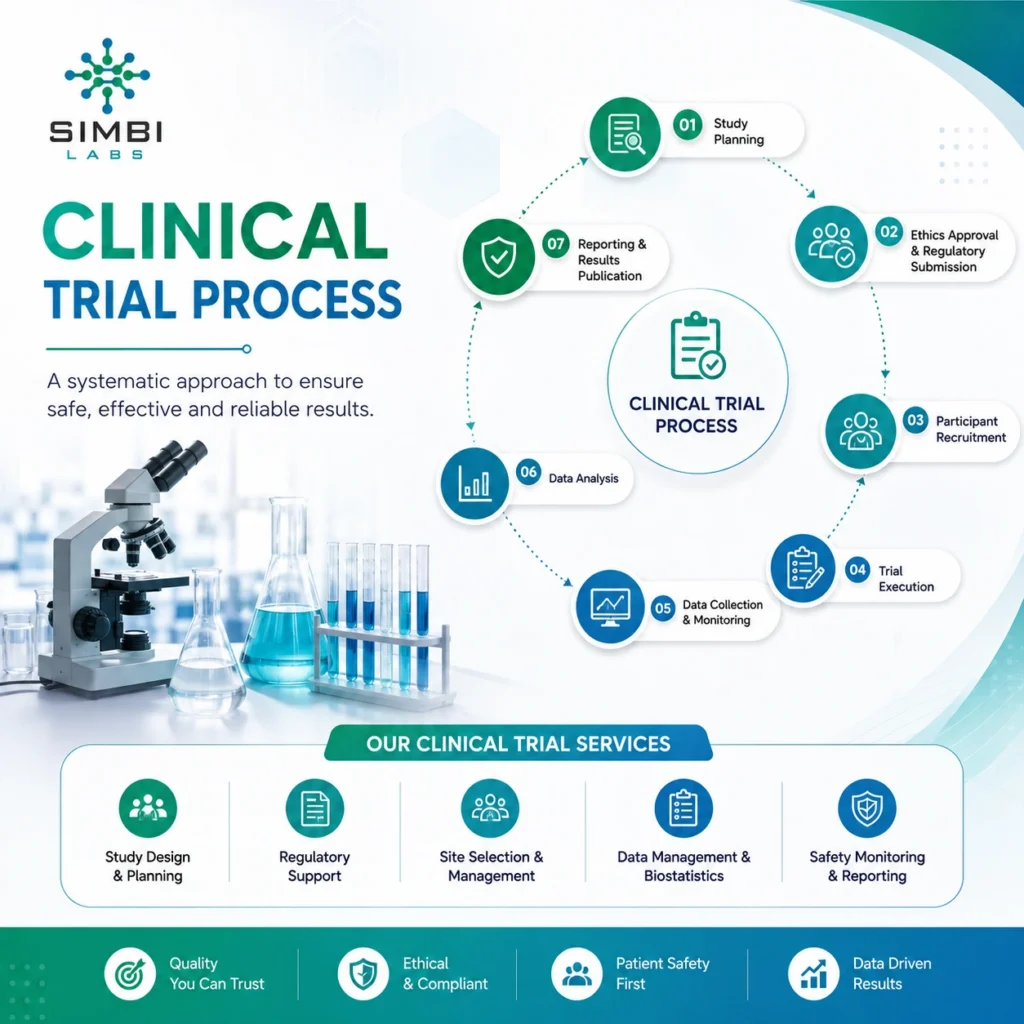
The Clinical Trial Process is a structured pathway used to determine whether a medical intervention is safe, effective, and suitable for a defined population. Although trials are often described as a sequence of phases, the real process is more interconnected. Scientific planning, ethical oversight, operations, data management, safety surveillance, and regulatory requirements work together throughout the study. Understanding How Clinical Trials Work therefore requires looking beyond participant visits and focusing on the full research system that produces credible evidence.
READ THIS : Clinical Trial Phases in India
From a Research Question to a Testable Plan
Every study begins with a clearly defined scientific question. Researchers identify the condition, intervention, target population, relevant outcomes, and type of comparison required. These decisions shape the design, such as randomized controlled, single-arm, crossover, blinded, or open-label.The Clinical Trial Steps at this stage include feasibility assessment, endpoint selection, sample-size planning, statistical considerations, and risk evaluation. Weak endpoints or unrealistic recruitment assumptions can undermine a promising study. Early planning must therefore connect the scientific objective with what can realistically be measured and delivered at research sites.
The Protocol Is the Trial’s Operating System
A Clinical Trial Protocol converts the research question into an executable plan. It defines study objectives, eligibility criteria, treatment schedules, visit procedures, laboratory assessments, safety reporting rules, endpoints, statistical methods, and procedures for handling deviations.A strong Clinical Trial Protocol also reduces unnecessary variation between sites. When investigators use consistent definitions and procedures, the resulting data are more comparable. Protocol amendments may be needed when new safety information emerges, operational barriers appear, or regulators request changes, but excessive amendments can increase complexity and inconsistency.
Before the First Participant Is Enrolled
A trial cannot begin simply because the protocol is complete. The sponsor and research team must prepare essential documents, select qualified sites, train investigators, establish data systems, arrange investigational product supply, and obtain ethics and regulatory approvals.
This part of the Clinical Trial Workflow creates safeguards for participant protection and data integrity. Informed-consent documents must explain the study in understandable language. Sites must also show that they have suitable staff, facilities, equipment, and access to the intended patient population.
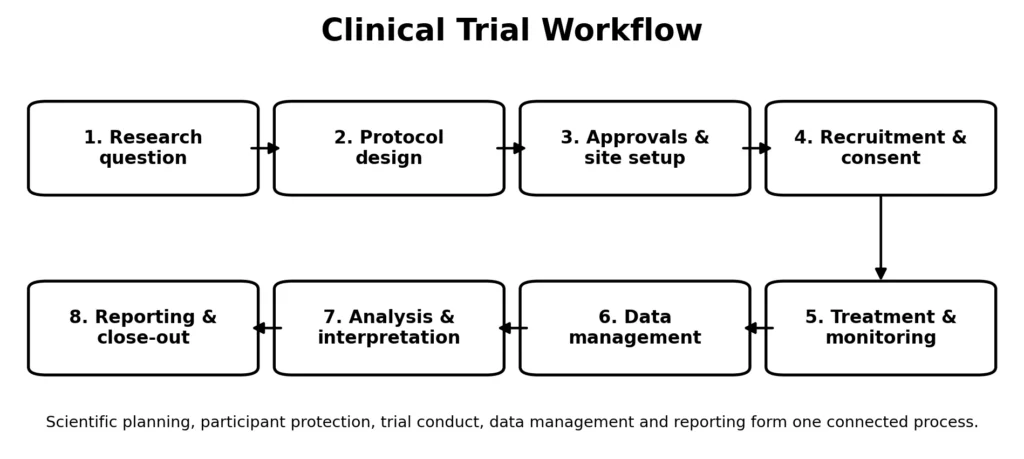
Figure 1. Integrated Clinical Trial Workflow from study planning through reporting and close-out.
Enrollment Is More Than Finding Volunteers
Participant recruitment is often one of the most difficult parts of the Clinical Trial Process. Potential participants are screened against inclusion and exclusion criteria. Eligibility checks may involve medical history, laboratory results, diagnostic confirmation, previous treatments, age, organ function, or other protocol-specific requirements.
Eligible participants must voluntarily provide informed consent before trial-specific procedures are performed. Consent is not merely a signature; it is an ongoing communication process covering the study purpose, potential benefits, known and unknown risks, alternatives, confidentiality, and the right to withdraw.
What Happens After Enrollment
Once enrolled, participants follow the visit and treatment schedule defined in the Clinical Trial Protocol. Depending on the design, they may be randomized and receive an investigational treatment, active comparator, placebo, or standard care. Researchers collect efficacy outcomes, laboratory values, imaging results, patient-reported outcomes, adverse events, medication use, and other protocol-defined data. Monitoring teams assess whether the study follows the protocol, Good Clinical Practice, and applicable regulations. Modern risk-based monitoring gives greater attention to data and processes that most affect participant safety and the reliability of trial conclusions.
Table 1. Core Clinical Trial Stages, Activities, and Outputs
| Clinical trial stage | Key activities | Primary output |
| Study design and protocol | Define the research question, population, endpoints, eligibility criteria, sample size, treatment plan, and statistical approach. | Executable protocol |
| Start-up and approvals | Prepare essential documents, select and train sites, establish data systems, arrange study treatment supply, and obtain ethics/regulatory approvals. | Sites ready to enroll |
| Recruitment and consent | Screen potential participants, confirm eligibility, explain the study, and obtain voluntary informed consent before trial-specific procedures. | Eligible enrolled participants |
| Treatment and monitoring | Deliver protocol-defined treatment and visits; collect efficacy and safety data; monitor protocol, GCP, and critical processes. | Complete, reliable study data |
| Data management and analysis | Validate data, resolve queries, code and reconcile records, review and lock the database, and conduct prespecified statistical analyses. | Analysis-ready evidence |
| Reporting and close-out | Complete safety reporting, clinical study reporting, registry updates, regulatory submissions, publication, and archival. | Transparent trial record |
Turning Study Data into Defensible Evidence
Clinical data pass through a controlled data-management process involving data capture, validation checks, query resolution, coding, reconciliation, and database review. Safety data may also require reconciliation between clinical and pharmacovigilance systems.
When the data are sufficiently complete and outstanding issues are resolved, the database may be locked for final statistical analysis. Analysis should follow a pre-specified statistical analysis plan whenever possible. Researchers interpret treatment effects together with confidence intervals, missing data, protocol deviations, subgroup findings, and safety outcomes. Statistical significance alone does not establish clinical importance; the size and practical relevance of the effect also matter.
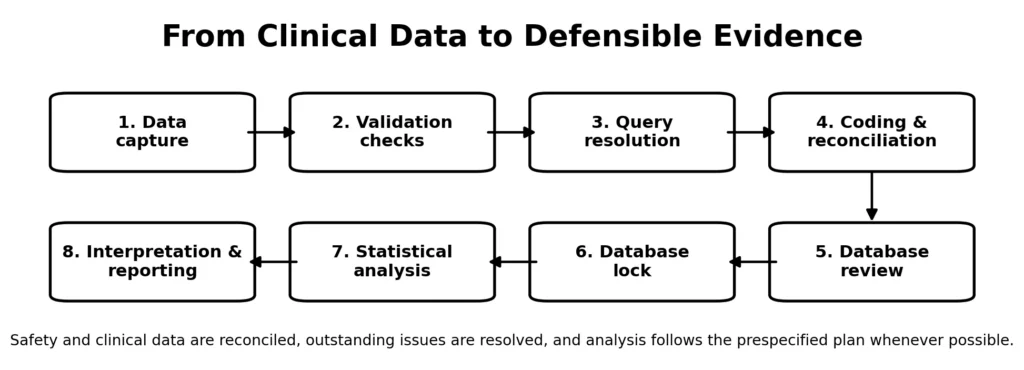
Figure 2. Controlled pathway from clinical data capture to statistical interpretation and reporting.
The Trial Does Not End at the Last Visit
After follow-up ends, sponsors may still need to complete safety reporting, prepare a clinical study report, update trial registries, submit evidence to regulators, publish results, and archive essential records. Findings may support another study, contribute to a marketing application, change an ongoing development program, or show that further development is not justified. This is why How Clinical Trials Work is best understood as a continuous evidence-generation cycle rather than a simple checklist. Each stage affects the credibility of the next.
Ensuring Quality Throughout the Clinical Trial Process
A well-managed Clinical Trial Process aligns scientific design with participant protection, operational discipline, reliable data, and transparent reporting. When the Clinical Trial Workflow is supported by a clear Clinical Trial Protocol and strong quality controls, the study is better positioned to produce evidence that clinicians, regulators, researchers, and patients can trust.