How DrillBit Detects AI Content and Paraphrased Text
Why Students Are Asking This More Often
As AI writing tools gain traction in the education sector, students are growing wary of how plagiarism tools such as DrillBit AI Detector handle AI-generated content. As AI writing tools become commonplace in education, students are increasingly skeptical about how plagiarism detection systems, including DrillBit AI Detector, identify AI-generated content. Many people believe that they can rewrite AI-generated text using paraphrasing tools without being detected by plagiarism or AI detection systems.
Some people say that plagiarism software only examines plagiarized sentences. The notion is obsolete.
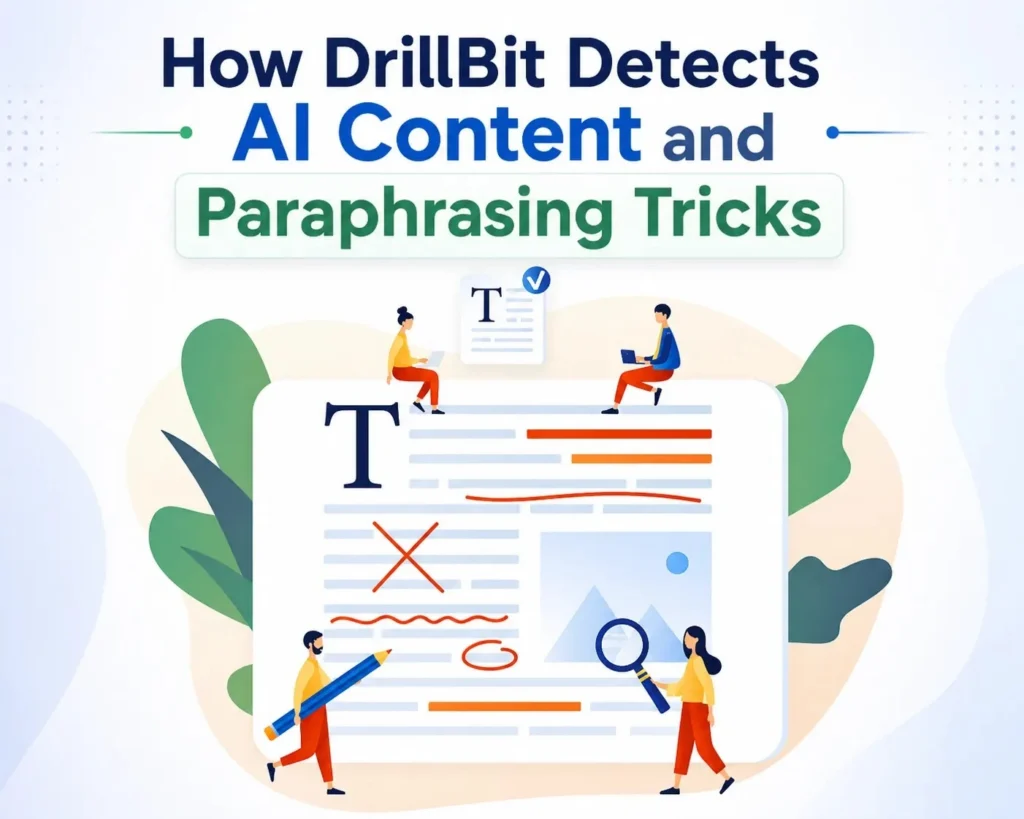
Today’s tools, such as DrillBit plagiarism checker, are getting better at their ability to detect suspicious patterns. How DrillBit Detects AI Content and Paraphrasing Tricks explains that these tools aren’t merely looking for the exact same words. They also assess text consistency and paraphrase behavior and structural similarity.
By knowing how DrillBit determines if content is AI-generated, students can make more responsible choices in their writing, avoiding any unintentional plagiarism problems while submitting to their universities.
DrillBit Looks Beyond Exact Word Matches
Plagiarism detection has traditionally been based on the overlap between two documents, usually in terms of a simple copy-and-paste match. Today’s DrillBit AI detection technologies go further. DrillBit goes beyond searching for matching phrases; it also uncovers deeper writing patterns like:
a. Structural similarity
b. Sentence arrangement
c. Paraphrase resemblance
d. Contextual overlap
e. The repetition of the source transformation patterns.
Read Also : DrillBit Acceptable Similarity Score for Colleges and Universities
How DrillBit Identifies AI-Generated Writing Patterns
DrillBit has mainly been geared toward detecting plagiarism, but its system can also spot patterns that are typically associated with AI-written content. It checks sentence structure, consistency and flow of writing for AI detection.
A major one is the predictability of the sentence flow. AI-generated text is typically flawlessly written and grammatically correct, yet has a very consistent sentence structure. Human writing, on the other hand, typically exhibits greater variations in tone, rhythm, and expression, making it easier for DrillBit to detect AI-generated material.
Common Signals That May Trigger DrillBit Review
Plagiarism detection systems used in modern times are not based on a single criteria for assessing the academic paper. Rather, they look at a variety of writing attributes that could be a sign of AI-generated or paraphrased content. The above signals do not constitute proof of misconduct, but if there are several of these, it means there is a higher probability that an item will be manually reviewed.
The following may serve as a guide for some of the common signs:
1. Repeated sentence patterns throughout the text.
2. Very uniform composition throughout
3. Little variation in the length of sentences and in the vocabulary.
4. Explanations that do not involve critical analysis.
5. Unnecessary wordiness when writing is concise and clear
6. Inadequate evidence of supporting details in many sentences
7. Fails to use supporting details in some sentences.
8. Very similar document structure to published documents
Read Also : DrillBit Plagiarism Report Analysis | How to Read and Fix Errors Step-by-Step
Why Paraphrasing Tricks Often Fail
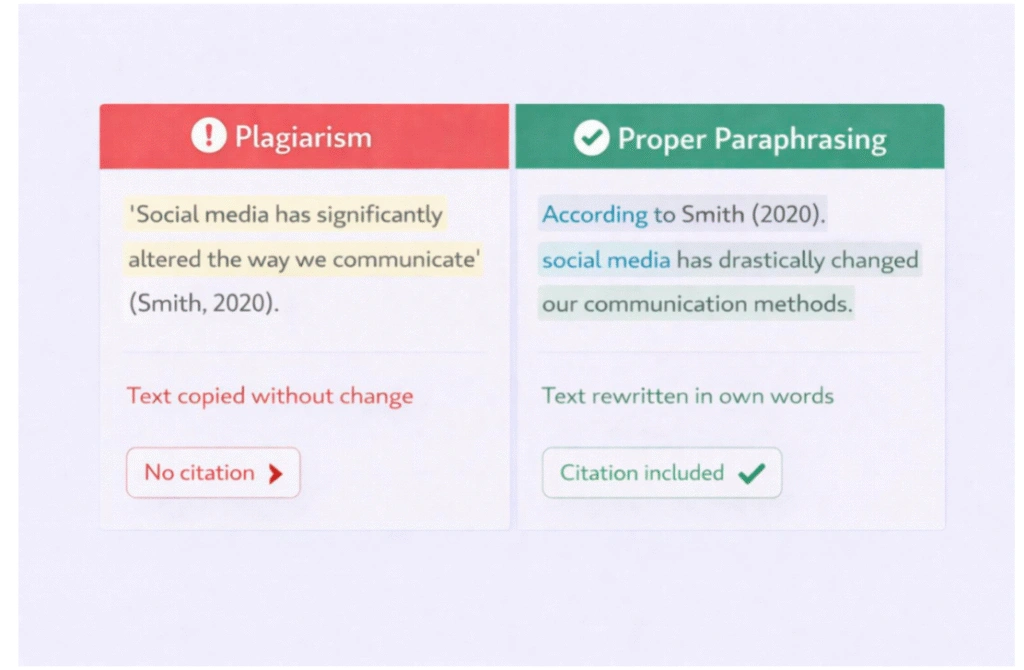
Many people find paraphrasing tricks to be ineffective.
1.Shallow Rewriting Techniques: There are many rewriting tools that just change words for synonyms and shuffle phrases and sentences, but they don’t change the logic of the sentence, which can still be identified when reading through AI Detection analysis.
2. Structural Paraphrasing Overlap – When AI-generated content is paraphrased but retains the same meaning and structure, it can be identified by AI Detection tools such as DrillBit, even if no word-for-word matches exist.
3. Why Instant Plagiarism Removers Fail – Most “instant plagiarism removers” fail in that modern AI Detection and paraphrasing analysis technology is engineered to recognize over-all rewriting, not originality.
Structural Similarity Is a Major Detection Factor
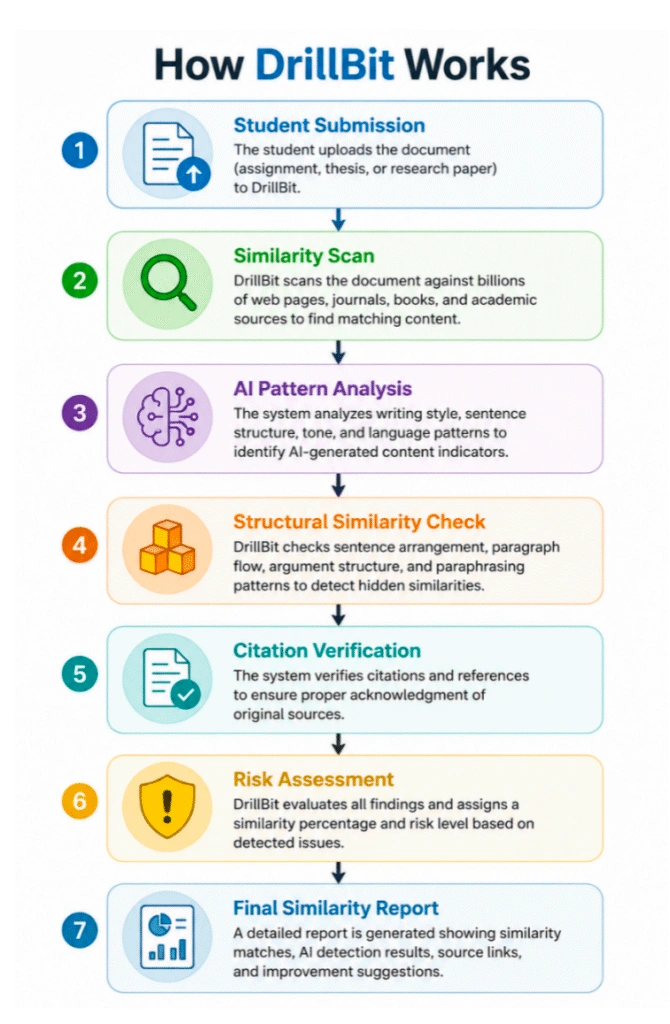
Structural similarity is one of the most significant in the ways that DrillBit identifies AI content. This is not about cosmetic edits, it’s about conceptual rewriting, and that originality is what is needed. The genuine re-expression of the ideas is a vital component of strong plagiarism-free university submissions. DrillBit can detect when even though the words might switch places:
a) Sentence order is preserved.
b)The flow of argument is followed in the text.
c) Supporting points are alike
d) Maintaining the original logic throughout the paragraph.
READ ALSO : DrillBit vs Turnitin: Which Plagiarism Checker Performs Better in 2026?
Is Human Writing catchable?
Yes. DrillBit AI detection, like any automated system, is not 100% effective. That’s why human review is still a necessity. A report flag is an indicator of assessment, not an indictment of wrongdoing. When human writing shows up, it can sometimes cause similarity concerns:
a. Highly formal
b. Technically repetitive
c. Heavily edited
d. Structurally predictable
e. This has been created using standard academic frameworks
How to Avoid DrillBit AI Detection Problems Ethically
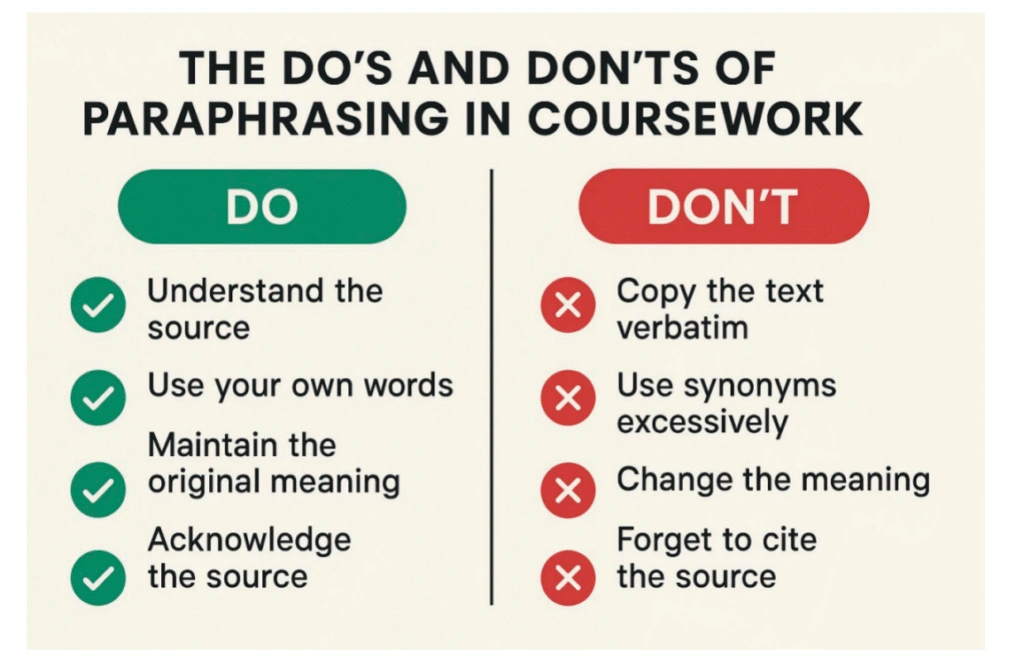
The best way to avoid AI Detection concerns is by focusing on genuine originality rather than trying to trick the system. These practices can naturally reduce DrillBit plagiarism checker concerns while improving academic quality.
- Rewrite from Understanding – Understand the source and explain ideas in your own words.
- Add Personal Analysis – Include your interpretation and reasoning for originality.
- Vary Sentence Structure – Natural writing includes variation in tone and sentence flow.
- Check Citations Properly – Correct referencing protects borrowed ideas.
- Limit AI Dependence – Use AI for support, not as the final submission.
The Role of Responsible AI Use
In a responsible manner, AI is not a bad thing. It may aid brainstorming, outlining, organising research and grammar learning in the writing process. But there are issues if raw AI-generated material is turned in without careful editing or personalization. The most ethical use of AI in DrillBit is to leverage the tools for transformation and understanding, while using personal ideas, analysis, and originality to transform the material, as this approach avoids any of the risks associated with AI Detection.
REAL ALSO : Common Reasons for High DrillBit Similarity Score (And Fixes)
Tips to Improve Originality Before Submission
Students can ease their concerns about originality by using a simple review procedure before handing in an assignment.
1. Write your work to dectect repetitive language
2. Substitute your own analysis for generic explanations.
3. Use more than one reliable source of information.
4. Make sure that all quotes, statistics and ideas borrowed from other sources are cited. 5. 5.Make final copy editing to vary sentences and to form a logical flow.
Final Thought
DrillBit goes beyond matching a word to analysing structure, prediction and paraphrase patterns. Rewriting shortcuts are generally not simple. The best defense is good old thinking, citing, and knowing what you’re doing. This is the reason why university submissions are plagiarism free and cannot be confused by any detection system.
Book a free consultation for appointment
Email us at : grow@simbi.in
FAQs
1. Will DrillBit identify AI-Generated Writing?
Evaluate language and sentence construction, as well as stylistic consistency, to detect writing patterns typical of AI-generated texts. Results do not constitute proof.
2. Are paraphrasing tools circumvention of DrillBit?
Usually not. Most paraphrasing tools only substitute words for sentences, but don’t alter their structure and meaning. Despite this, DrillBit can identify content and structures that are similar and matched.
3. Can original writing be picked up by DrillBit?
Yes, in some cases. Standard phrases, technical jargon or material that is cited correctly can contribute to similarity. Similarity reports always need to be read in context.
4. How to minimise the probability of detection?
Compose original writing, provide handwritten revisions, engage in effective paraphrasing, quote accurately, and add analysis. These practices enhance authenticity and decrease unnecessary matches.
5. Is there something about the words that diminish similarity?
No – just swapping the words alone is not sufficient. Reducing similarity is better with the use of structural originality, unique ideas, and natural sentence construction.
6. What are the tricks that DrillBit uses to identify AI-generated content and paraphrasing?
Using sophisticated algorithms to analyse writing patterns, sentence structure, linguistic consistency and similarities with other sources, DrillBit can detect when content is AI-generated or plagiarised.