
Top Clinical Research Services Every Sponsor Needs to Run Successful Clinical Trials
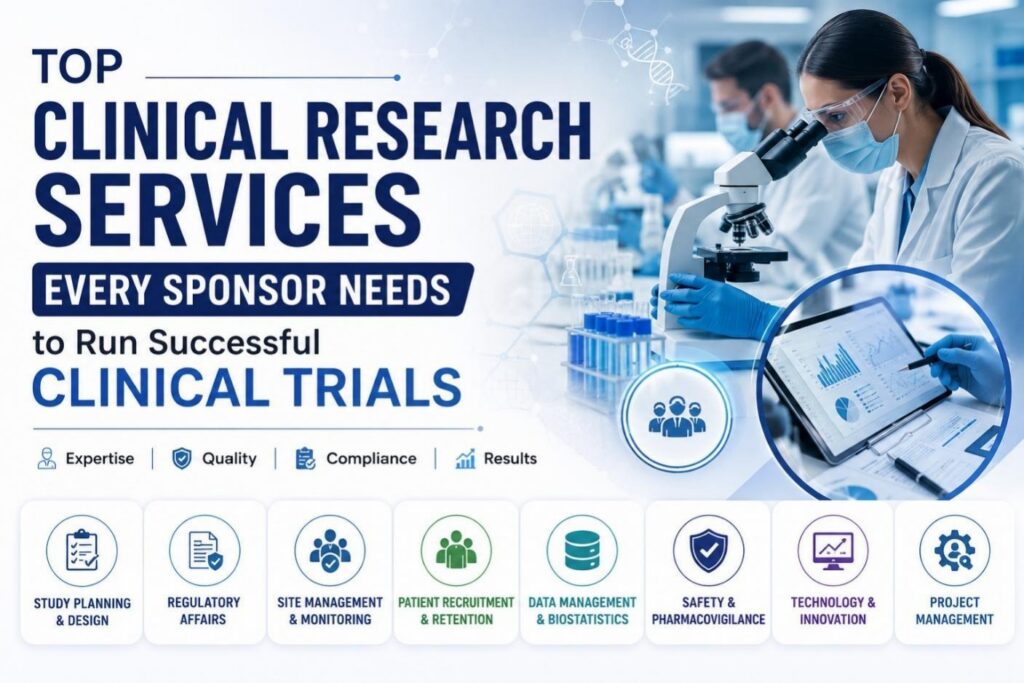
Navigating Clinical Research with the Right Services
Development of a new drug, biologic, medical device or advanced therapy product to market is one of the most complex and resource-intensive tasks in healthcare. Patient safety, clinical trial regulatory compliance, operational efficiency, and scientific precision are all required for every clinical trial. Without adequate support, even the most promising therapy can hit snags of protocol deviation, recruitment issues, delays, or regulatory hurdles.
That is where Clinical Research Services come in handy. Today, sponsors aren’t just using one service provider. Instead, they work with seasoned clinical research organizations that offer the specialized expertise required throughout the process of drug development, from protocol design and regulatory strategy to patient recruitment, clinical monitoring, data management, biostatistics, pharmacovigilance and final study reporting.
Choosing the right Clinical Research Service provider is not just a transaction, but a strategic investment that can significantly affect the quality of the study, timelines, costs, regulatory success and ultimately patient outcomes. This guide examines the critical clinical research services that all sponsors should be aware of when designing and conducting a successful clinical trial.
Understanding Clinical Research Services
Clinical Research Services include the scientific, operational, regulatory, technological and analytical work that enables planning, conducting, monitoring and completion of clinical studies that meets international guidelines and Good Clinical Practice (GCP), and covers all the stages of clinical development:
- Phase I clinical trials
- Phase II efficacy studies
- Phase III pivotal trials
- Phase IV post-marketing studies
- Medical device investigations
- Observational studies
- Real-world evidence programs
Why Sponsors Depend on Clinical Research Services
Clinical trials are quite different today from 10 years ago, and sponsors have to juggle many responsibilities – operational, scientific and regulatory. Today, studies can be conducted across countries, with many investigational sites and patient populations, to provide a comprehensive clinical evidence.
Moreover, sponsors likely need to handle adaptive designs, decentralized clinical trial models, digital data collection technologies, ever-changing regulatory requirements, and more aggressive development timelines. Managing all these activities within the organization requires a significant level of infrastructure, specialization and technology, as well as resources.
Consequently, numerous sponsors outsource trial service to Clinical Research Services for help in streamlining trial operations, compliance with the regulation, data quality control, and successful delivery of the trial on time and budget.
Professional Clinical Research Services help sponsors by:
- Accelerating study startup
- Improving protocol execution
- Enhancing patient recruitment
- Ensuring regulatory compliance
- Maintaining data quality
- Reducing operational risks
- Supporting global trial expansion
- Optimizing overall development costs
Clinical Research Services Across the Trial Lifecycle
| Clinical Trial Stage | Key Clinical Research Services Required |
| Study Planning | Trial Strategy, Feasibility, Protocol Development |
| Regulatory Approval | Regulatory Affairs, Ethics Committee Support |
| Site Startup | Site Identification, Site Activation |
| Patient Enrollment | Recruitment & Retention Services |
| Trial Execution | Monitoring, Project Management, Technology Solutions |
| Data Collection | Clinical Data Management, eSource, EDC |
| Data Analysis | Biostatistics, Statistical Programming |
| Safety Monitoring | Pharmacovigilance, Medical Review |
| Regulatory Submission | Medical Writing, Regulatory Documentation |
| Study Closeout | Database Lock, Final Reports, Quality Assurance |
Clinical Trial Strategy and Study Planning
Any clinical trial of success starts with a clear plan and sets the stage for the efficient conduct of the trial. Clinical research experts assist sponsors in the feasibility assessment of clinical trials, development of trial protocols, optimisation of the clinical trial design, selection of endpoints, country and site selection, assessment of the therapeutic landscape, risk assessment, operational planning for clinical trial, budget forecasting, etc. Successful planning means fewer changes to the protocol, less delay and greater chance of a successful trial.
Regulatory Affairs and Ethics Support
Compliance with regulations is vital to the successful start and execution of clinical trials. Clinical Research Services support in REGULATORY strategy and IND/CTA submission, Ethics Committee / Institutional Review Board documentation, Health Authority Communication, Essentials Document Preparation, Submission Management, and Inspection Readiness. This all-inclusive package ensures sponsors stay compliant and prevents needless delays in receiving approvals.
Site Identification and Feasibility
Clinical Research Services review investigator experience, patient availability, research infrastructure, laboratory capabilities, regulatory history, staff qualifications, competing studies, and site activation timelines to determine the optimal site(s). Study start-up and operational efficiency is enhanced through careful site selection.
Patient Recruitment and Retention
One of the most significant problems in clinical research is finding and keeping the right participants from the right age group. Patient identification strategies, digital recruitment campaigns, physician referrals, community outreach, eligibility screening, enrollment management, diversity initiatives and patient engagement programs are all advantages to sponsors.
Communication and follow-up, flexibility, remote outreach, and patient support help sustain participation and minimize attrition
Clinical Trial Monitoring
The monitoring of clinical trials guarantees that trials are conducted in compliance with the protocol, Good Clinical Practice (GCP) and regulatory requirements.
Monitoring activities include site initiation, routine monitoring visits, source data verification, informed consent review, protocol compliance review, drug accountability, query resolution, corrective action, and site close out. Centralized data review can be complemented by targeted on-site monitoring to provide enhanced oversight, through modern risk-based monitoring.
Clinical Data Management
The clinical data needs to be reliable for proper analysis and regulatory approval. Data management services consist of database design, electronic case report form (eCRF) development, data validation, medical coding, query management, data cleaning, reconciliation, database lock and quality review, ensuring adherence to regulatory data standards. Data management enhances data integrity across the clinical trial.
Biostatistics and Statistical Programming
Biostatistics converts clinical information into significance scientific evidence. The services cover microplaning of the statistical analysis, sample size calculation, randomization design, interim and final analyses, efficacy and safety assessment, statistical modeling, programming in SAS, preparation of CDISC datasets and clinical study reporting. Appropriate statistical analysis enhances regulatory submissions and can aid in informed decision making.
Medical Writing Services
A significant amount of documentation is created during the study process in clinical research. Medical writing experts come up with clinical study protocols, investigator brochures, informed consent forms, clinical study reports, statistical reports, safety narratives, regulatory summaries, investigator communications, manuscripts, and scientific publications. Solid documentation guarantees scientific correctness and regulations compliance.
Pharmacovigilance and Drug Safety
The pharmacovigilance services encompass adverse event management, serious adverse event reporting, safety database management, detection of drug signals, medical review, risk assessments, aggregate safety reporting, periodic safety updates, regulatory reporting, and continuous surveillance of safety. These activities are aimed at risk identification, patient safety and patient welfare during the trial.
Clinical Trial Technology Solutions
These days, technology has become an integral part of clinical research. Electronic Data Capture (EDC), Clinical Trial Management Systems (CTMS), Electronic Trial Master Files (eTMF), Electronic Regulatory Binders (eReg), Interactive Response Technology (IRT), ePRO, eSource, eConsent, Risk Based Monitoring dashboards and remote monitoring platforms are all examples of how sponsors can improve efficiency, data accuracy and study oversight.
Quality Assurance and Compliance
Services performed cover internal, vendor, site and system audits, CAPA management, development of SOPs, quality risk management, preparation for inspections, GCP compliance reviews and regulatory readiness assessments. Continuous quality oversight helps minimize compliance risks and inspection findings. Quality, information, and communication services.
Laboratory and Biomarker Services
Clinical Research Services include support to central laboratory testing, biomarker analysis, sample logistics, biobanking, genetic and molecular testing, pharmacokinetic and pharmacodynamic analysis, specialty assays, and laboratory data integration. Good lab work enhances the credibility of clinical trial results. The preparation and production of the final report.Provision of final report preparation and production.
Decentralized Clinical Trial Support
Decentralized clinical trials can better make studies accessible by enabling people to participate in studies from their homes. Support services include telemedicine visits, remote consent, home healthcare visits, wearable device integration, remote patient monitoring, electronic diaries, virtual follow-ups, home sample collection, digital engagement platforms, and remote safety assessments. These methods increase access to trials and make them more convenient for the patient.
Project Management
Clinical project managers manage timelines, budget, vendor coordination, resources, communication planning, tracking milestones, reporting on performance, risk management, issue resolution and communicating with the sponsor. A good project management keeps studies on track, on budget and connects to trial goals.
Selecting the Right Clinical Research Company
When selecting a Clinical Research Company, it is not enough to consider cost; the Clinical Trial Partner should extend the sponsor’s organization, not be just an external service.sponsors should evaluate:
- Therapeutic expertise
- Global regulatory knowledge
- Technology capabilities
- Clinical operations experience
- Data quality standards
- Inspection history
- Geographic reach
- Recruitment capabilities
- Scalability
- Transparent communication
- Financial stability
- Dedicated project teams
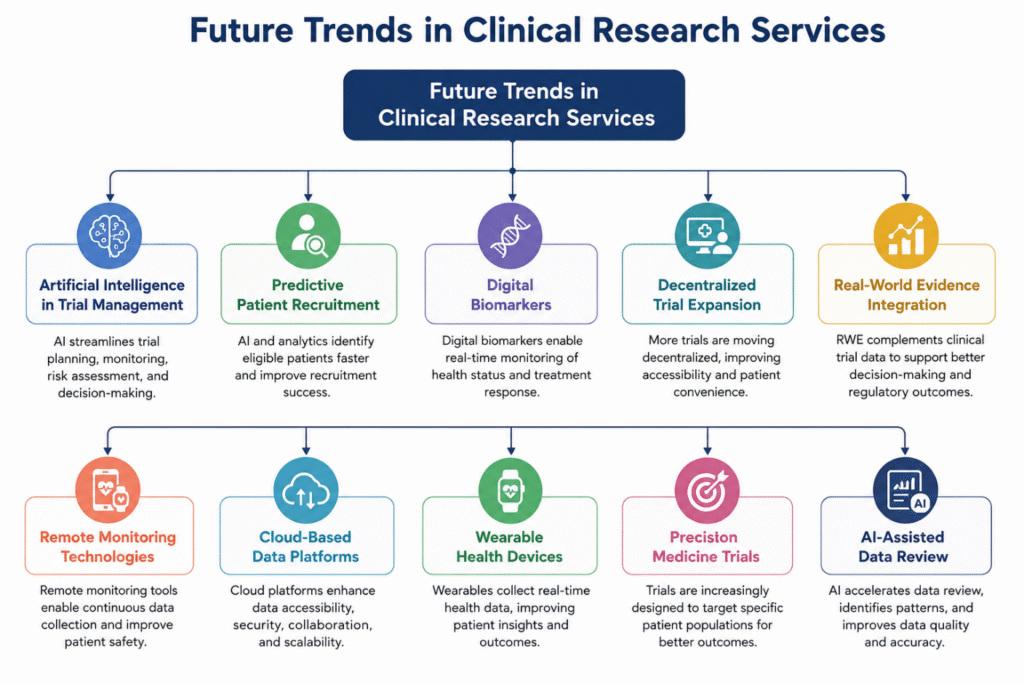
Achieving Clinical Trial Success with the Right Clinical Research Services
Clinical development is much more than enrolling patients and data collection. It requires everyone’s effort, particularly scientific planning, regulatory knowledge, operational excellence, patient engagement, quality management, advanced technology and intensive analysis of data.
Comprehensive Clinical Research Services offer sponsors the expertise, infrastructure and strategy to navigate ever more complex clinical trials. From early studies to global Phase III trials, working with the right Clinical Research Company can help you meet timelines, hold your projects to strict compliance standards, ensure your data is as clean as possible, and ensure your regulatory submissions are as sound as they can be.
Over time, digital innovation and patient-centric research methods have become more common in clinical trials, and for long-term clinical trial success, having a trusted Clinical Research Vendor and an experienced Clinical Trial Partner are one of the most critical choices a sponsor can make.
Frequently Asked Questions
What are Clinical Research Services?
What are the reasons for sponsors to employ a Clinical Research Company?
What does a Clinical Trial Partner do?
What are the ways that Clinical Research Vendors advance clinical trials?
Which Clinical Research Service is the most important?
Book a free consultation for appointment
Email us at : grow@simbi.in