
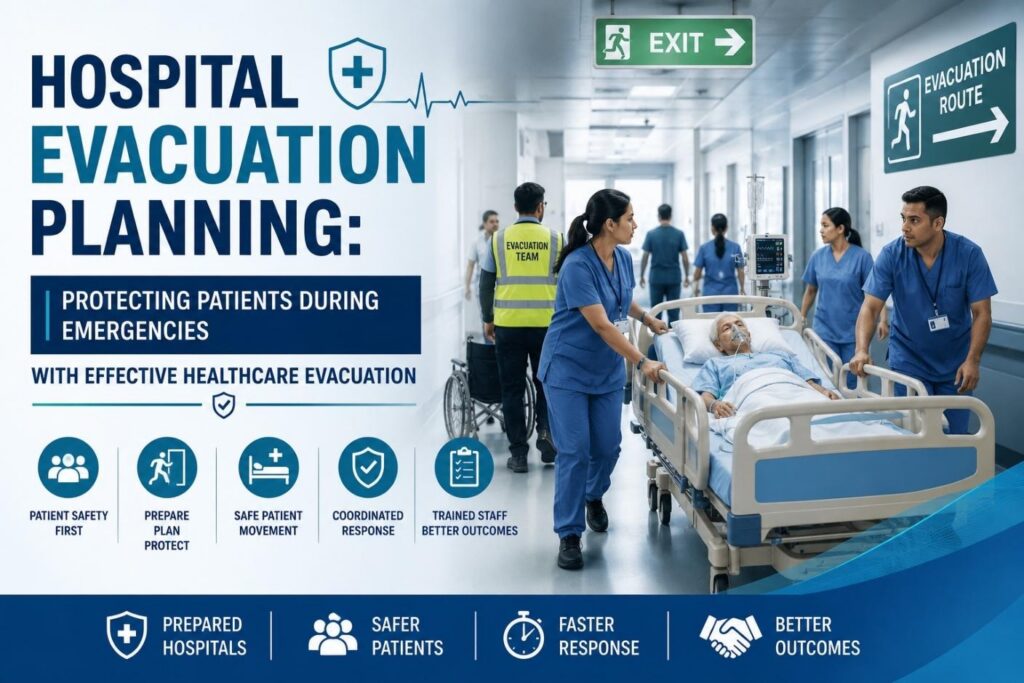
Hospital Evacuation Planning: Protecting Patients During Emergencies with Effective Healthcare Evacuation
Understanding the Importance of Hospital Evacuation Planning
Hospitals are built to save lives, but during an emergency, they must also ensure those lives can be moved safely. Unlike office buildings or shopping malls, hospitals care for patients who may be unconscious, dependent on life-support systems, recovering from surgery, or unable to walk without assistance. Evacuating a healthcare facility therefore requires meticulous planning, well-trained staff, effective coordination, and continuous emergency preparedness.
Whether the emergency is caused by a fire, earthquake, flood, chemical leak, structural failure, or power outage, every second matters. Inadequate planning can increase the risk of patient injury, interrupt critical medical treatment, and place additional pressure on emergency responders.
Modern hospital evacuation strategies combine risk assessment, evacuation simulation, emergency drills, patient prioritization, and advanced technologies to ensure patients are relocated safely while maintaining continuity of medical care.This guide explores the key aspects of hospital evacuation planning, including ICU evacuation, wheelchair patient movement, emergency escape routes, evacuation simulations, real-world challenges, and industry best practices.
Critical Considerations in Hospital Evacuation Management
Evacuating a hospital is far more complex than evacuating most other buildings because every patient has unique medical needs that must be considered throughout the evacuation process.
Unlike healthy occupants who can often leave independently, hospitals must safely relocate a wide range of vulnerable patients. These include ICU patients dependent on ventilators and life-support equipment, newborns in neonatal intensive care units, post-operative patients, wheelchair users, bedridden individuals, elderly patients with limited mobility, psychiatric patients who may require additional supervision, dialysis patients receiving essential treatment, and individuals with infectious diseases who need controlled transport to prevent contamination.Managing these diverse medical needs requires careful planning, trained healthcare professionals, appropriate medical equipment, and well-coordinated evacuation procedures. Together, these elements help ensure patient safety while maintaining continuity of care throughout an emergency.
Common Emergencies That Require Hospital Evacuation
Several incidents may force a healthcare facility to evacuate partially or completely. Hospitals must be prepared for both sudden emergencies and slowly developing disasters.
| Emergency Category | Examples | Potential Impact on Hospital Operations |
| Internal Emergencies | Fire or smoke | Immediate evacuation of affected areas due to fire and toxic smoke. |
| Oxygen cylinder explosion | Risk of severe injury, fire, and structural damage. | |
| Electrical failure | Loss of critical medical equipment, lighting, and life-support systems. | |
| HVAC malfunction | Reduced air quality, smoke spread, or loss of infection control. | |
| Medical gas leakage | Increased risk of fire, explosion, or hazardous exposure. | |
| Cyberattack affecting hospital systems | Disruption of patient records, communication, and essential healthcare services. | |
| External Emergencies | Earthquakes | Structural damage requiring partial or complete evacuation. |
| Flooding | Water damage, inaccessible routes, and utility failures. | |
| Hurricanes | High winds, flooding, and prolonged infrastructure disruption. | |
| Terror attacks | Immediate evacuation to protect patients, staff, and visitors. | |
| Nearby industrial accidents | Exposure to hazardous materials or explosion risks. | |
| Hazardous chemical spills | Air contamination requiring rapid relocation of patients and staff. |
Key Takeaway: Hospitals should develop comprehensive evacuation plans that address both internal and external emergencies, ensuring patient safety, uninterrupted medical care, and effective coordination during any crisis.
Types of Hospital Evacuation
Horizontal Evacuation
Horizontal evacuation involves relocating patients, staff, and visitors to a safe area on the same floor without using stairs or elevators. This is generally the preferred approach when an emergency is limited to a specific section of the hospital, allowing unaffected areas to continue operating normally.
It is commonly used during situations such as a fire in one hospital wing, smoke spreading through a particular corridor, or other localized incidents where moving patients to an adjacent fire-safe compartment provides sufficient protection.
Vertical Evacuation
Vertical evacuation requires moving patients between different floors using protected stairways or specialized evacuation equipment when remaining on the same level is no longer safe.
Because many hospital patients have limited mobility or depend on life-support equipment, this type of evacuation requires careful planning, trained personnel, and close coordination. Vertical evacuation is typically necessary when an entire floor becomes unsafe due to fire, smoke infiltration, structural damage, or other hazards that prevent horizontal relocation.
Full Facility Evacuation
A full facility evacuation is the most extensive and challenging type of hospital evacuation. It involves relocating all patients, staff, and visitors to another healthcare facility or a temporary medical center while ensuring that essential medical care continues without interruption.
This process demands detailed planning, adequate transportation resources, and close coordination with emergency services and neighboring healthcare providers. A full evacuation is usually carried out during large-scale emergencies such as major structural collapse, severe flooding, uncontrolled fires, bomb threats, or any situation in which the hospital can no longer operate safely.
Understanding Patient Prioritization
Hospitals cannot evacuate everyone simultaneously.
Most facilities use patient categorization.
| Priority | Patient Type | Evacuation Method |
| Priority 1 | Walking patients | Guided evacuation |
| Priority 2 | Wheelchair users | Assisted movement |
| Priority 3 | Bedridden patients | Stretchers or evacuation sleds |
| Priority 4 | ICU and ventilator patients | Specialized medical transport |
ICU Evacuation: The Greatest Challenge
The Intensive Care Unit (ICU) is one of the most challenging areas to evacuate during a hospital emergency because critically ill patients depend on continuous medical care and cannot be relocated without detailed planning. Many ICU patients require mechanical ventilators to support breathing, cardiac monitors to track heart activity, infusion pumps for delivering medications and fluids, oxygen therapy to maintain stable oxygen levels, and multiple intravenous (IV) medications that must continue without interruption throughout transport.
For every ICU transfer, healthcare teams must carefully coordinate the movement of patients to ensure life-support equipment remains fully operational during the evacuation. Maintaining uninterrupted medical care throughout the process is essential to minimize risk and protect patient safety.
ICU Evacuation Checklist
- Portable ventilators ready for use
- Battery backup systems fully verified
- Portable oxygen cylinders prepared
- Essential medications accompany the patient
- Medical records transferred with the patient
- Dedicated transport team assigned
- Destination ICU confirmed before transfer
Safe Wheelchair Evacuation Procedures
Many hospital patients are medically stable but unable to walk independently, making wheelchair evacuation an essential part of emergency preparedness. Before relocating a patient, staff should lock the wheelchair wheels during transfers to prevent unintended movement, fasten safety belts to keep the patient secure, and ensure oxygen cylinders or other medical equipment are firmly attached.
Evacuation routes should always remain clear of obstacles so patients can be moved safely and without interruption. When elevators are unavailable, evacuation chairs should be used to transport wheelchair users down staircases. Throughout the evacuation, trained healthcare staff should remain with each patient to provide assistance, monitor their condition, and ensure the transfer is carried out safely and efficiently.
Moving Bedridden Patients During Emergencies
Evacuating bedridden patients requires specialized equipment and carefully planned techniques to ensure they can be moved safely without causing additional injury or interrupting essential medical treatment.
- Evacuation sleds: Allow patients to be safely pulled across floors and down stairways when elevators cannot be used.
- Transfer sheets: Help caregivers reposition and move patients with less physical effort while reducing the likelihood of injury.
- Rescue mattresses: Provide full-body support and protection, making it easier to transport patients over uneven surfaces or through narrow spaces.
- Stair evacuation devices: Enable the safe and controlled movement of bedridden patients down staircases during multi-story building evacuations.
- Portable stretchers: Offer a secure and stable platform for transporting patients to safe locations or ambulances while maintaining comfort and continuous medical support.
Designing Effective Emergency Evacuation Routes
Emergency evacuation routes should remain safe, accessible, and fully operational throughout the year. Several design features are essential for ensuring efficient patient movement during an emergency.
- Wide corridors: Corridors should be spacious enough to accommodate hospital beds, stretchers, wheelchairs, evacuation equipment, and emergency personnel moving simultaneously without creating congestion.
- Fire-resistant exits: Emergency exits should be built with fire-rated doors and materials capable of withstanding high temperatures, helping contain fire and smoke while maintaining safe escape routes.
- Clearly illuminated signage: Exit signs should remain bright, easy to read, and clearly visible even in low-visibility conditions, allowing occupants to quickly locate the nearest evacuation route.
- Wheelchair accessibility: All evacuation routes should remain barrier-free, incorporating ramps, wide doorways, and smooth flooring to ensure patients with mobility limitations can be evacuated safely.
- Smoke-free escape paths: Stairwells and evacuation corridors should be protected by smoke-control systems, fire doors, and effective ventilation to prevent smoke from blocking escape routes.
- Backup emergency lighting: Battery-powered emergency lighting should activate automatically during power failures, keeping evacuation routes visible and reducing confusion or the risk of falls.
- Clearly marked refuge areas: Designated refuge areas should be strategically positioned throughout the hospital, providing temporary safe locations where patients requiring additional assistance can wait for rescue or further evacuation.
Role of Staff During Healthcare Evacuation
Every hospital employee should know their responsibilities before an emergency occurs.
Clinical Staff
- Stabilize patients
- Prioritize evacuation
- Maintain medical documentation
Nursing Teams
- Prepare patients
- Administer essential medications
- Assist with transport
Security Personnel
- Control crowd movement
- Secure entrances
- Coordinate emergency responders
Engineering Teams
- Maintain emergency power
- Shut down hazardous systems
- Monitor building safety
Scenario: Fire in the ICU Wing
Imagine a fire breaking out in an electrical room located next to the ICU. As smoke begins spreading into the corridor, the fire alarm is activated, prompting an immediate emergency response. The incident commander quickly initiates a horizontal hospital evacuation for the affected ICU wing. Nurses disconnect patients from fixed ventilators and safely transfer them to portable ventilators equipped with battery backup to maintain uninterrupted respiratory support.
Patients who are medically stable are evacuated first using wheelchairs, while critically ill patients are transported on evacuation sleds with portable monitors, oxygen supplies, and other essential life-support equipment. At the same time, security personnel secure and clear emergency evacuation routes, engineering teams isolate the affected electrical systems, and ambulance crews coordinate patient transfers to nearby hospitals. Because the staff had regularly practiced these procedures through evacuation drills, every patient is relocated safely without disrupting essential medical care.
Example: Flood Threat to a Coastal Hospital
A coastal hospital receives an official warning that severe flooding is expected within the next six hours. Rather than waiting for conditions to worsen, the hospital’s emergency management team immediately activates a phased healthcare evacuation plan.
Patients in the ICU who face the highest medical risk are transferred first to partner hospitals, followed by neonatal patients and individuals recovering from surgery. Outpatient appointments are postponed, elevators are reserved exclusively for patient transport, and emergency generators are relocated to protected locations to ensure continuous power if flooding occurs. By acting early, the hospital prevents panic, minimizes congestion, and maintains uninterrupted patient care despite the approaching natural disaster.
Best Practices for Effective Hospital Evacuation
Healthcare organizations can improve emergency preparedness by implementing well-established evacuation strategies.
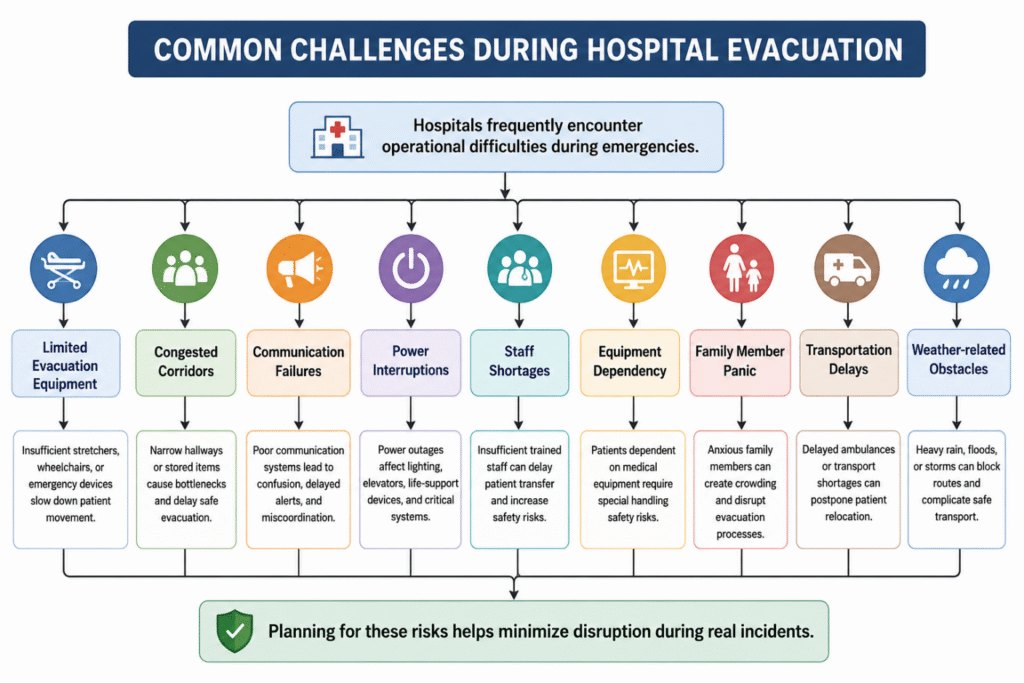
- Conduct evacuation drills on a regular basis.
- Review and update evacuation plans every year.
- Train staff in ICU patient transfers and wheelchair evacuation procedures.
- Maintain emergency equipment, backup power systems, and essential medical supplies.
- Coordinate closely with nearby hospitals, ambulance providers, and emergency response agencies.
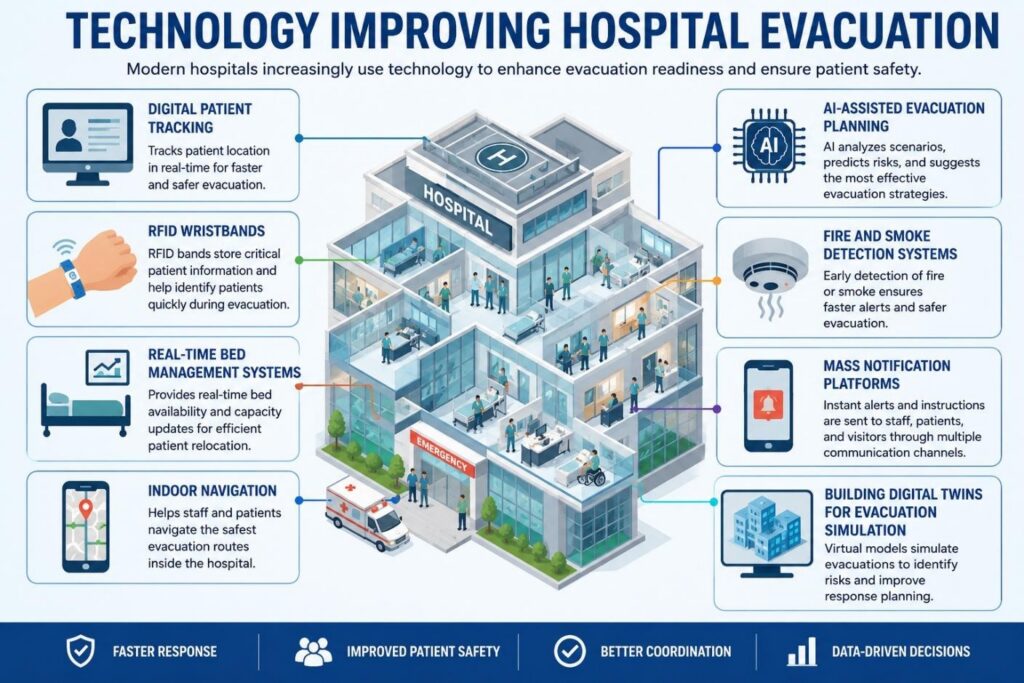
- Use patient tracking systems to monitor patients throughout the evacuation process.
- Keep emergency corridors and evacuation routes clear at all times.
- Evaluate lessons learned after every drill or real emergency and incorporate improvements into future plans.
The Future of Healthcare Evacuation
Rapid advances in technology are reshaping the way hospitals prepare for emergencies. Artificial intelligence can identify potential evacuation bottlenecks before they occur, while digital twin technology enables hospitals to evaluate different emergency scenarios within a virtual environment. Wearable patient tracking devices improve real-time location awareness, and autonomous robots may assist by transporting medical supplies and essential equipment during evacuations.
Together, these innovations are making healthcare facilities more resilient, improving emergency response capabilities, and strengthening preparedness for increasingly complex emergency situations.
Book a free consultation for appointment
Email us at :grow@simbi.in